
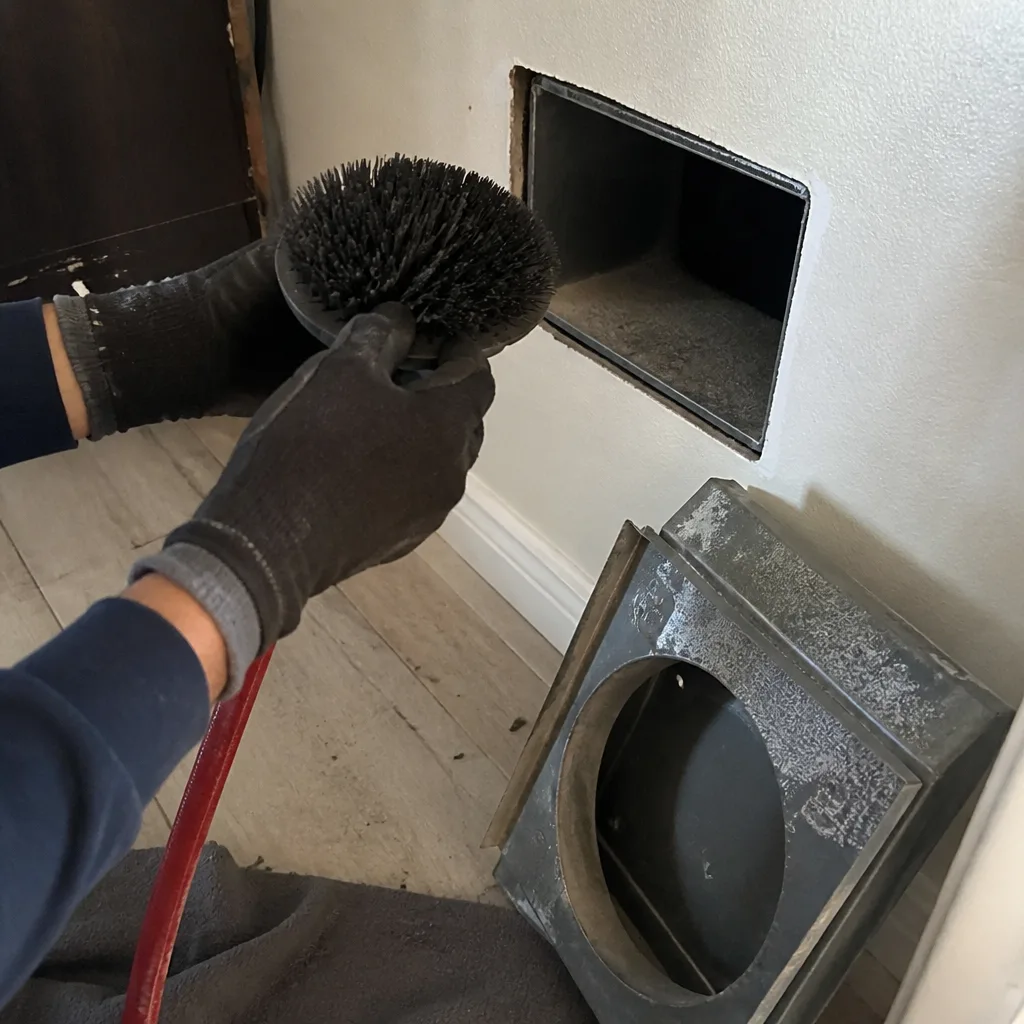
Last updated November 2, 2026
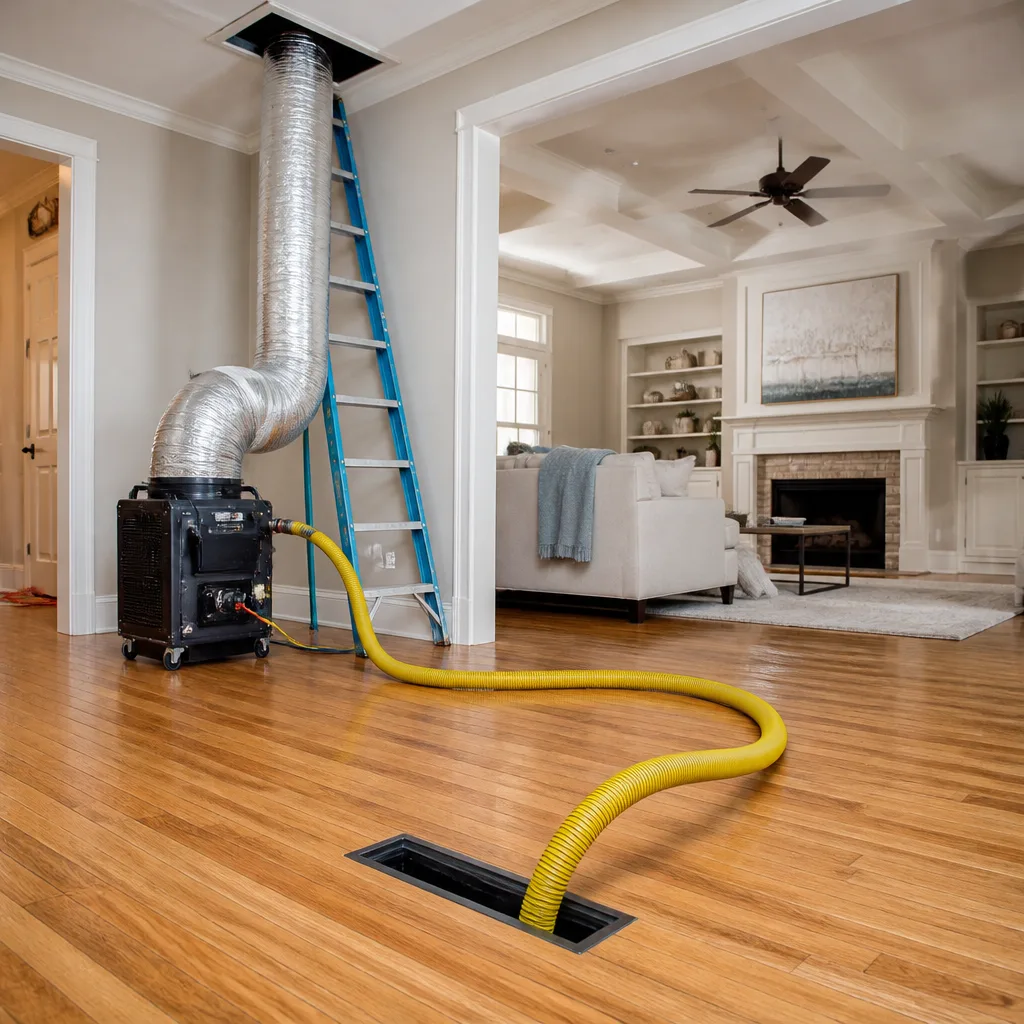 Whole-home duct cleaning
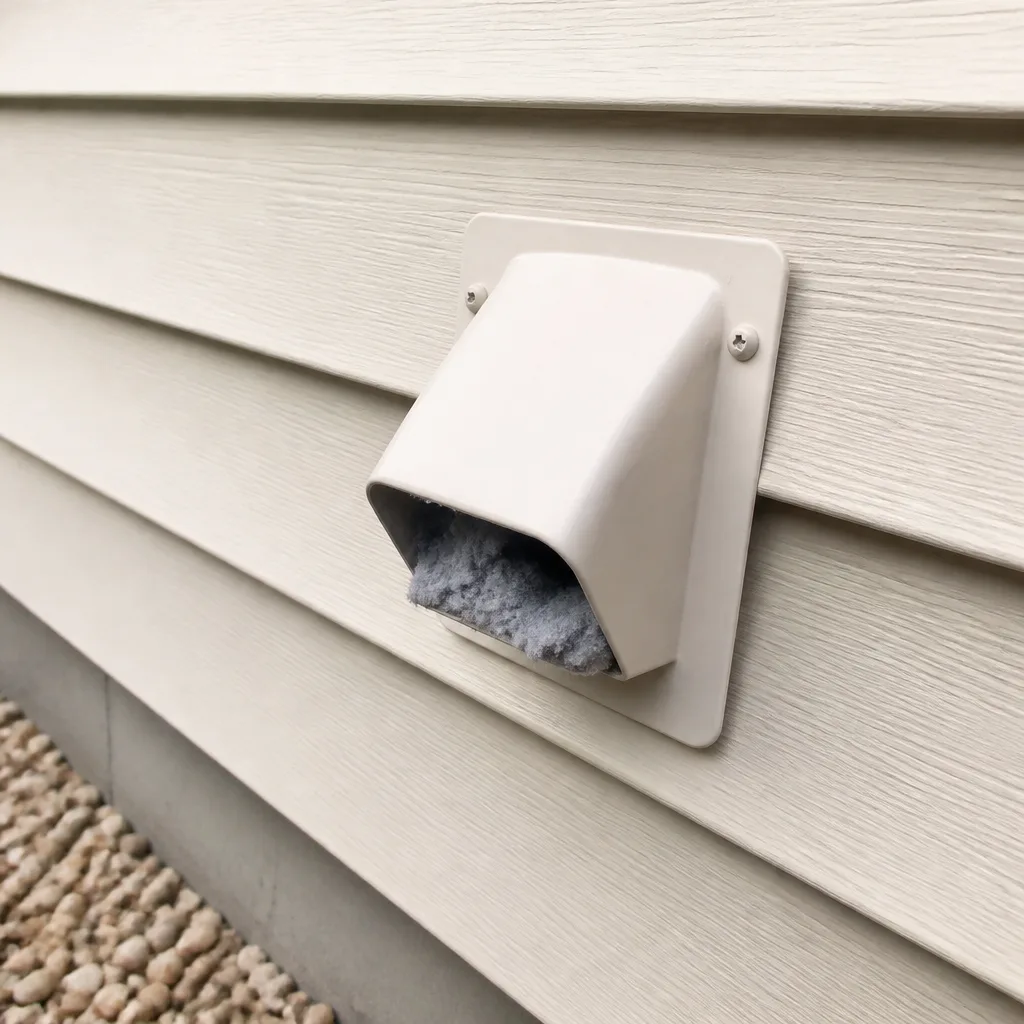 Dryer vent cleaning
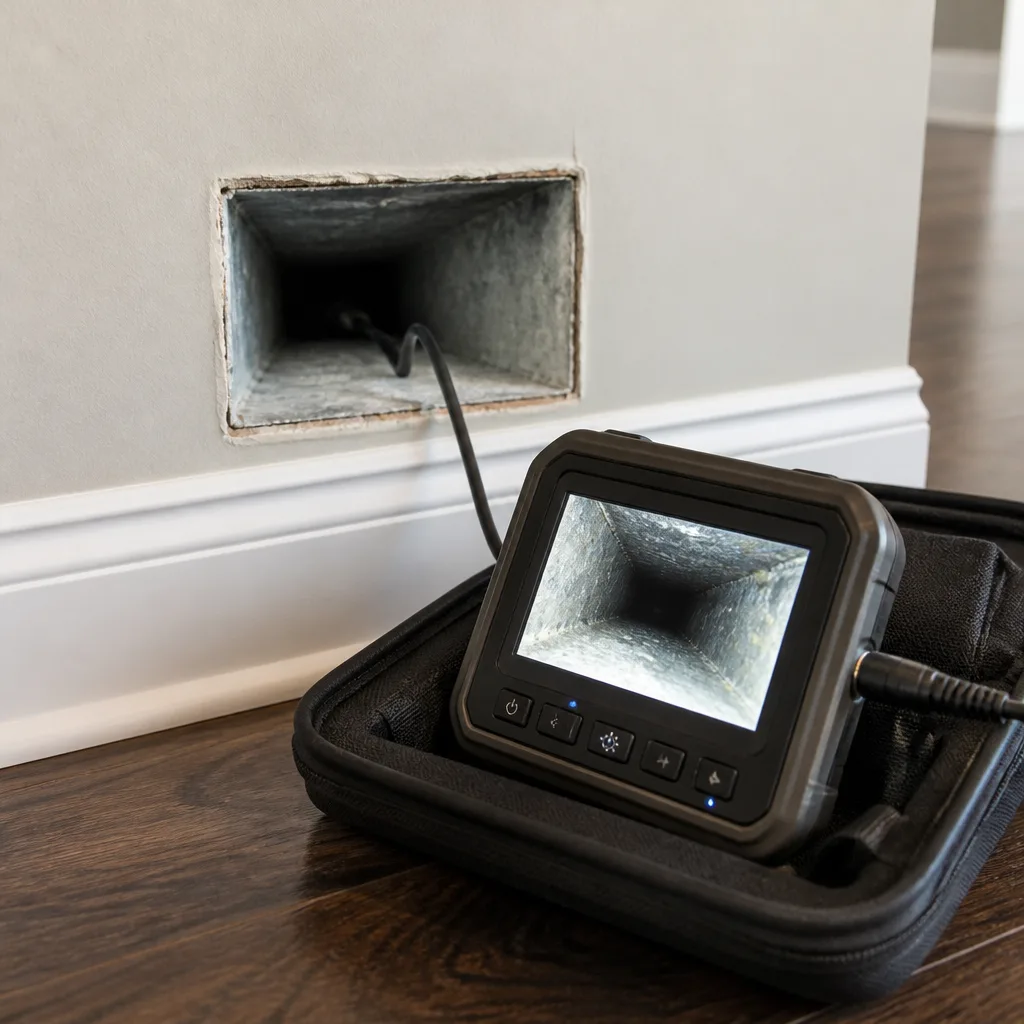 Camera inspection
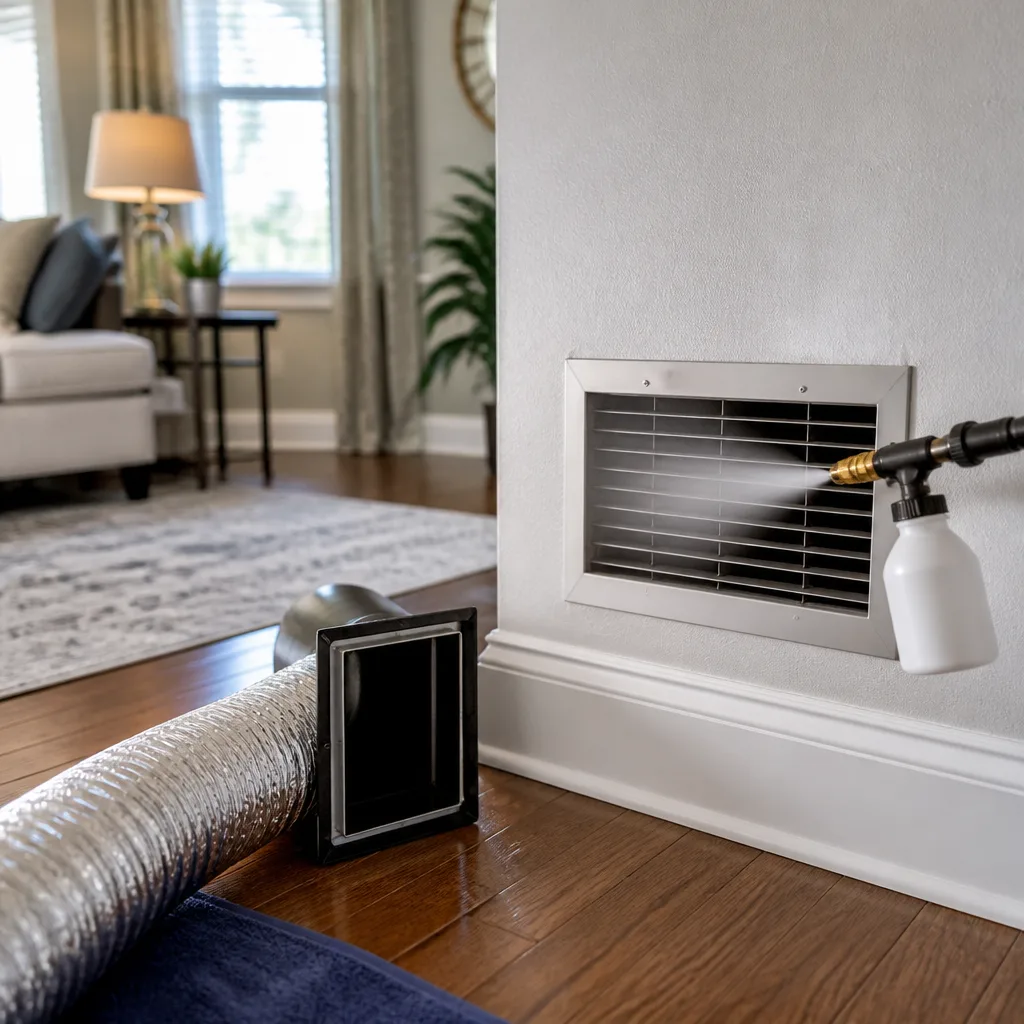 Sanitizing & deodorizing
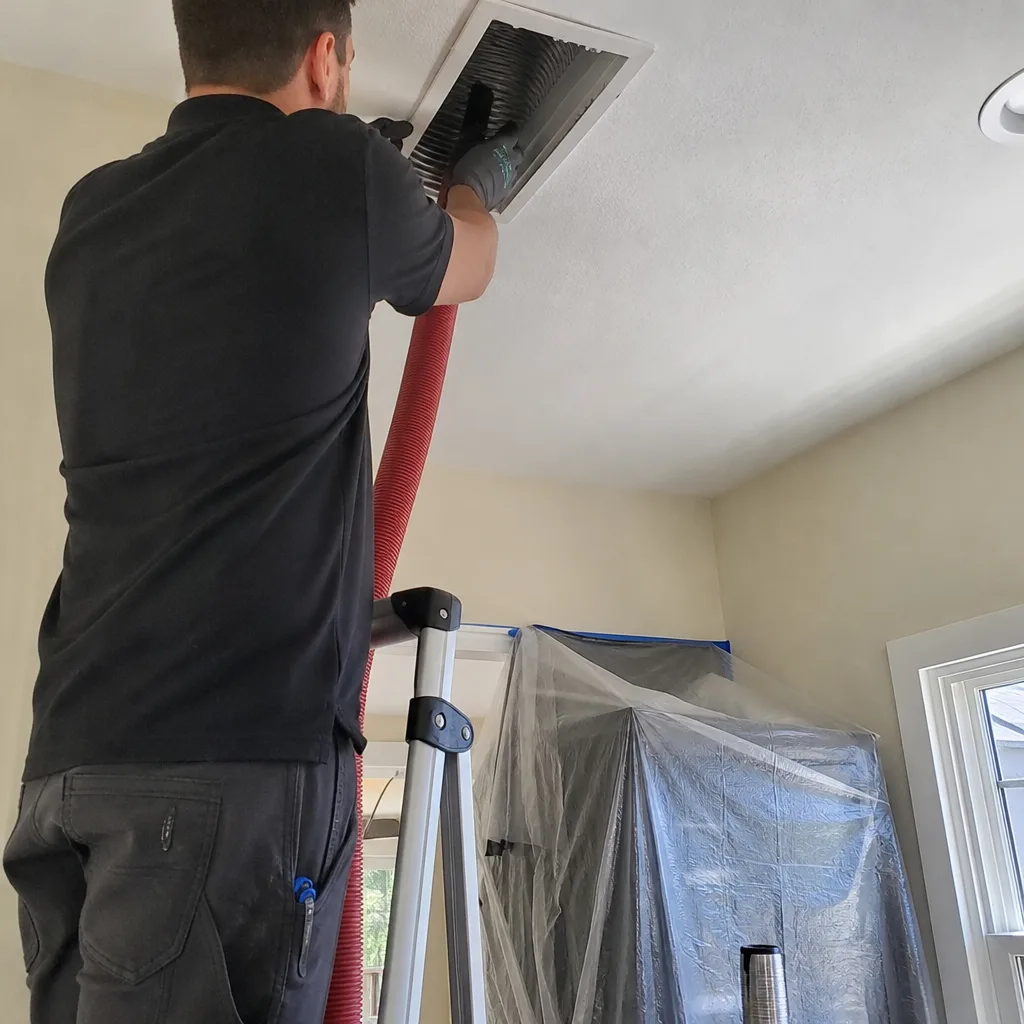
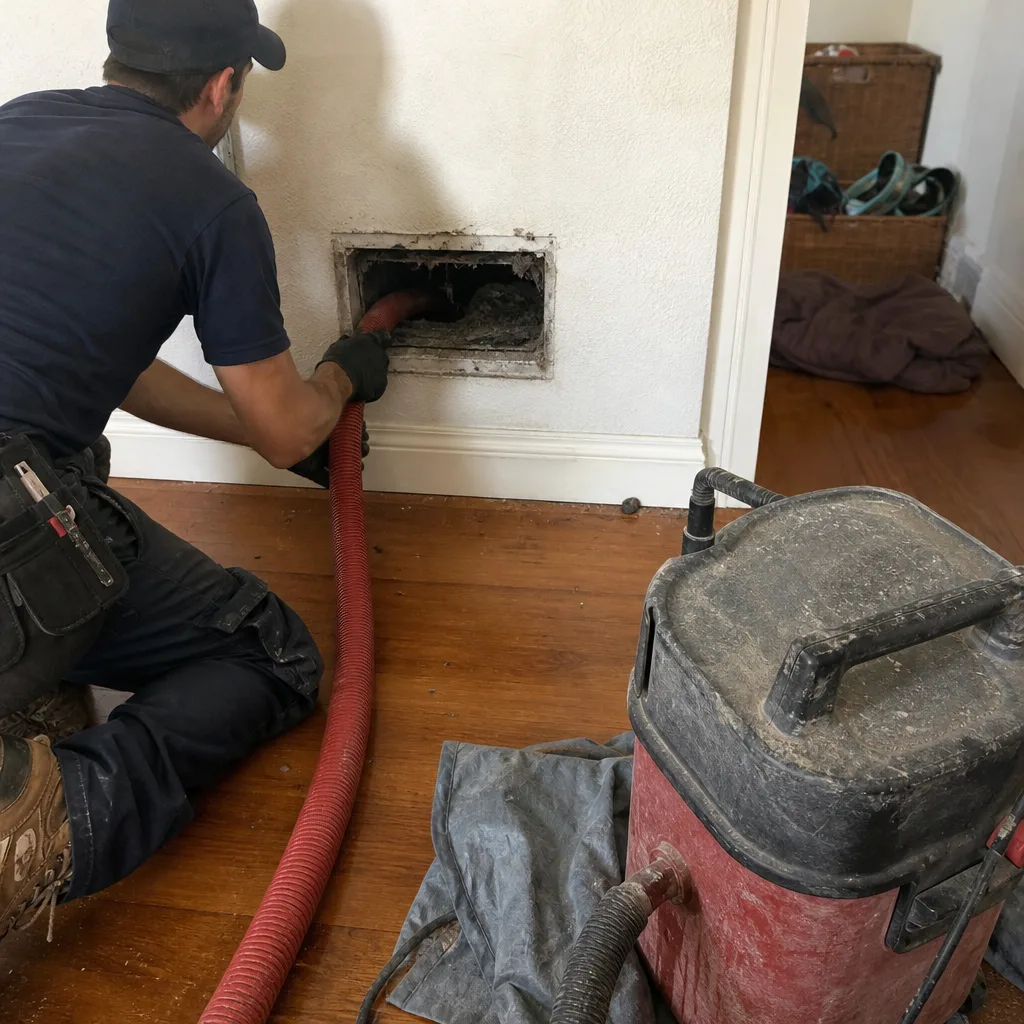
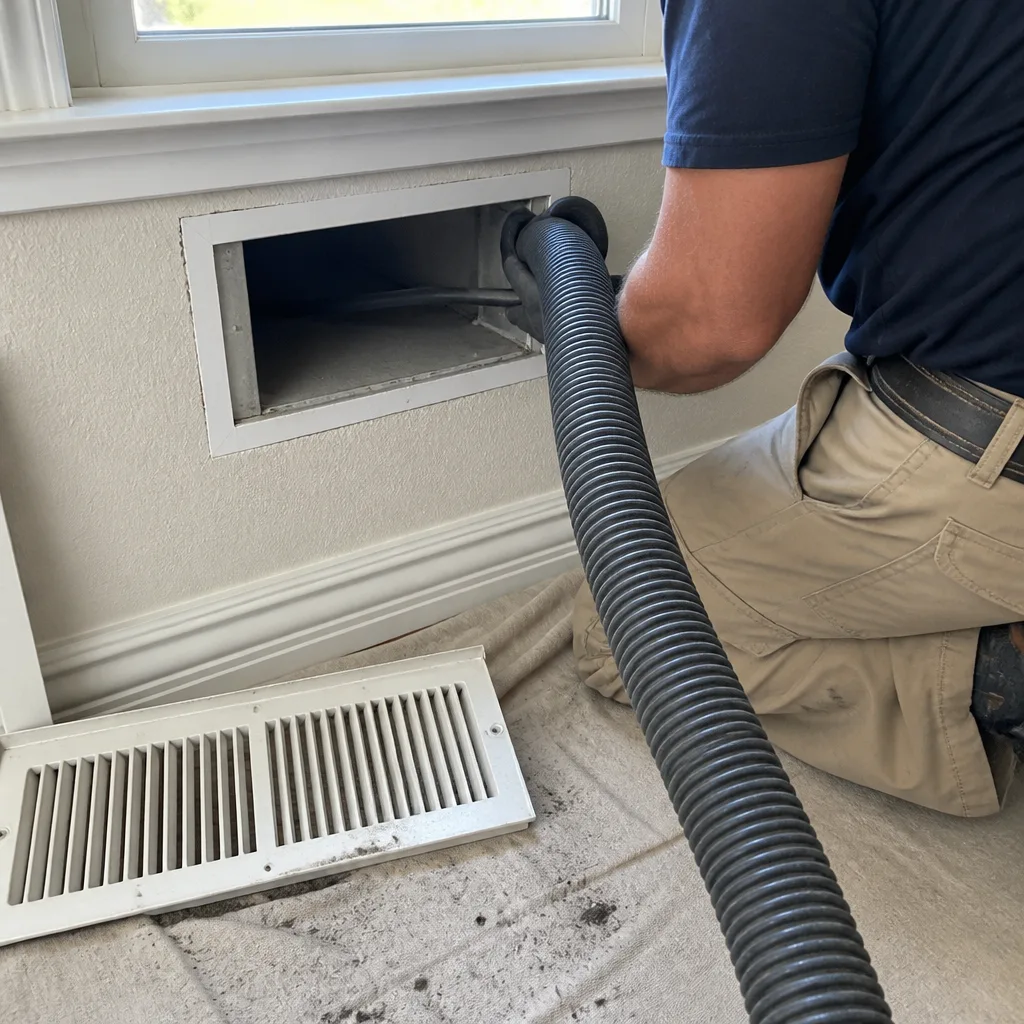
Whole-system duct and dryer vent check with before-and-after photos - you see exactly what came out of your vents
That "$99 whole-house special" is a bait ad - the real number appears once they are in your hallway, or the "clean" is a shop-vac at the register. We photograph the inside of your ducts before and after instead.
Air Duct Cleaning Warning Signs: An Encinitas Homeowner’s Reference Guide
Most Encinitas homeowners don’t think about their ductwork until something obvious goes wrong: a visible plume of dust when the system kicks on, a room that won’t hold temperature, a smell that won’t go away. By the time you see dust blowing from a register, the problem has been building for months, sometimes years. Debris has already bypassed the filter, coated the evaporator coil, and settled into the lowest points of the duct runs. This Complete Air Duct Cleaning Guide for Encinitas Homeowners is about catching the quieter signals first, the ones specific to how coastal homes in Encinitas age, so you can address a developing problem before it becomes an expensive one.
Styles & brands we work with
- Whole-home duct cleaning
- Dryer vent cleaning
- Camera inspection
- Sanitizing & deodorizing
Quick Answer
The earliest warning signs of duct problems in Encinitas homes are often invisible: uneven airflow between rooms that used to feel the same, a faint musty odor when the system first starts, and darkening around register edges that indicates bypass leakage at the joints. Visible dust blowing from vents is a late-stage signal. If you notice any combination of airflow imbalance, persistent odors, or register discoloration, a professional duct inspection is warranted sooner rather than later.
Table of Contents
- Odor Diagnostics: What Your Ducts Are Telling You Through Smell
- Airflow Imbalance: The Early Structural Indicator Most Homeowners Miss
- Register Discoloration Patterns: Reading the Evidence at the Grille
- The White Tissue Paper Test: A Simple Field Method for Filter Bypass
- Post-Wildfire Particulate Deposition in Encinitas Ducts
- How Coastal Air Accelerates Duct Deterioration in Encinitas
- Common Mistakes to Avoid
- When to Call a Professional
- Frequently Asked Questions
- The Bottom Line
Odor Diagnostics: What Your Ducts Are Telling You Through Smell
Odors are one of the most reliable early indicators of duct problems, but only if you know how to read them. In Encinitas, where marine air carries consistent moisture, a musty smell is often the first signal that condensation is forming inside duct runs. This isn’t the same as the general coastal dampness you might notice in a garage or crawl space. Duct condensation odor has a particular character: it’s more pronounced when the AC first cycles on, fades as the system runs, and returns the next time the system starts from rest.
Here’s how to distinguish the three odor categories we encounter most often in Encinitas homes:
- Musty or mildewed air at startup: This points to condensation inside the duct system. In Encinitas, where overnight temperatures drop and humidity stays high, uninsulated or poorly sealed duct runs in unconditioned attics and crawl spaces collect moisture. That moisture supports microbial growth on dust that has accumulated inside the duct lining. The smell is strongest at startup because the fan pushes air through those damp sections after hours of stillness.
- Combustion or exhaust odor: This is a different category entirely and requires immediate attention. A persistent oily or smoky smell that doesn’t clear, particularly when the heat runs, can indicate a cracked heat exchanger or backdrafting from a gas appliance. This is a safety issue, not a cleaning issue. Shut the system down and call a professional.
- Rodent or animal odor: A sharp, acrid, almost ammonia-like smell that comes and goes, often stronger in one room than others, suggests animal activity in the ductwork. Rats and mice are common in Encinitas neighborhoods near open space, including Olivenhain and parts of Leucadia. Droppings, nesting material, and urine inside ducts are not something a basic cleaning should ignore. This requires removal of contaminated material and, in many cases, Air Duct Repair in Encinitas to close the entry points that let animals in.
What distinguishes a duct odor problem from a general household smell issue is location specificity. If the smell is strongest at the registers and fades when the system is off, the source is inside the ductwork. If it’s evenly distributed throughout the house regardless of HVAC operation, you’re likely dealing with carpet, upholstery, or general indoor air. That distinction saves you from cleaning ducts that don’t need it and missing ducts that do.
Airflow Imbalance: The Early Structural Indicator Most Homeowners Miss
Your HVAC system was designed to deliver roughly consistent airflow to every room based on the original load calculation. When that balance shifts, something inside the system has changed. The rooms that lose conditioning first in Encinitas homes are typically the ones farthest from the air handler: second-story bedrooms in Cardiff-adjacent neighborhoods, or converted garage spaces in New Encinitas.
Here’s what airflow imbalance looks like before it becomes an obvious comfort problem:
- One room now runs 3-5 degrees warmer or cooler than it did last year, with no change to thermostat settings or system operation. This indicates a restriction or leak in the branch duct serving that room.
- Closing a door changes the temperature in that room dramatically. This suggests the room’s return-air path is compromised, often by a collapsed or disconnected return duct.
- The system runs longer to hit the same setpoint. Longer run times with no change in outdoor conditions point to leakage or blockage reducing overall system efficiency.
- You hear whistling or rushing air at one register but almost nothing at another. That pressure differential signals a partial blockage downstream of the noisy register or a leak upstream of the quiet one.
In our experience serving Encinitas, homes built in the 1980s and early 1990s are particularly prone to duct separation at the plenum connection. The combination of coastal humidity cycling and the original flexible duct connectors aging out means joints that were once tight begin to slip. When a duct separates completely in an attic, that room loses almost all conditioning while the system dumps treated air into unconditioned space. The homeowner’s electric bill climbs before they ever notice the comfort change.
Airflow imbalance is not something a cleaning alone always fixes. If the duct has separated or collapsed, Air Duct Cleaning in Encinitas can remove the debris and contaminants, but structural repair requires reconnection or replacement. That’s why a diagnostic approach matters: identify the cause before choosing the service.
Register Discoloration Patterns: Reading the Evidence at the Grille
Every register collects some surface dust. That’s normal. What’s not normal is a specific pattern of discoloration that spreads outward from the edges of the register or concentrates on the wall or ceiling immediately around it. This pattern is called filter bypass deposition, and it’s one of the clearest visual signals that air is leaking around the register boot rather than passing through it cleanly.
Here’s how to distinguish the patterns:
- Even surface dust on the register face: Normal. This is room air being drawn across the grille surface by convection currents, depositing household dust. Wipe it off and move on.
- Darkening on the wall or ceiling surrounding the register, particularly on the side nearest the air handler: Indicative of bypass leakage at the boot connection. Air is escaping between the duct and the drywall cutout, carrying fine particulates that deposit on the surrounding surface. This is structural, not cosmetic.
- Streaking or staining radiating outward from the register screws or seal edge: Condensation is forming at the register and wicking into the surrounding drywall. In Encinitas, this is common in homes where the supply air temperature is low and the indoor humidity is high, particularly in upstairs bedrooms during summer.
- Dark, oily-looking residue at the register vanes: This is often a sign of cooking aerosol deposition or candle soot being circulated through the system. If it appears at every register, your duct system is distributing particulate from elsewhere in the house. If it appears at only one, that register is pulling from a contaminated branch.
The practical takeaway: surface dust is a housekeeping issue. Edge and wall discoloration is a duct leakage issue. The latter won’t resolve with a register wipe-down, and it suggests the system is pulling unconditioned air from the attic or crawl space into your living areas.
The White Tissue Paper Test: A Simple Field Method for Filter Bypass
You can assess whether your filter is actually doing its job with a single-ply white tissue and two minutes of your time. This test works because a properly sealed return-air path pulls a measurable negative pressure at the grille face. If the filter is seating correctly and the return is sealed, that suction is strong enough to hold the tissue firmly. If there are bypass gaps, the suction is weaker.
Here’s the procedure:
- Turn the system fan on (Fan ON, not Auto, at the thermostat).
- Take a single-ply white tissue (the cheap stuff works best; heavier multi-ply tissues don’t respond as clearly).
- Hold the tissue against the return-air grille in the center of the grille face. The system’s suction should hold it firmly in place with no assistance.
- Slowly move the tissue toward the edges of the grille. If the suction weakens noticeably or the tissue falls at the edges, the return box or the filter frame has gaps that are allowing air to bypass the filter.
- Repeat at each return grille in the house. A properly sealed system should show consistent suction across the entire grille face at every return location.
What does a failed test tell you? Air that bypasses the filter is air that hasn’t been cleaned. It carries whatever particulate is in your attic, crawl space, or wall cavities directly into the system and distributes it throughout the house. In Encinitas, where many homes have return-air pathways routed through unconditioned attics, a failed tissue test often correlates with visible attic dust and insulation fibers appearing in the living space.
This is exactly the kind of issue a professional inspection should address. A cleaning that doesn’t first identify and seal bypass gaps will deliver short-lived results, because the system immediately starts pulling unfiltered air again. We use the tissue test as a quick field assessment during estimates, and we recommend homeowners try it before calling so they can describe what they observed.
Post-Wildfire Particulate Deposition in Encinitas Ducts
Encinitas doesn’t sit in the highest-risk wildfire zone in San Diego County, but it doesn’t have to. Prevailing winds have carried ash and smoke particulate from fires in East County, Riverside, and even farther north into coastal Encinitas many times in recent years. When wildfire smoke settles over the coast, your home’s air intake pulls those fine particulates into the system, and they behave differently than ordinary household dust.
Ash particulate is smaller than most household dust, more chemically complex, and more likely to embed in duct lining, evaporator coils, and blower housings. It doesn’t just sit on the floor of the duct run waiting to be vacuumed. It adheres to surfaces and requires agitation to dislodge.
Here’s what to look for after a wildfire smoke event:
- Gray or white fine powder at register faces within days of the smoke event. This is ash fallout that entered the system through the outdoor air intake or through leaks in the return path.
- A persistent smoky odor when the system runs, even after the outdoor air has cleared. Ash particulate embedded in the duct lining and coil continues to release odor compounds when air passes over it.
- Increased allergy symptoms or respiratory irritation when the AC runs. Fine ash is an irritant, and the system is recirculating it through the occupied space.
- Visible ash deposits inside the return-air grille or on the filter (beyond normal gray filter loading).
Post-wildfire ash requires a different cleaning approach than standard dust removal. Standard rotary brush cleaning may not fully dislodge ash embedded in fibrous duct liner. The work needs to include thorough agitation with professional-grade equipment like Rotobrush or Nikro systems, combined with on-site air filtration using Abatement Technologies units to capture dislodged particulates before they resettle in the house. If you’ve had a smoke event impact your neighborhood, mention it specifically when you call for service. It changes the scope of the job.
How Coastal Air Accelerates Duct Deterioration in Encinitas
Encinitas has a specific set of environmental conditions that affect duct systems differently than inland San Diego communities. The marine layer that rolls over Leucadia, Old Encinitas, and Cardiff-by-the-Sea most nights brings humidity levels that inland homes never experience. That persistent moisture works on duct systems in several ways.
First, it accelerates corrosion on metal components. Galvanized steel duct sections, register boots, and the fasteners that hold flex duct to rigid connections all corrode faster in coastal air. A duct system that might last thirty years in Escondido can show significant corrosion at connection points in fifteen years or less in Encinitas. Those corroded connections fail, and the failures are almost never visible without opening the system.
Second, humidity drives condensation inside uninsulated or under-insulated duct runs. When the AC delivers cold air through a duct run in a hot, humid attic, the exterior of the duct sweats. If the duct isn’t properly wrapped or the insulation has degraded, that moisture penetrates to the interior surface, where it supports mold and mildew growth on the dust layer inside the duct lining.
Third, the salt content in coastal air is a mild abrasive and a corrosion catalyst. It doesn’t cause dramatic failures on its own, but it accelerates every other degradation mechanism. Homes within a mile of the coast in Encinitas, particularly those in the communities west of Highway 101, experience measurably faster HVAC component wear than homes in the eastern parts of the city.
The practical implication: if you live west of the 5 in Encinitas and your duct system is more than ten years old, an inspection is more than a routine check. It’s a baseline assessment of a system that has been operating under accelerated aging conditions since the day it was installed.
Common Mistakes to Avoid
- Assuming visible dust means the filter is bad. If dust is blowing from registers, the filter has already been bypassed for months. Replacing the filter doesn’t address the accumulated contamination inside the system. It just changes the input stream going forward.
- Treating odors with air fresheners or duct spray products. Masking a musty or animal odor doesn’t remove the source. The moisture, the droppings, or the microbial growth is still inside the duct, and it will continue to release contaminants. Worse, some spray products add chemical compounds to the airstream that weren’t there before.
- Ignoring one room that’s uncomfortable because “the rest of the house is fine.” That one room is the canary. A branch duct problem that starts in one room will, over time, stress the entire system through extended run times and imbalanced pressure. Early repair is typically less expensive than the systemic issues that follow.
- Assuming all duct cleaning is the same. The difference between a professional cleaning with rotary brush and negative air equipment versus a surface-level vacuum job is substantial. In Encinitas, ask whether the company uses Rotobrush or Nikro equipment and whether they run HEPA-filtered air scrubbers during the job. The answers tell you whether you’re getting a real cleaning or a cosmetic one.
- Waiting for a catastrophic failure to inspect the system. A duct system that separates completely in an attic dumps conditioned air into unconditioned space for weeks or months before most homeowners notice. By the time the problem is obvious, the energy cost has already been paid.
- Skipping dryer vent cleaning while addressing the main duct system. Lint accumulation in dryer vents is a leading cause of house fires, and Encinitas homes with longer vent runs from the laundry room to the exterior wall are at higher risk. Dryer Vent Cleaning in Encinitas is a separate service from main duct cleaning, but it should be part of the same maintenance conversation.
- Assuming post-wildfire ash will clear itself with normal filter changes. Ash embedded in duct lining and coil surfaces doesn’t exit the system on its own. It continues to be released into the airstream every time the fan runs, and normal filter replacement won’t stop it.
When to Call a Professional
Call for Air Duct Cleaning services when the tissue test shows weak or inconsistent suction at your return grilles. Call when you smell musty air at startup that doesn’t clear within a few minutes. Call when one room has quietly drifted out of comfort range and you can’t explain why. Call when you see discoloration spreading from the register edges onto the wall. Call after a wildfire smoke event if you notice fine ash at your registers or a lingering smoky odor when the system runs. And call if you’ve owned your Encinitas home for more than five years and have no records from the previous owner indicating the ducts were ever inspected. Duct Cleaning Encinitas offers free estimates in Encinitas – call (866) 596-9358 and we’ll walk the system with you and tell you what we find.
Frequently Asked Questions
Air duct cleaning in Encinitas typically ranges from $450 to $900 for a full single-family home system, depending on the number of systems, the accessibility of the ductwork, and the level of contamination present. For help deciding on a provider, see our Choosing the Right Air Duct Cleaning Brand: A Buyer’s Guide for Encinitas. Homes with multiple zones, second-story duct runs, or post-construction debris will land at the higher end. Call (866) 596-9358 for an exact quote – estimates are free, and we agree on a flat price before any work begins.
Cheap duct cleaning quotes are usually for surface-level work: a technician runs a vacuum at the register faces but never opens the main trunk line, doesn’t agitate the interior surfaces, and doesn’t run negative air equipment. The system looks cleaner at the registers for a few weeks, then dust reappears because the source material inside the ducts was never removed. Real duct cleaning requires professional-grade rotary brush equipment, full system access, and on-site air filtration. That’s a different job and a different price point.
Ask for before-and-after photos or video of the interior of your duct runs. Professional equipment such as Rotobrush and Nikro systems can be paired with inspection cameras that document the condition of the duct interior before the job and after. If a company refuses to provide interior documentation or only shows you photos of the register faces, that’s a red flag.
For most Encinitas homes without unusual contamination events, a duct cleaning every 5 to 7 years is reasonable. Homes with pets, recent construction or renovation, a wildfire smoke exposure, or residents with significant allergy or respiratory conditions may warrant cleaning more frequently. If you’ve never had the ducts cleaned and the home is more than 15 years old, an inspection and baseline cleaning is the right starting point.
Yes, but not the way most people assume. Dust accumulation inside ducts doesn’t directly increase energy use dramatically. What does increase energy use is the flow restriction and leakage that often develops alongside that dust: collapsed branch ducts, separated connections, and corroded boots that leak conditioned air. A thorough duct inspection during cleaning will catch those structural issues, and addressing them is what actually moves the needle on your utility bill.
Yes. Construction generates fine particulate that penetrates the duct system through open registers, open return plenums, and the general negative air pressure that construction activity creates. Drywall dust, sawdust, and insulation fibers settle throughout the system and will recirculate for months after the project is complete. A post-construction cleaning removes that particulate before it becomes embedded in the duct lining and coil surfaces. If the remodel involved any changes to the duct system itself, pair the cleaning with an Air Duct Repair in Encinitas evaluation to confirm the new work is sealed correctly.
The Bottom Line
Duct problems in Encinitas homes develop quietly. The coastal humidity, the distance of many homes from the coast, and the age of the housing stock in neighborhoods like Leucadia, Old Encinitas, and Cardiff all combine to accelerate duct deterioration in ways that don’t announce themselves. The warning signs are there: airflow imbalance, startup odors, register edge discoloration, weak return suction, and post-wildfire ash deposition. None of them are subtle once you know what to look for. The question is whether you’re looking before the system fails or after. For a professional evaluation of your Encinitas home’s duct system, visit our Duct Cleaning Encinitas home page for more information, or call (866) 596-9358 to schedule a free estimate.
Written by the team at Duct Cleaning Encinitas, serving Encinitas since 2017. Explore our more guides & resources for maintaining healthy indoor air.
See the difference
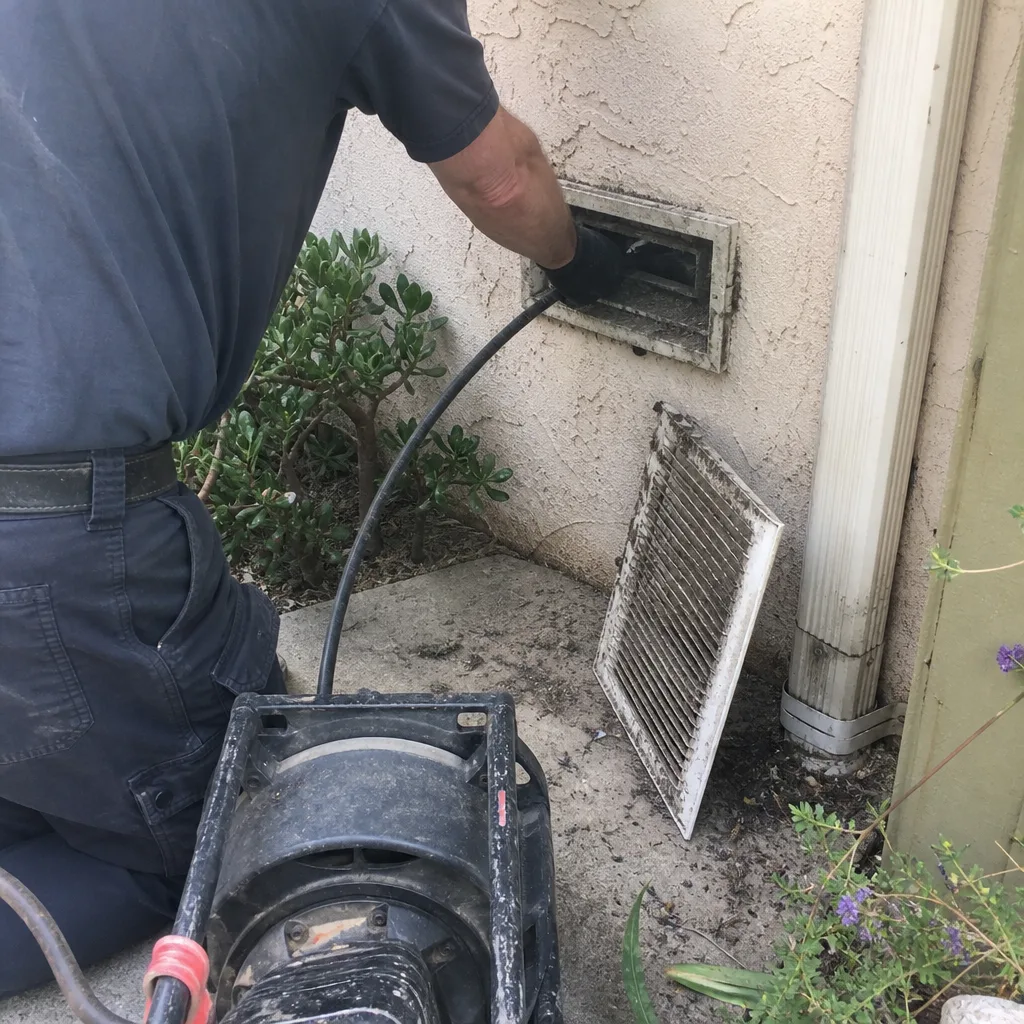 Before
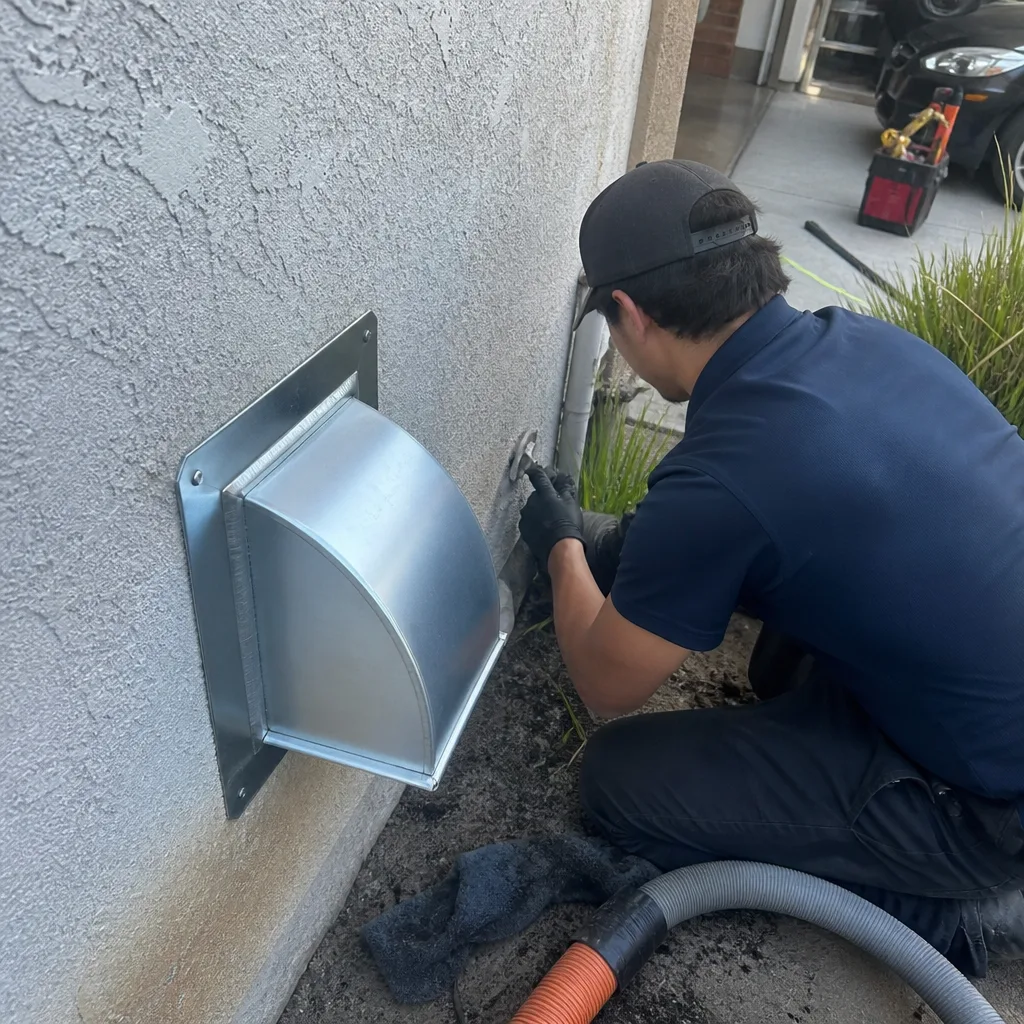 After
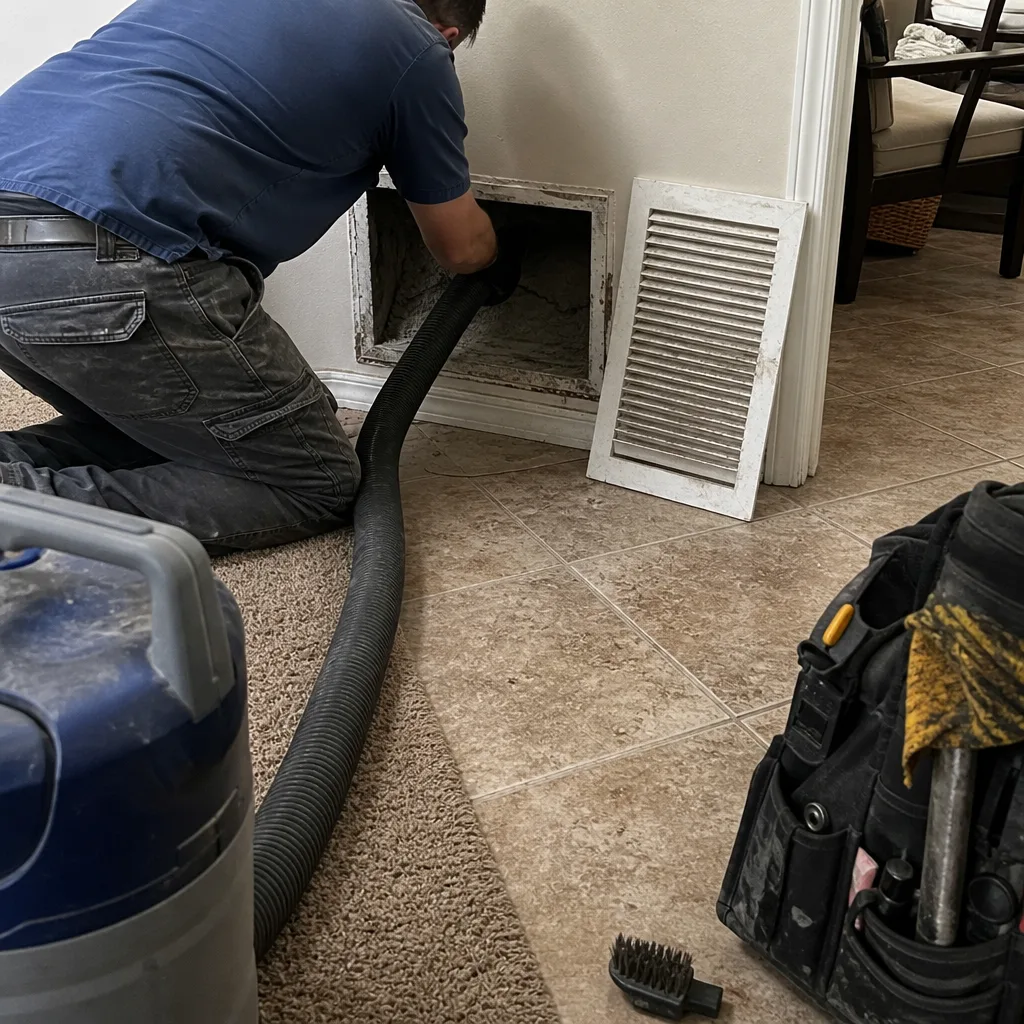 Before
 After
 Before
 After