
Last updated November 2, 2026
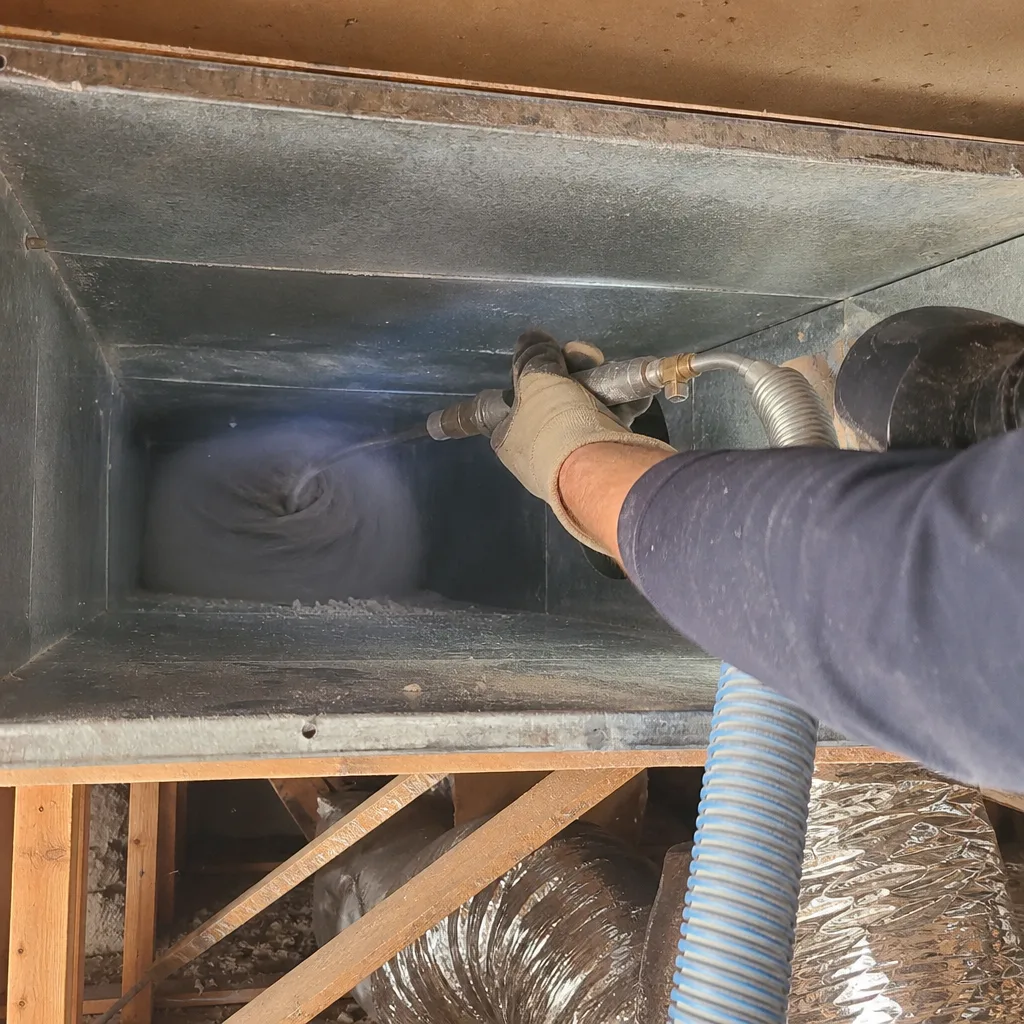
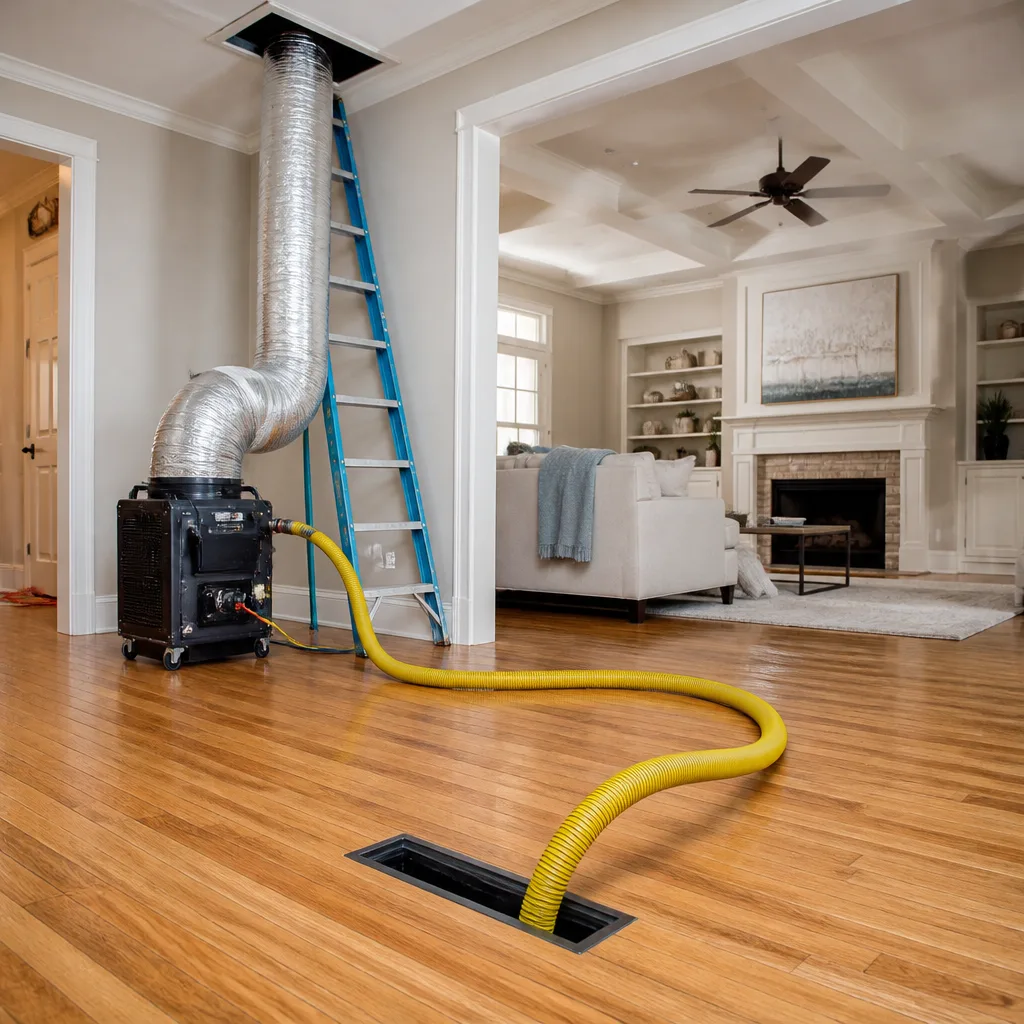 Whole-home duct cleaning
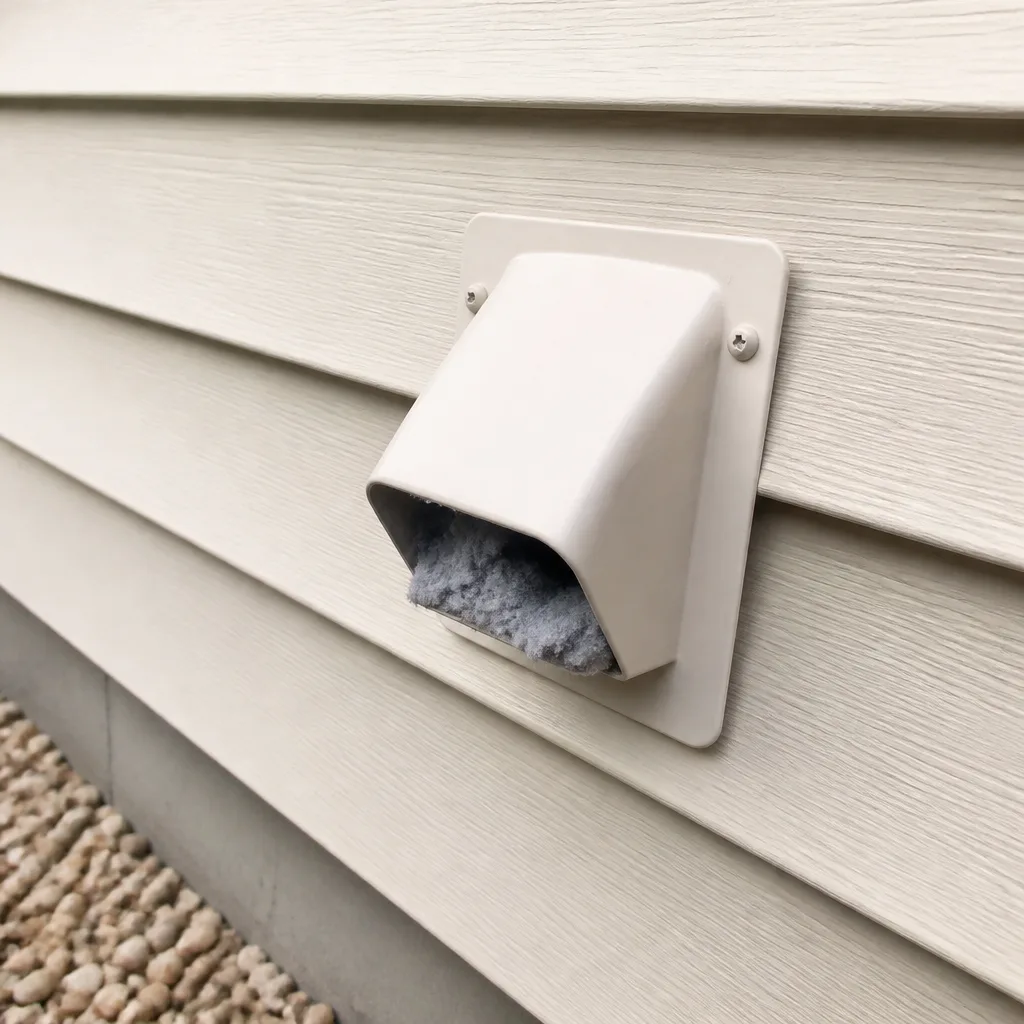 Dryer vent cleaning
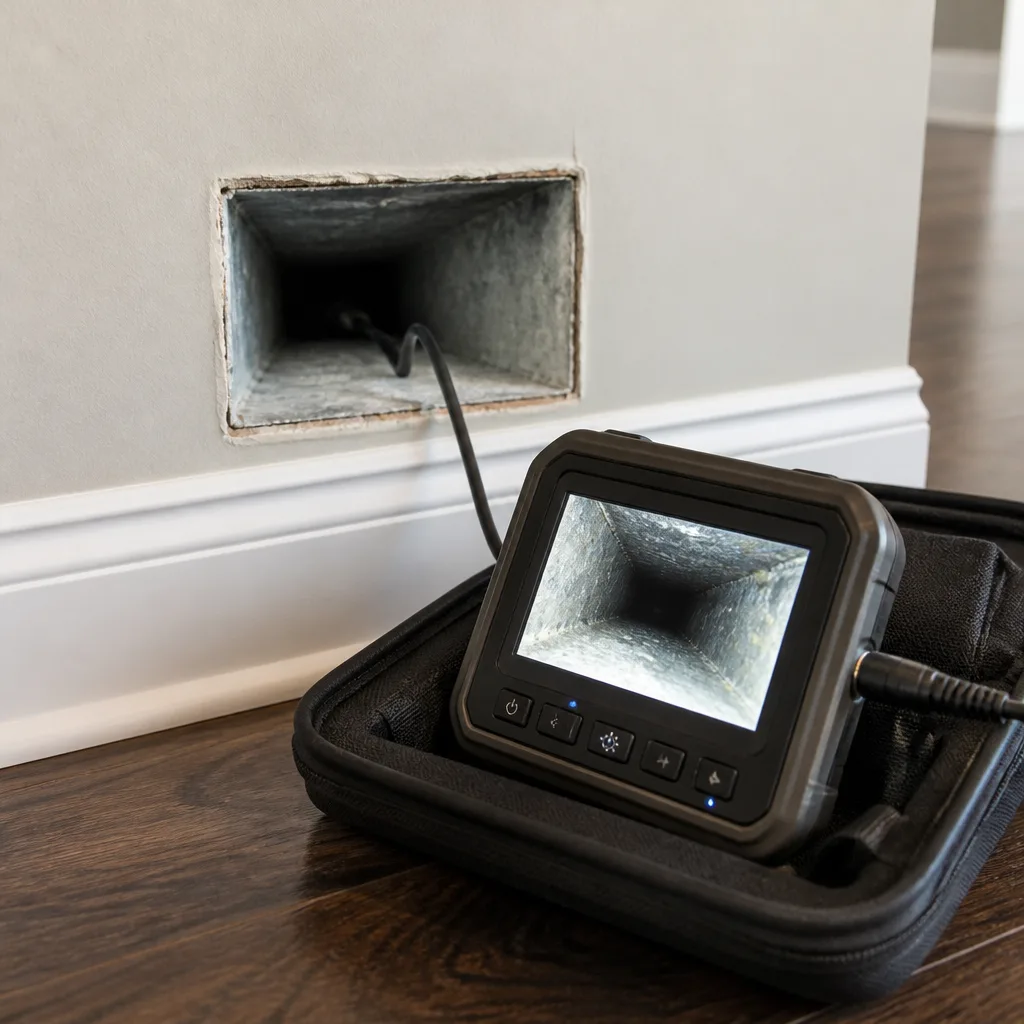 Camera inspection
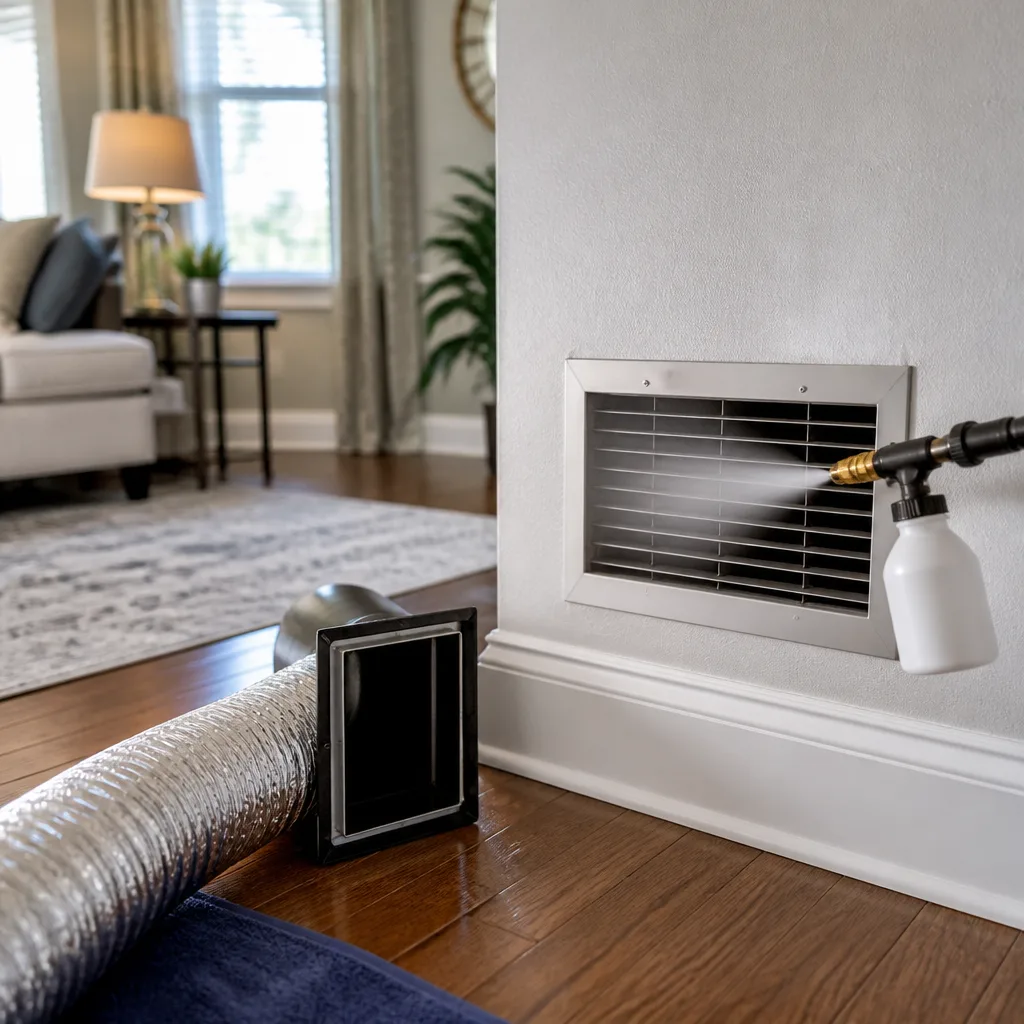 Sanitizing & deodorizing
Whole-system duct and dryer vent check with before-and-after photos - you see exactly what came out of your vents
That "$99 whole-house special" is a bait ad - the real number appears once they are in your hallway, or the "clean" is a shop-vac at the register. We photograph the inside of your ducts before and after instead.
Air Duct Cleaning Emergency Preparedness Guide for Encinitas Homes
Most Encinitas homeowners have earthquake kits and wildfire go-bags ready. Flashlights, water, batteries, important documents. But almost nobody has a plan for their duct system. That’s a gap worth closing, because the same events that knock out power and force evacuations also compromise the air pathways inside your walls. This guide covers what happens to ductwork during wildfires, earthquakes, and flooding events common to coastal North County, and what you need to do before you turn your HVAC system back on. We’re writing this from Encinitas, where we’ve inspected residential duct systems after some of the region’s most disruptive events.
Quick Answer
Our Air Duct Cleaning services after a wildfire, earthquake, or flood in Encinitas are not the same as routine maintenance cleaning. It’s a targeted contamination-removal protocol designed to keep ash, soot, dislodged debris, and moisture-driven mold from circulating through your living space. The critical action is to keep your HVAC system off until a professional inspection confirms the ductwork is safe to use.
Styles & brands we work with
- Whole-home duct cleaning
- Dryer vent cleaning
- Camera inspection
- Sanitizing & deodorizing
Table of Contents
- What Counts as a Duct Emergency in Encinitas
- Wildfire Smoke and Ash: Your 48-Hour Protocol
- Earthquake Damage Checks: What Moves and What Breaks
- Flooding and Moisture: The Mold Timeline You Can’t Ignore
- Building a Pre-Emergency Baseline: Photos and Records
- Emergency Cleaning vs. Full System Cleaning: Know the Difference
- Common Mistakes to Avoid
- When to Call a Professional
- Frequently Asked Questions
What Counts as a Duct Emergency in Encinitas
Let’s define the term before we go deeper. A duct emergency is any event that introduces foreign material into your duct system, compromises the physical integrity of the ductwork, or creates conditions where running your HVAC system would actively harm your indoor air quality. That’s a working definition we use in the field.
In Encinitas specifically, three scenarios account for nearly every emergency duct service call we’ve handled:
- Wildfire smoke and ash intrusion from fires burning in the backcountry east of Interstate 5, or the occasional vegetation fire closer to the coast. Even when flames never reach Encinitas city limits, fine particulate matter travels miles and settles into return-air registers when the system cycles.
- Earthquake-related displacement of flex duct, plenum connections, and register boots. Encinitas sits in a seismically active corridor, and the shaking doesn’t have to be severe to unseat a duct connection that’s been in place for 20 years.
- Water intrusion from coastal humidity spikes, roof leaks after heavy winter storms, or slab-level moisture wicking into return-air pathways common in older Encinitas homes built before modern vapor barriers became standard.
The common thread: in each case, the HVAC system becomes a distribution mechanism for whatever entered the ducts. That’s the danger. Not the contamination itself, but what happens when you turn the fan on.
Wildfire Smoke and Ash: Your 48-Hour Protocol
Running your HVAC system within 48 hours of a nearby wildfire, before the duct system has been inspected, turns your air handler into a particulate distribution machine. Fine ash and combustion byproducts settle into ductwork while the system is off, and the moment you restart it, that material moves through every room connected to a register.
Here’s the protocol we recommend to Encinitas homeowners after smoke events:
- Keep the system off. This means thermostat set to OFF, not just turned up or down. Fan mode ON is just as bad as cooling mode, because the blower is the distribution mechanism.
- Visually inspect return-air grilles. Most Encinitas homes have return grilles at ceiling level in hallways or at the base of walls. If you see gray or black film on the grille surface or the filter behind it, that’s ash. It means the system drew contaminated air into the ductwork.
- Replace your air filter. A standard 1-inch pleated filter is going to be saturated after a smoke event. This is a stopgap measure only. It does not address what’s already settled deeper in the duct runs.
- Do not run portable air purifiers as a substitute for duct inspection. They help with room air, but they don’t address what’s inside the duct system waiting to be distributed.
- Schedule a professional inspection before restarting. A duct specialist will assess the extent of ash penetration, check the air handler cabinet, and determine whether an emergency cleaning scope is needed.
We’ve responded to Encinitas homes after fires where ash was found a full 20 feet into duct runs, coating register boots and branch connections even when the return grille looked only lightly soiled. The visible surface is not a reliable indicator of what’s deeper in the system.
Equipment matters here. Professional duct cleaning in Encinitas uses rotary brush systems and high-powered vacuum units like the Rotobrush and Nikro equipment we run, paired with HEPA filtration from Abatement Technologies to capture dislodged particulates before they hit your living space. This is not a job for a household vacuum or a consumer-grade duct attachment.
Earthquake Damage Checks: What Moves and What Breaks
Encinitas sits about 25 miles from the Rose Canyon Fault Zone, and even small events shake homes in ways that stress flexible duct connections. Flex duct, which is the insulated, wire-reinforced tubing used in most residential systems, is designed to flex. But it’s typically secured at each end with zip ties, mastic, or both, and those connections degrade over time. Add seismic movement, and you get separations.
Here’s what to check after any noticeable earthquake, using nothing more than a flashlight and your eyes:
- Access your air handler. In most Encinitas homes this is in the garage, a hallway closet, or an attic. The air handler is the metal cabinet with the filter slot.
- Inspect the supply plenum. This is the large metal box on top of the air handler where the main supply trunk connects. Look for visible gaps between the plenum and the trunk, separated mastic sealant, or flex duct that has pulled away from the metal collar.
- Walk each register in your home. Remove the register cover (usually two screws or friction fit) and shine a light into the opening. Look at where the flex duct or rigid duct connects to the register boot. If you see exposed insulation, gaps, or the duct has slipped off the boot entirely, that’s a disconnection.
- Listen for airflow changes. If one room suddenly blows weak or noticeably strong air after an event, that’s a pressure signature of a separated duct somewhere in the branch system.
Here’s what not to do: don’t open walls, don’t cut into ceiling drywall, and don’t attempt to re-secure duct connections in inaccessible spaces. Attic and crawlspace work in Encinitas homes requires navigating tight clearances, and a separated duct connection can be under tension. The goal of your post-earthquake check is documentation and detection, not repair.
This is where Air Duct Repair in Encinitas as a distinct service matters. A cleaning-only contractor can tell you a duct is disconnected, but they can’t fix it. We inspect, clean, and repair in one visit, which means the system gets restored to functional condition rather than left with a documented problem and a referral to someone else.
Flooding and Moisture: The Mold Timeline You Can’t Ignore
Encinitas doesn’t get the kind of river flooding that inland communities face, but we get something that’s arguably harder to manage: coastal moisture, winter storm water, and slab-level water intrusion in older homes. Many Encinitas homes built from the 1970s through the early 1990s have return-air pathways routed through wall cavities under or near slab level. When water pools against the foundation or seeps through a weather-worn stucco exterior, it migrates into those cavities.
The mold timeline is the part most homeowners don’t realize. Mold spores present in most homes will colonize a damp, dark duct environment in 48 to 72 hours. Given a food source like dust or drywall paper backing, visible growth can appear within a week. By the time you smell it, you’re weeks in, and the HVAC system has been moving mold spores through the house the entire time.
If you’ve had any water event near your HVAC system, here’s the checklist:
- Check the air handler filter. If it’s wet, wrinkled, or shows water staining, water reached the unit cabinet. The blower motor and housing may have been splashed, and the interior insulation inside the cabinet will hold moisture.
- Inspect slab-level returns. If you have return grilles near the floor, remove one and use a flashlight to look down the caviity. Dark staining, visible mold, or a damp odor are all red flags.
- Pay attention to air smells. A musty smell only when the system runs is a strong indicator of microbial growth inside the ductwork. That’s different from a general mustiness that could come from a laundry room or under-sink area.
- Check flex duct insulation. External duct insulation that got wet will hold moisture for weeks. Even if the interior duct liner looks dry, saturated external insulation means the duct needs replacement, not just cleaning.
Mold remediation in ductwork is not a surface cleaning job. It requires removal of the affected materials when the growth has penetrated porous surfaces. In many cases, the right answer is cleaning combined with selective replacement of contaminated flex duct sections. That’s why our commercial-grade approach includes repair capability: the fix isn’t always a cleaning fix.
Building a Pre-Emergency Baseline: Photos and Records
The most useful thing you can do for your duct system today, while everything is working normally, is to document it. A pre-emergency baseline gives you and any contractor you hire a reference point for post-event assessment. It’s the difference between weeks of “was it always like that?” uncertainty and a same-day comparison.
Here’s what to document:
- Photograph your air handler from 4 angles. Get the front with the access panel on, the filter slot, the supply plenum connection, and the return connection. Do this now, while everything is clean and sealed.
- Photograph every return grille and one representative supply register per room. Remove the cover and shoot into the opening so you have a record of what clean ductwork looks like inside your Encinitas home.
- Note your air handler filter size and model number. Write it on the unit with a permanent marker, or save it in your phone. Post-event, you’ll want to replace this immediately, and having the size on hand saves a trip to the hardware store during a time when hardware stores are slammed.
- Record your baseline airflow. Stand at each register with the system running and note whether the airflow feels strong, moderate, or weak. After an earthquake or water event, a change from baseline is diagnostic information for your duct specialist.
- Keep a simple duct map. A rough sketch of where your duct runs are located, which rooms they serve, and where the air handler sits relative to the building envelope. For a typical Encinitas tract home, this is a 2-minute pencil sketch that becomes invaluable when you’re describing a problem over the phone.
This baseline doesn’t need to be a construction document. It’s for you, not the county. But when you call a duct professional after an event, being able to say “I have photos of the supply plenum from March, let me show you what it looked like before the shaking” moves the assessment forward faster than any amount of verbal description.
Emergency Cleaning vs. Full System Cleaning: Know the Difference
Under time pressure, this distinction gets lost. And losing it means either paying for work you don’t need or skipping work you do. Here’s how to think about it in Encinitas-specific terms.
Emergency cleaning is a targeted scope. It’s what you need after a specific event: smoke intrusion, a known duct disconnection that let building materials into the system, or visible contamination from a water event. The focus is on removing that specific contamination, verifying the system is safe to run, and getting you back to normal operation. It typically covers the supply trunk, the return system, branch runs that show visible contamination, and the air handler cabinet interior. It may not include deep cleaning of every branch line if inspection shows only localized contamination.
Full system cleaning is comprehensive. It’s the complete cleaning of every duct run, every register, the return system, the air handler, and the blower assembly. This is what you’d schedule for accumulated years of dust, debris from a remodel, or when you’ve never had the system cleaned and you’re noticing persistent dust on surfaces throughout your Encinitas home.
How to communicate the distinction when you’re calling around under stress:
- Say what happened first. “We had wildfire smoke in the house and the system was running during the worst of it.” This tells the contractor it’s an emergency scope request, not a maintenance call.
- Ask about inspection before cleaning. A credible duct specialist will want to inspect before quoting an emergency scope. Anyone who quotes a full system cleaning over the phone without knowing what’s in your ducts is selling a service, not solving a problem.
- Request scope in writing. Ask what specifically is included: which duct runs, whether the blower assembly is included, whether the return system is full-length or just the trunk. A written scope is your protection against scope creep in both directions.
When we respond to an emergency call in Encinitas, our first move is almost always an inspection camera through the return and supply plenums. That tells us whether we’re looking at a localized contamination event or a systemic one, and we scope the work based on what we see, not what we assume.
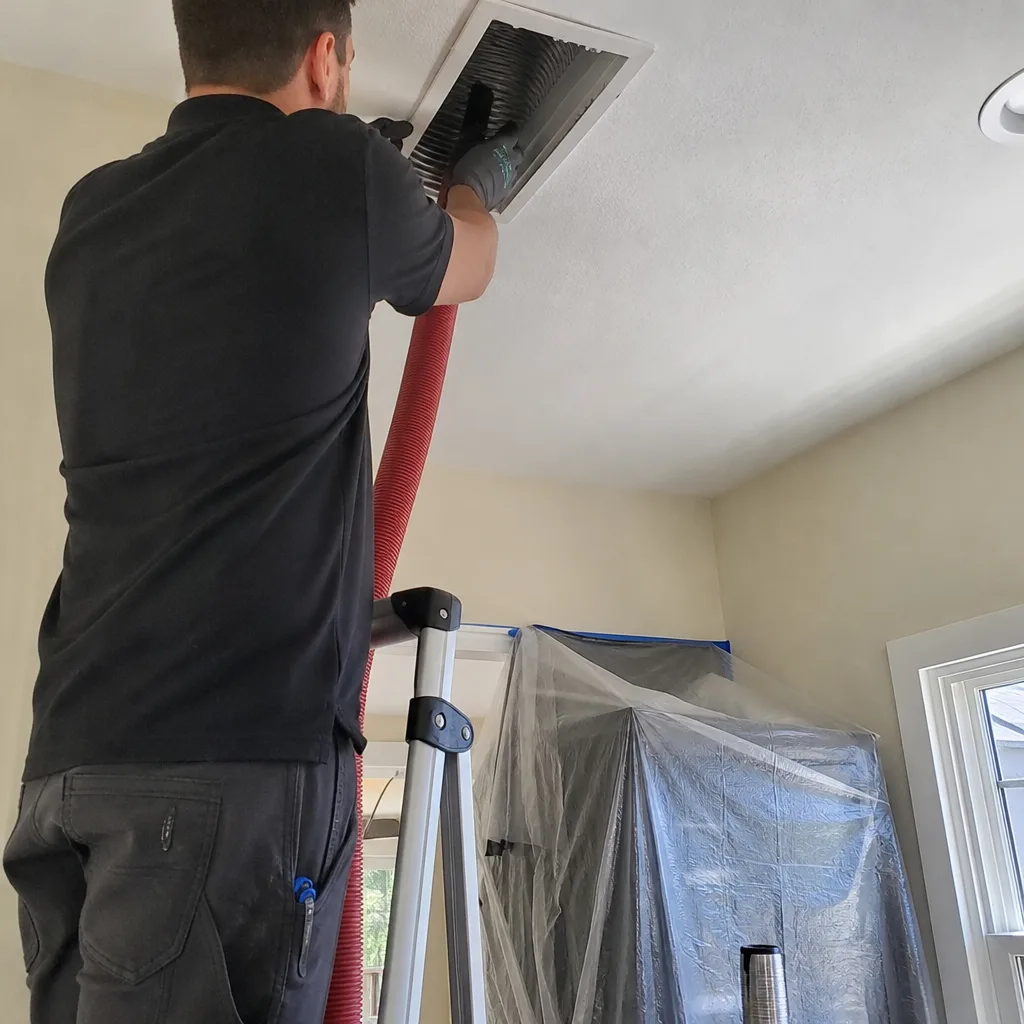
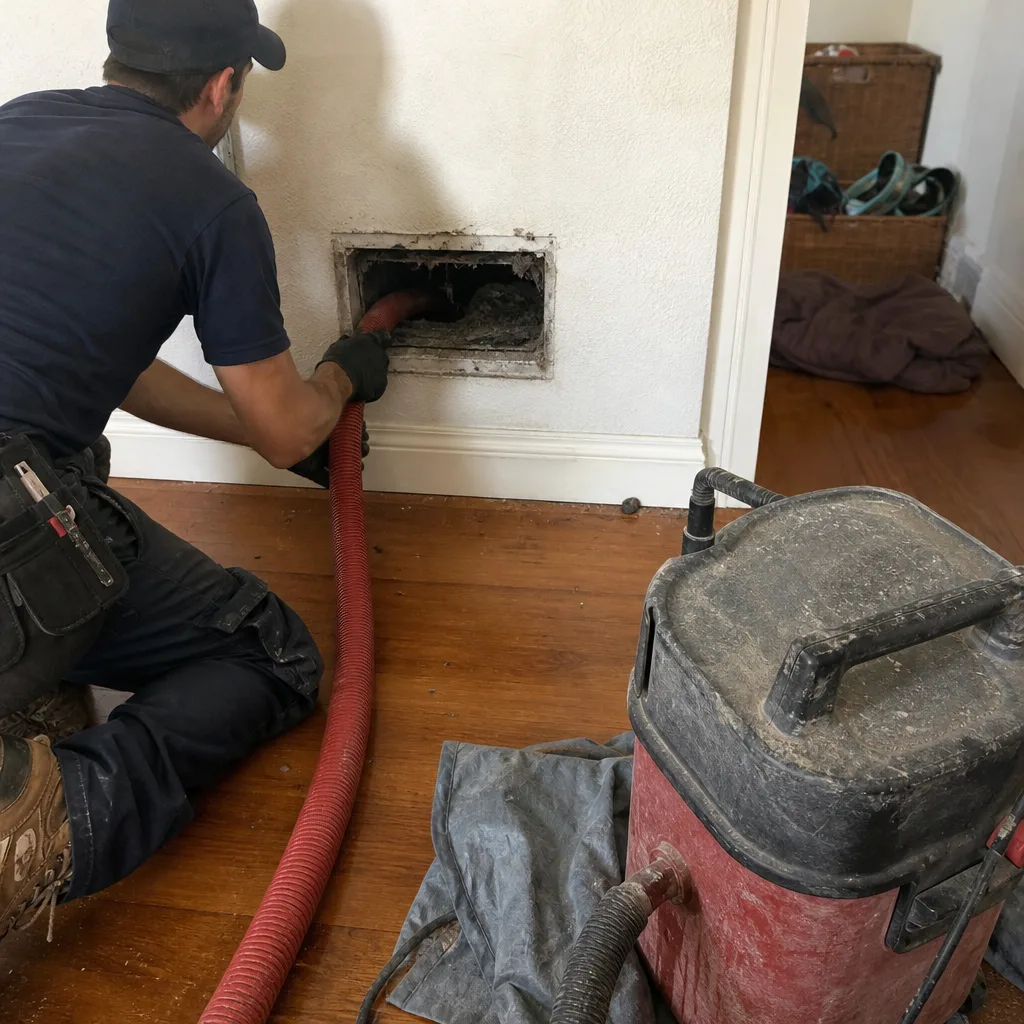
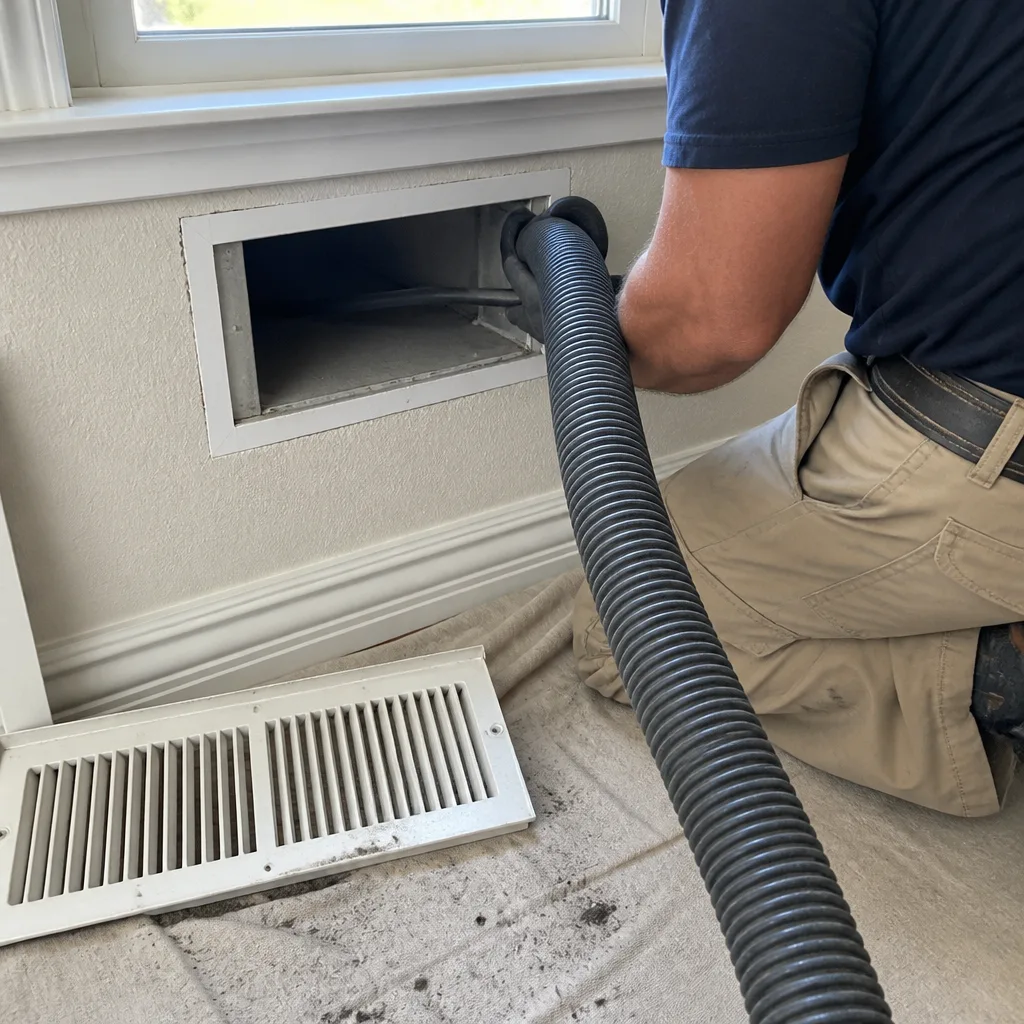
See the difference
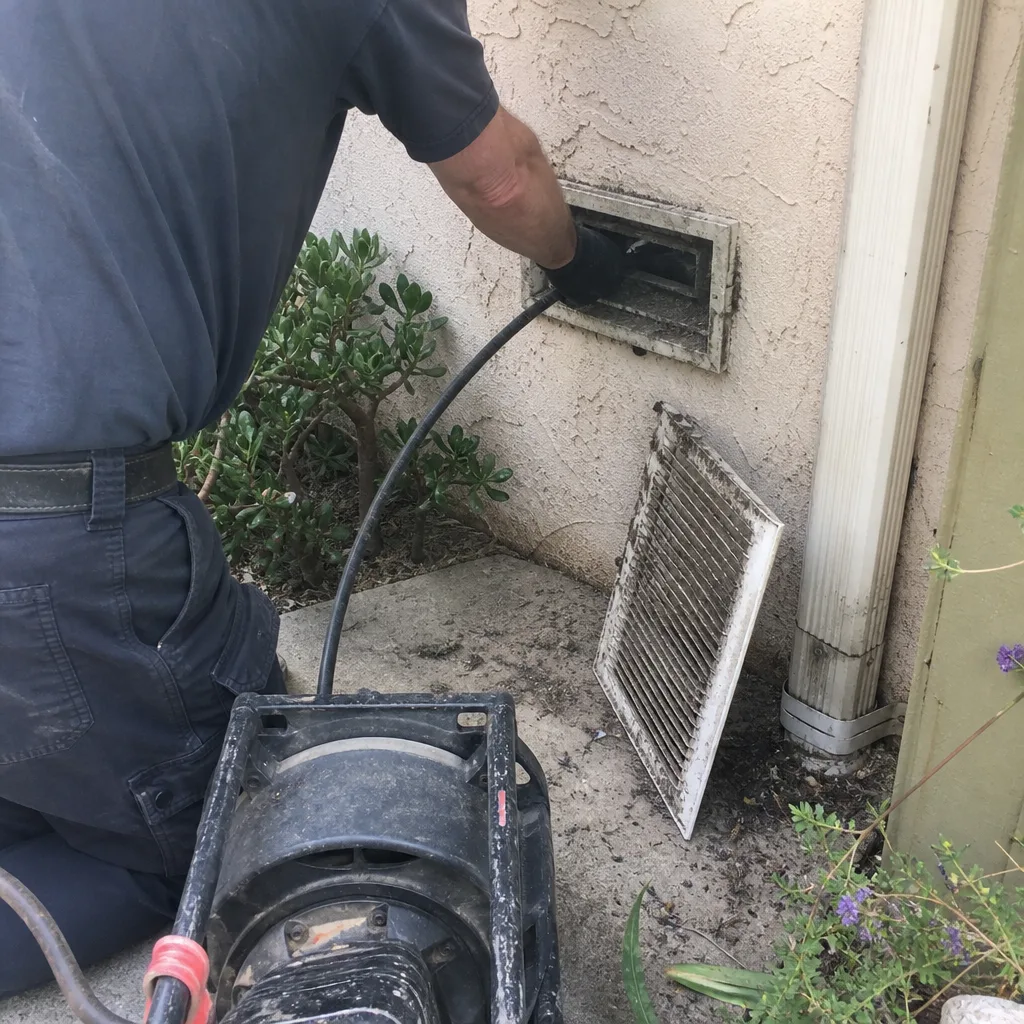 Before
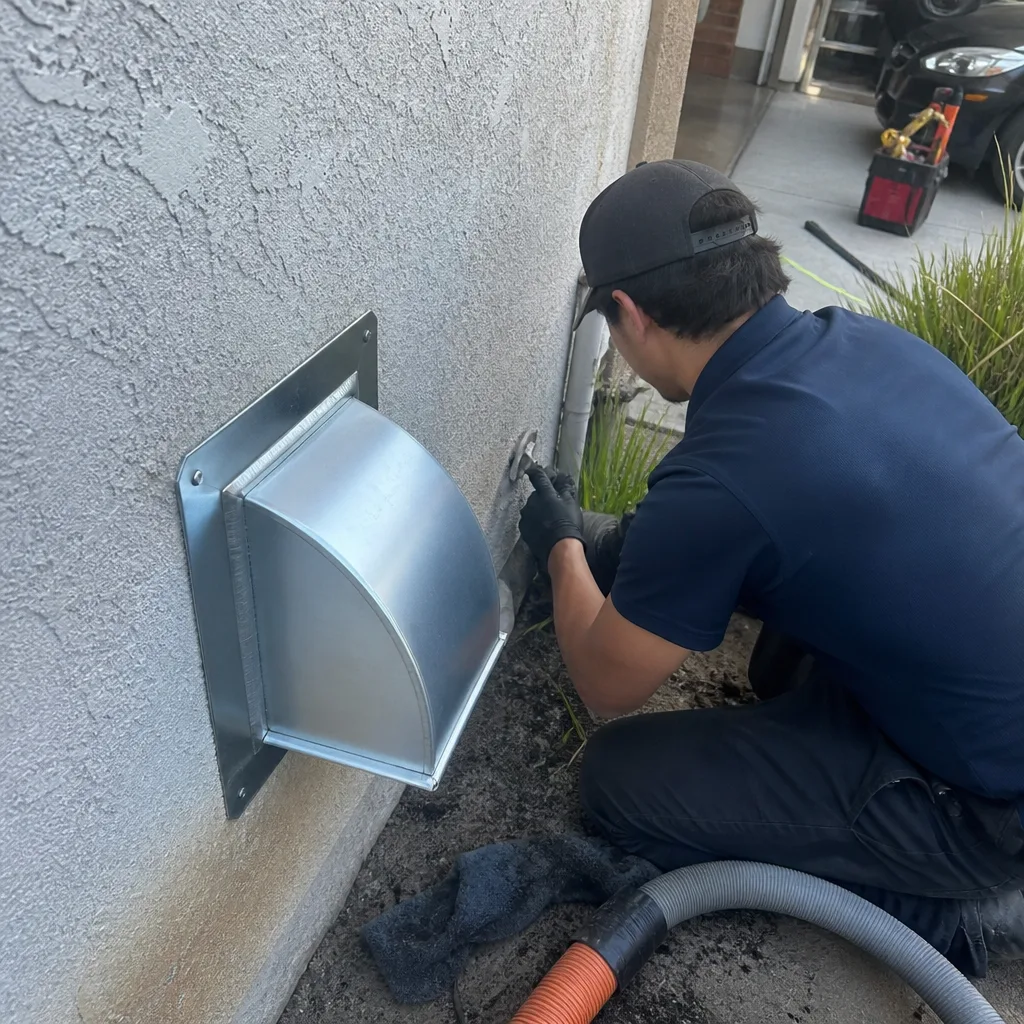 After
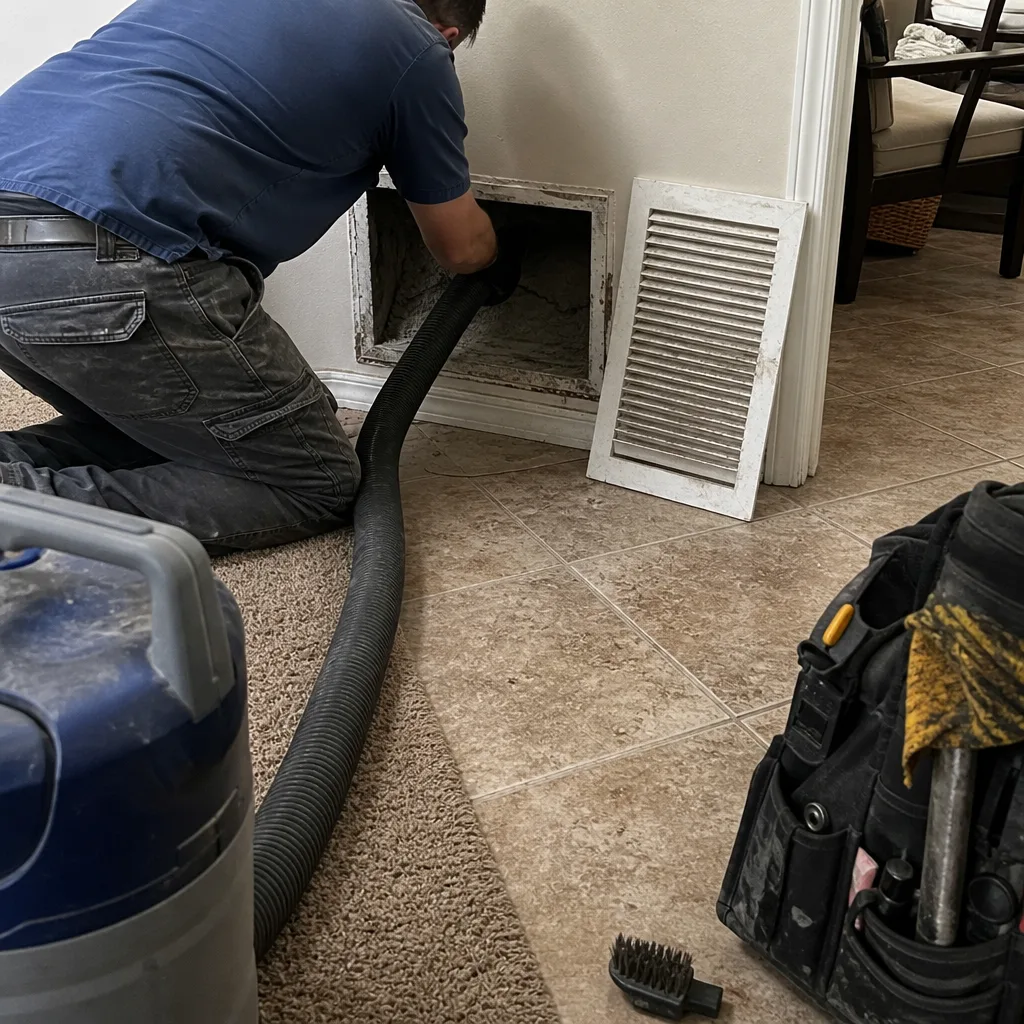 Before
 After
 Before
 After
Products and Equipment That Actually Make a Difference
Let’s talk about what professional-grade means in this context, because it’s the difference between a real fix and a surface-level show. The duct cleaning equipment used by our technicians includes Rotobrush rotary brush systems and Nikro vacuum equipment. These are not consumer tools. Rotobrush systems use a powered brush on a flexible shaft that scrubs the duct interior while the vacuum simultaneously removes debris. Nikro equipment brings commercial vacuum power that can handle full residential duct runs without losing suction halfway through.
On the air filtration side, Abatement Technologies units provide HEPA filtration during the cleaning process. In an emergency post-wildfire scenario in Encinitas, this matters: you’re removing ash and fine particulate, and you don’t want that material resuspended into the house while you’re working. The HEPA capture is what keeps the cleaning from becoming a redistribution event.
After the cleaning, if air quality is an ongoing concern, we can install products from Honeywell and Aprilaire. These aren’t duct cleaning tools, they’re indoor air quality systems: whole-home filtration, UV treatment, humidity management. For Encinitas homeowners dealing with coastal moisture or persistent allergen loads, these long-term solutions sit on top of a properly cleaned and sealed duct system.
The reason we bring this up in an emergency-preparedness guide is that emergencies expose weak points in your home’s air infrastructure. The right time to think about upgrading filtration is after a professional has inspected and cleaned the system, not while ash is still settling. Sequence matters.
Common Mistakes to Avoid
- Running the system to “clear the smoke out.” Your HVAC system is not an air purifier. Running it after smoke intrusion distributes ash through every register in your Encinitas home, including into rooms that remained sealed during the worst of the event.
- Replacing the filter and calling it done. A clean filter traps what’s blowing through the blower, but it does nothing for particulate already settled in duct runs, register boots, or the return system. The filter is a bandage, not a treatment.
- Skipping the post-earthquake connection check. Small duct disconnections don’t announce themselves. You may not notice a reduction in airflow to one bathroom register until weeks later, and by then, that branch run has been pushing conditioned air into your attic or wall cavity the entire time.
- Cleaning wet ductwork without addressing the moisture source. If water got into your ducts from a slab leak or roof issue, cleaning is temporary. The moisture source has to be fixed first, or you’ll be scheduling the same cleaning in six months. In Encinitas coastal homes, this often means working with a roofer or foundation specialist before the ducts get touched.
- Treating an emergency cleaning as a maintenance cleaning. The scopes are different, the pricing is different, and the urgency is different. If you call and ask for “air duct cleaning” without explaining the wildfire or flood context, you may get a maintenance quote when you need an emergency scope, or vice versa.
- Waiting to document damage. Insurance claims after wildfire smoke events move faster when you have photos of your HVAC system taken before the event and immediately after. Baseline photos, as described above, are your documentation.
- Hiring based on price alone during an emergency. Emergency demand attracts contractors who aren’t duct specialists. Ask what equipment they use, whether they inspect before they clean, and whether they can repair disconnected or damaged ductwork on the spot. The answers tell you who you’re really dealing with.
When to Call a Professional
After a wildfire smoke event where you can see ash on return grilles or smell smoke inside your Encinitas home, call before you reactivate the system. After an earthquake that was strong enough to rattle dishes, the flex duct connections are worth a professional eyes-on check, especially in older homes where mastic has hardened and zip ties have aged. After any water event that touched the air handler or the lower sections of return ductwork, professional inspection is the difference between catching mold at 72 hours and discovering it at 72 days. Duct Cleaning Encinitas offers free estimates in Encinitas. Call (866) 596-9358 to schedule an inspection and scope review.
Frequently Asked Questions
Ideally within 48 to 72 hours of the smoke clearing, and definitely before you run your HVAC system again. Ash that settles into ductwork becomes airborne and gets distributed the moment the blower runs, so the inspection should happen while the system is still off. If your system was running during the peak smoke period, treat it as a priority inspection, not a wait-and-see situation.
It depends on what the inspection finds. Cleaning addresses contamination, not structure. If flex duct has pulled off a register boot or a plenum connection, that section needs to be re-secured or replaced, not cleaned. Our approach in Encinitas is to inspect first, identify what moved, and then do the cleaning and the Air Duct Repair in Encinitas in one visit so the system is returned to functional condition without a second appointment.
A wet or water-stained air handler filter is the clearest sign. After that, check slab-level return grilles for dark staining or a damp odor when the system cycles. In Encinitas homes with slab return pathways, water intrusion often shows up as a persistent musty smell that intensifies when the blower runs. If you’ve had any flooding near the HVAC system, assume moisture entered until inspection proves otherwise.
Emergency cleaning scopes vary based on the size of the home, the number of duct runs affected, and whether repair work is needed alongside the cleaning. A full emergency response for a typical Encinitas single-family home, including inspection, targeted or full cleaning, and verification, generally runs higher than a maintenance cleaning because of the inspection time and the specialized equipment required. Call (866) 596-9358 for a free estimate based on your specific situation.
No. Your household vacuum cannot reach more than a few inches into a duct run, and agitation without proper capture makes the particulate problem worse. Post-wildfire duct contamination in Encinitas requires professional rotary brush equipment and HEPA filtration to capture ash rather than resuspend it. This is not a DIY job, and attempting it rarely does anything beyond making the visible register face look cleaner while leaving the duct interior untouched.
They address completely different systems. Air duct cleaning is for your HVAC distribution system: supply ducts, return ducts, the air handler, and register boots. Dryer Vent Cleaning in Encinitas addresses the vent line that runs from your clothes dryer to the exterior of your home, which has its own fire risk profile. After a wildfire event, both may need attention, but they are separate services with separate scopes.
After the ductwork has been professionally inspected and cleaned, installing a whole-home filtration system from Honeywell or Aprilaire can be a sensible long-term upgrade. The key sequencing: filtration systems treat air passing through them, but they don’t clean contaminated ductwork. Get the ducts addressed first, then evaluate whether additional filtration would serve your Encinitas home’s ongoing air quality needs.
For most coastal Encinitas homes, a professional inspection every 3 to 5 years is a reasonable interval, with more frequent checks if you’ve had smoke events, water intrusion, major remodels, or if anyone in the household has significant respiratory sensitivities. The goal of routine inspection is finding small problems before they become emergency scopes. Our Air Duct Cleaning in Encinitas service includes inspection as part of the scope, so you’re not guessing about what’s inside your ductwork.
The Bottom Line
Encinitas homeowners who prepare for wildfires, earthquakes, and water events by thinking about their duct systems are ahead of the curve. For more guides & resources on protecting your indoor air quality, explore our blog. The HVAC system is the most overlooked distribution mechanism in a disaster recovery scenario, and the difference between a targeted emergency cleaning and a full-blown indoor air quality crisis often comes down to one decision: whether the system got turned back on before inspection. Keep it off after a smoke event. Check connections after shaking. Document your baseline now. And when you need a professional, call a duct specialist, not a general contractor who cleans ducts as a sideline.
For immediate assistance with a duct emergency or to schedule a pre-event inspection, call Duct Cleaning Encinitas at (866) 596-9358. We’ll assess your system, scope the work accurately, and get your home’s air moving safely again.
Written by the team at Duct Cleaning Encinitas home, serving Encinitas since 2017.