
Last updated November 2, 2026
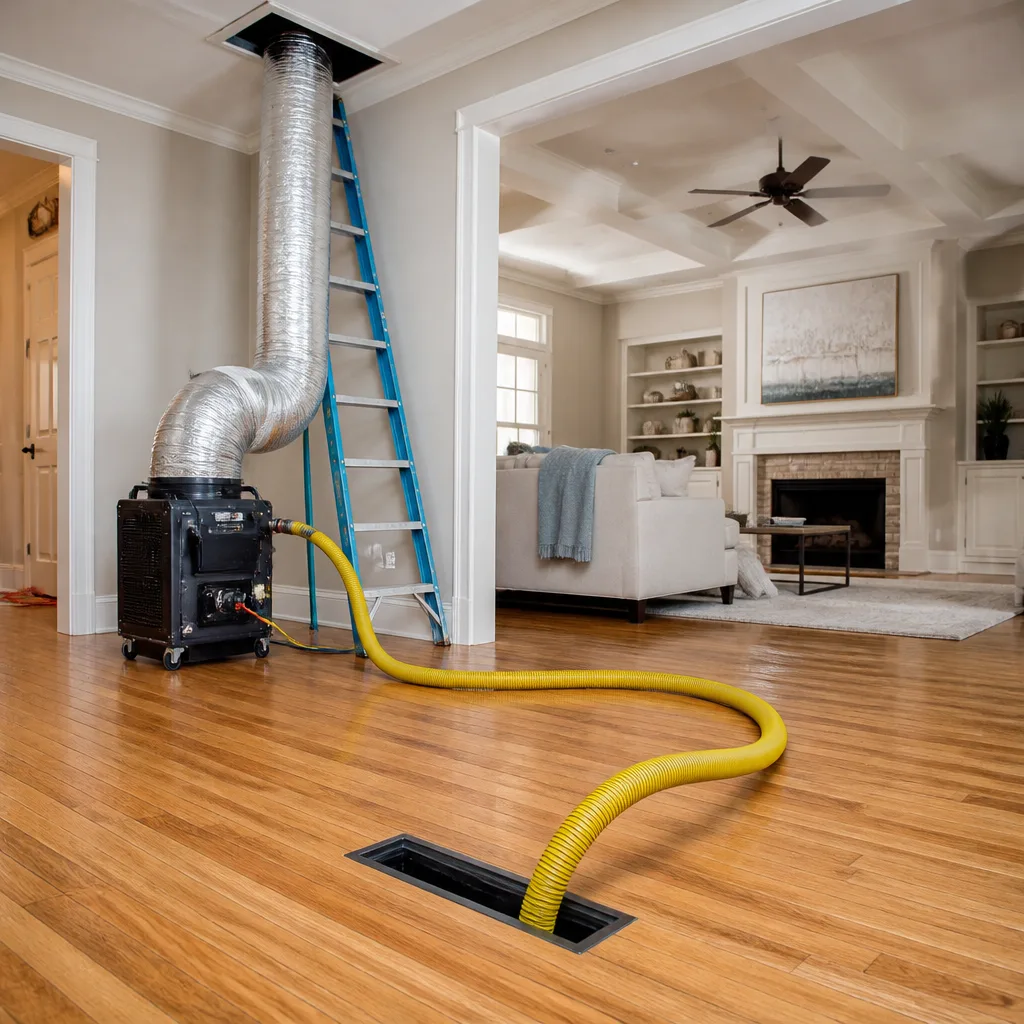 Whole-home duct cleaning
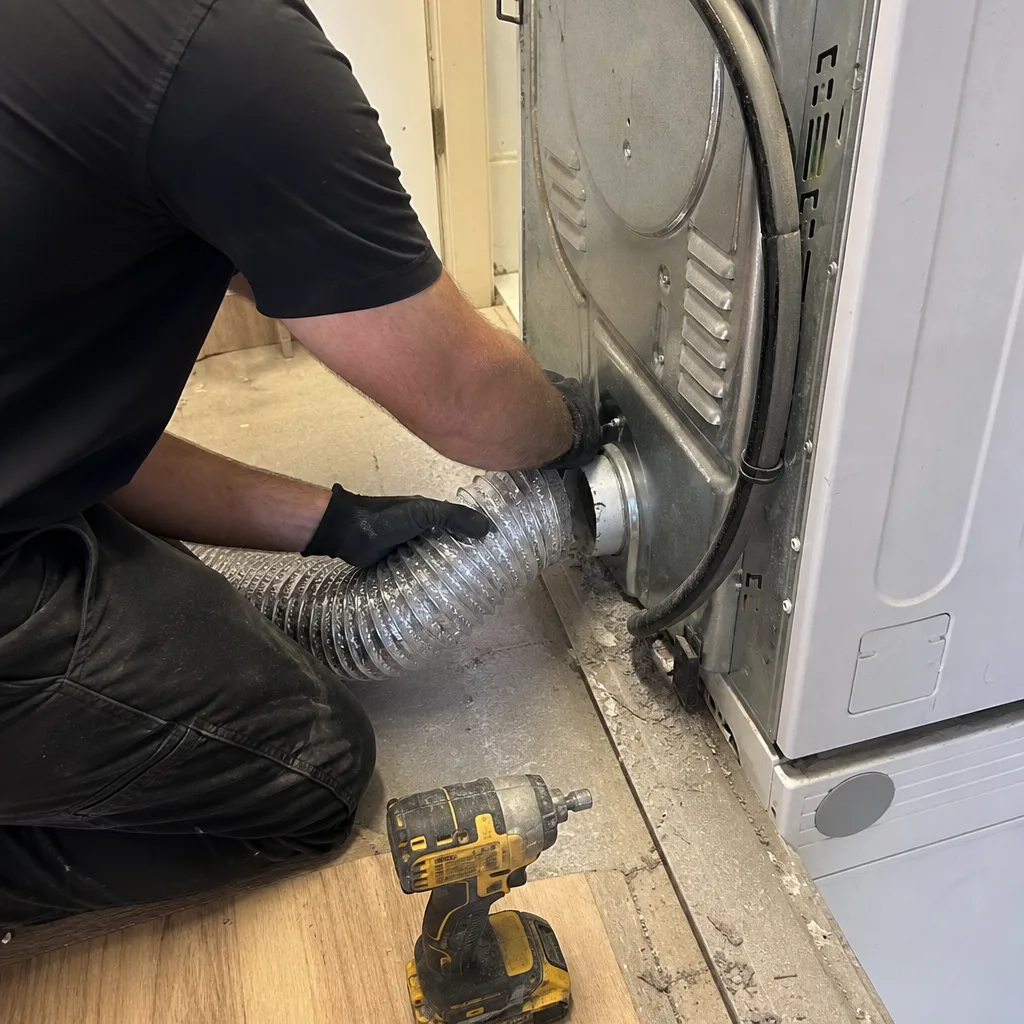
 Dryer vent cleaning
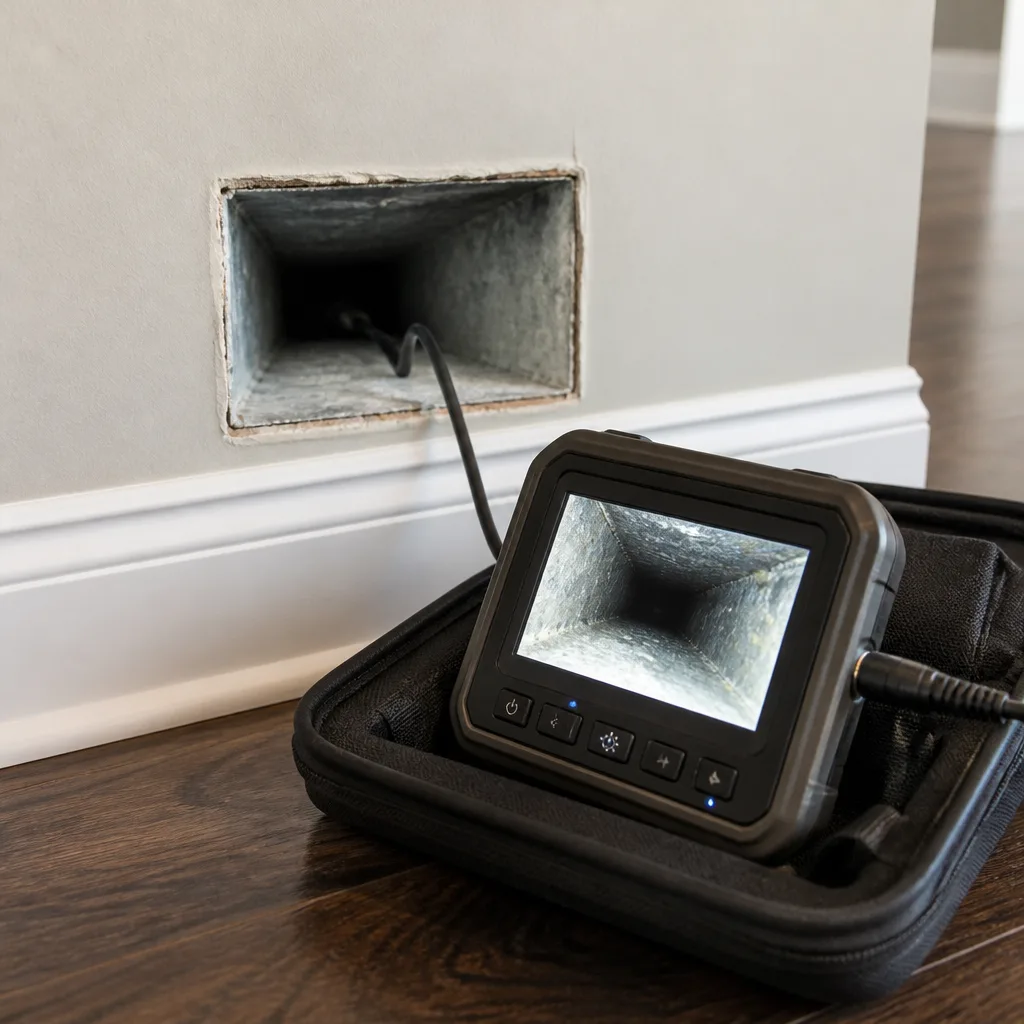 Camera inspection
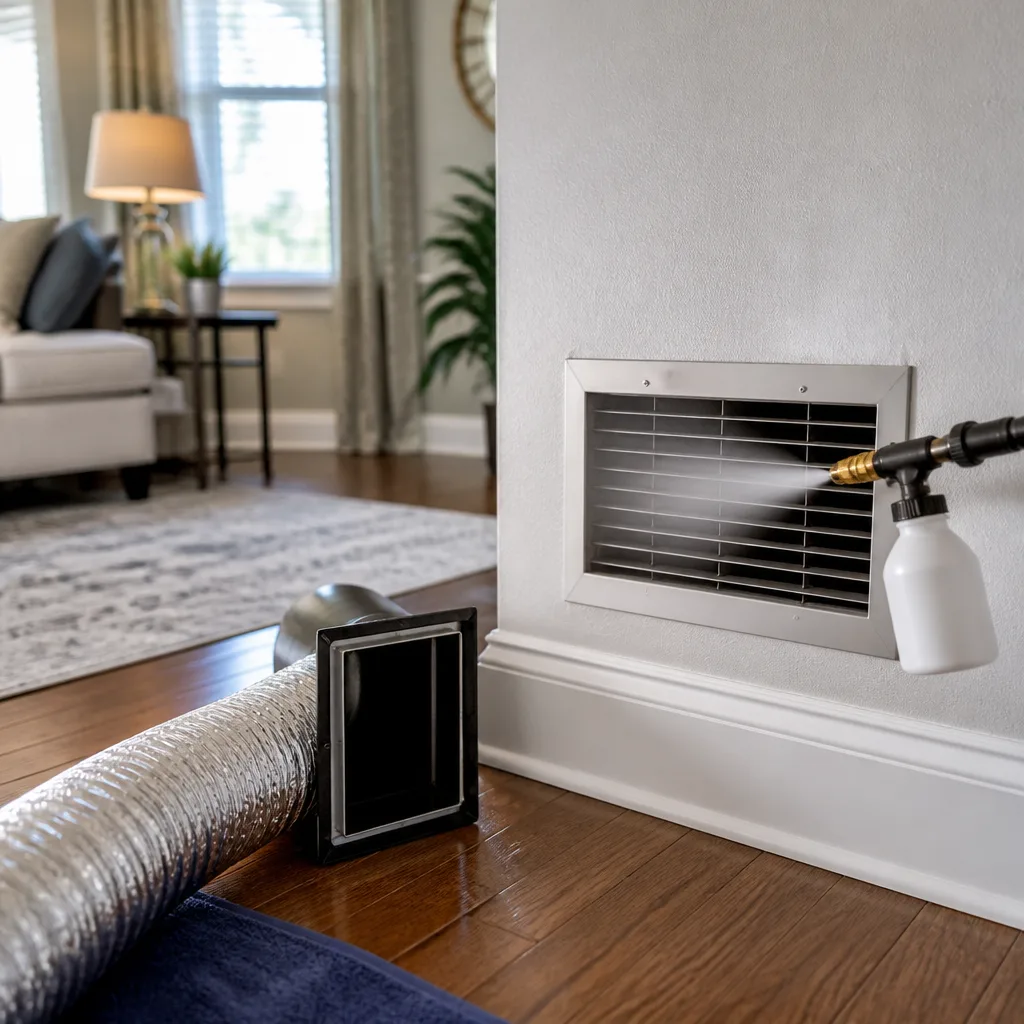 Sanitizing & deodorizing
Whole-system duct and dryer vent check with before-and-after photos - you see exactly what came out of your vents
That "$99 whole-house special" is a bait ad - the real number appears once they are in your hallway, or the "clean" is a shop-vac at the register. We photograph the inside of your ducts before and after instead.
DIY vs Professional Air Duct Cleaning: The Encinitas Homeowner’s Decision Guide
A 5-horsepower shop-vac generates roughly 100 cubic feet per minute (CFM) of suction. A truck-mounted professional duct cleaning unit generates 3,000 to 5,000 CFM. That 30-to-50x gap is the entire DIY conversation in one sentence. If you’re a homeowner in Encinitas trying to decide whether to tackle your air ducts yourself or hire a specialist, our Air Duct Cleaning services guide gives you the straight answer: where the DIY line actually ends, what you can legitimately do yourself, and why the physics of ductwork makes professional equipment a different operation entirely, not just a more expensive version of the same task.
Styles & brands we work with
- Whole-home duct cleaning
- Dryer vent cleaning
- Camera inspection
- Sanitizing & deodorizing
Quick Answer
For surface-level maintenance like register cleaning and filter replacement, DIY works fine and we encourage it. For actual interior duct cleaning, the negative pressure required to extract compacted debris from a flex-duct system is not achievable with any consumer-grade vacuum, so professional cleaning is the only method that actually removes what’s inside the ducts rather than redistributing it. In Encinitas specifically, where coastal humidity compacts dust into a dense paste inside ductwork during late summer, the case for professional equipment is stronger than in drier inland climates. For Seasonal Air Duct Cleaning Care for Encinitas: Year-Round Homeowner’s Guide tips, see our seasonal maintenance resource.
Table of Contents
- The Physics of Duct Cleaning: Why CFM and Static Pressure Decide Everything
- What Homeowners Can Legitimately Do Themselves
- The DIY Risk Calculus: Three Ways Amateur Cleaning Backfires
- When DIY Is Genuinely the Right Call in Encinitas
- The DIY Pre-Inspection Protocol: Gather Intel Before You Spend a Dime
- Equipment Matters: What Professional Gear Actually Does Differently
- Encinitas-Specific Factors That Shift the Cost-Benefit Math
- Common Mistakes to Avoid
- When to Call a Professional
- Frequently Asked Questions
- The Bottom Line
The Physics of Duct Cleaning: Why CFM and Static Pressure Decide Everything
Here’s the honest framing most DIY duct cleaning conversations skip: the question is not whether you’re capable of running a vacuum hose into a vent. The question is whether any machine you can rent or buy can generate the airflow and negative pressure needed to dislodge and extract debris that has been compacted into the walls of a flex-duct system over years, sometimes decades.
Duct cleaning operates on two physical principles: velocity and extraction. Velocity is the speed of air moving across a surface, measured in cubic feet per minute. Extraction is the removal of loosened debris via negative pressure, measured in inches of water column. Both need to hit a threshold, and both need to happen simultaneously.
A consumer shop-vac, even a robust one, produces roughly 80 to 120 CFM at the end of a 25-foot hose. Once you account for hose friction, bends, and the sheer length of residential duct runs, effective airflow at the point of contact drops significantly. A professional truck-mounted unit operates at 3,000 to 5,000 CFM, sometimes higher. That airflow creates the negative pressure required to hold a flex-duct system open while an agitation device works the interior walls.
Here’s what that means in practical terms. In an Encinitas home with standard 6-inch flex ducts running 20 to 40 feet from the air handler to each register, the debris inside is not loose dust sitting on the bottom of the duct. It is a layer that has been pressed and re-pressed by repeated heating and cooling cycles, then glued in place by the marine-layer humidity that rolls through coastal North County every summer night. That debris behaves more like damp clay than like loose dust. A brush rotating at the end of a consumer drill can scratch at it. A professional rotary brush system running at high RPM with simultaneous negative-pressure extraction can peel it off and remove it from the system entirely.
The gap between those two outcomes is not effort. It is equipment.
What Homeowners Can Legitimately Do Themselves
We are not here to tell you that every aspect of duct care requires a specialist. That would be dishonest, and it would make us the kind of company we have no interest in being. There is a meaningful set of tasks that any Encinitas homeowner can and should do themselves, and doing them well extends the life of a professional cleaning and keeps your system running cleaner between visits.
Register and grille cleaning. The metal or plastic covers where air enters your rooms catch a surprising amount of dust, pet hair, and cooking residue. Remove each register, wash it in warm soapy water, dry it thoroughly, and reinstall it. Do this quarterly. It takes an afternoon and it makes a visible difference.
Filter replacement. This is the single highest-leverage DIY task in indoor air quality. In Encinitas, where the coastal climate means windows are open much of the year and the system pulls in whatever is in the outside air, a filter should be checked monthly during high-use seasons and replaced at least every 60 to 90 days. Use a MERV 8 to 11 filter unless your system manufacturer specifies otherwise. Higher MERV ratings restrict airflow and can strain older air handlers.
Visual inspection with a phone camera. You can remove a register cover and slide a smartphone camera into the opening, using the flash to photograph the duct interior. This will not give you a complete picture of the system, but it will show you the first few feet of ductwork, which is where the most visible accumulation occurs. If you’re wondering whether your ducts are dirty, this 30-second check often answers the question.
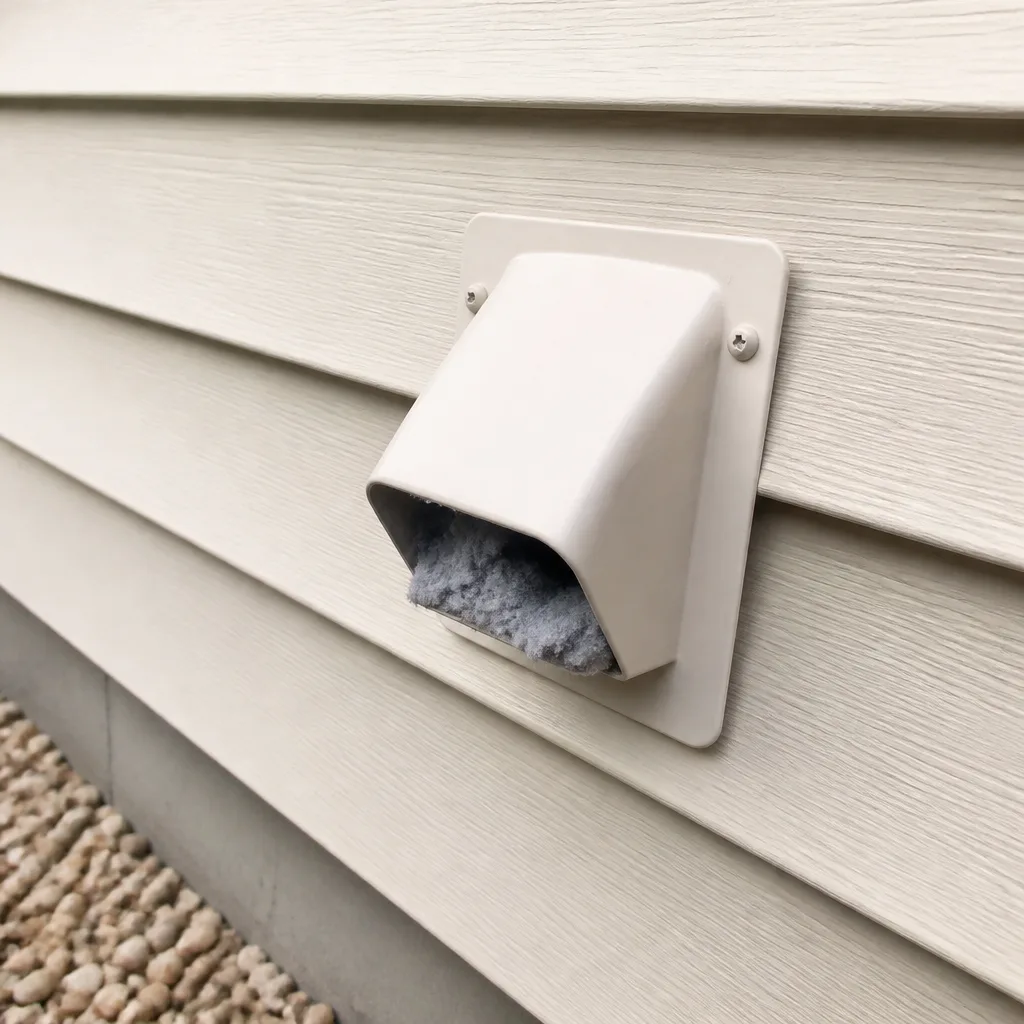
Dryer vent exterior check. Walk outside and look at the dryer vent exhaust. Is the flap opening when the dryer runs? Is there visible lint buildup around the opening? Does the air flow feel strong at the exterior vent while the dryer is on? Any of these observations is useful, both for your own safety awareness and for any professional you eventually call. Dryer vent cleaning is a dedicated service at Dryer Vent Cleaning in Encinitas, and a quick exterior check tells you whether that conversation is urgent.
Coil inspection on accessible mini-splits. If your Encinitas home has a ductless mini-split system, the indoor air handler’s coils and blower wheel are often accessible by lifting the front panel. These surfaces can be carefully wiped with a damp microfiber cloth. More on this in the section below, because mini-splits are the one case where DIY genuinely overlaps with professional outcomes.
These tasks all share a common thread: they address accessible surfaces. No specialty equipment, no negative pressure requirements, no risk of damaging the system. That’s the honest line. Everything on the accessible side is yours. Everything inside the sealed duct run belongs to equipment capable of extraction.
The DIY Risk Calculus: Three Ways Amateur Cleaning Backfires
The appeal of DIY duct cleaning is obvious: the equipment you already own, the weekend you already have, and the feeling that you’re doing something proactive. The problem is that ductwork is a connected system, not a container. Push on one part of it and the rest responds.
Risk one: pushing debris deeper into the system. When you insert a shop-vac hose or a consumer-grade brush into a register opening, what you are actually doing is loosening debris at the accessible end of the duct run and, in the absence of sufficient suction to extract it, driving it further down the line toward the air handler. The visible result looks like progress: the first few feet of duct appear cleaner. The systemwide result is a layer of debris now packed against the air handler cabinet, where it is harder to access and more likely to be pulled into the blower motor and evaporator coil.
Risk two: dislodging flex-duct connections. Residential duct systems in Encinitas are predominantly flex duct: a wire coil wrapped in insulation and an outer vapor barrier. The connections at the register boot and at the plenum are held with zip ties or band clamps. When pressure is applied from the wrong direction, particularly with a rigid tool pushed deep into the duct, those connections can pop loose. A disconnected duct that leaks conditioned air into an attic or crawlspace is a worse problem than a dirty duct, and it will not announce itself. It just silently dumps your conditioned air into unconditioned space for months until a utility bill or a hot room prompts investigation.
Risk three: voiding manufacturer warranties. Most air handler and ductwork manufacturers include language in their warranty documentation that covers defects in materials and workmanship, not damage caused by consumer maintenance. When a blower motor fails because it ingested debris that was loosened but never extracted, the repair can be classified as consequential damage. That classification puts the full replacement cost on the homeowner. We have replaced air handlers in Encinitas homes where the failure was traceable to amateur cleaning attempts that left debris inside the cabinet. It is an expensive way to save a few hundred dollars.
None of this is meant as scare tactics. These are observed outcomes from years of working inside duct systems in coastal North County. The risk calculus is simple: the downside of a failed DIY attempt is repair work that costs more than the professional cleaning would have in the first place. When that happens, the repair is a structural fix, not a surface clean. Air Duct Repair in Encinitas is a service we offer specifically because compromised ductwork is a common finding, and because a disconnected or deteriorated duct undoes everything a cleaning was meant to accomplish.
When DIY Is Genuinely the Right Call in Encinitas
There is one scenario where the physics argument flips and DIY becomes the genuinely appropriate choice: single-room ductless mini-split systems. These are common in Encinitas, particularly in older beach cottages and ADU conversions where adding central ductwork was never practical.
A mini-split system has no duct network. The indoor unit, usually mounted high on a wall, contains a blower wheel, a coil, and a washable filter, all behind an easily removable front panel. Everything that would be “inside the ducts” in a central system is inside a cabinet you can open with your hands. The blower wheel accumulates a crust of dust and moisture that reduces airflow and creates the musty odor many people associate with window units. That wheel can be cleaned with coil cleaner, a soft brush, and patience. No negative pressure required, because the debris is accessible and removable in place.
The honest caveat: mini-split blower wheel cleaning is tedious, and it requires care not to bend the wheel’s fins or flood the electronics. But it is a legitimate DIY task in a way that central duct cleaning is not. If you have a central system in one part of the house and a mini-split in another, you can handle the mini-split yourself and call in a specialist for the central ducts. That’s a smart division of labor, not a failure of effort.
There is a second, narrower DIY-appropriate case: a system that has been professionally cleaned within the last 12 to 18 months and is simply collecting surface dust. In that scenario, replacing filters, cleaning registers, and wiping accessible surfaces is maintenance, not cleaning. The interior duct surfaces have not had time to accumulate the compacted layer that requires extraction. Extending the interval between professional cleanings through consistent DIY surface maintenance is a legitimate cost-reduction strategy.
The DIY Pre-Inspection Protocol: Gather Intel Before You Spend a Dime
The most valuable DIY contribution to any duct cleaning is not the cleaning itself. It is the pre-inspection. A homeowner who can describe what they are seeing, smelling, and hearing gives a professional a targeted starting point, which makes the eventual cleaning more efficient and lets the technician focus attention where the system actually needs it.
Here is a step-by-step pre-inspection protocol any Encinitas homeowner can complete in under an hour. Do this before you call anyone.
- Remove each register cover and photograph the opening. Use your phone’s flash. Take photos from multiple angles. These images document the visible condition of the duct interior at every access point. When you share them with a prospective cleaner, you’ll get a more accurate initial assessment than any phone conversation can provide.
- Note which rooms have the most dust accumulation. If one bedroom is dustier than the others despite identical cleaning habits, that is a signal. Airflow imbalances often correspond to duct leaks or obstructions, and the pattern of dust tells you where to look.
- Run the system and stand at each register. Does the airflow feel roughly consistent room to room? A room with noticeably weaker flow is a candidate for a disconnected or collapsed duct. A room with stronger flow may have a shorter, cleaner run. Record what you feel.
- Smell the system right at startup. Turn the air handler on after it has been off for several hours and stand at a supply register. Does the first air out carry a musty, stale, or vinegar-like odor? That smell comes from the system, not the room, and it is one of the most reliable indicators that interior cleaning is warranted.
- Inspect the return air grille and the area around it. The return side pulls air from your living space into the system. If the grille is matted with pet hair or the surrounding area collects a visible dust halo, the return duct is likely carrying that debris toward the air handler.
- Check the filter condition and orientation. A filter that is bowed inward suggests airflow restriction. A filter that is clean after months of use suggests air is bypassing it entirely, which happens when the filter slot is not sealed correctly.
This information costs you nothing and makes you a better-informed customer. When you call a company like Duct Cleaning Encinitas home with a pre-inspection in hand, the conversation shifts from “how much does it cost” to “here’s what I found, what does it mean.” That is a better conversation for everyone.
Equipment Matters: What Professional Gear Actually Does Differently
The difference between a professional duct cleaning and a DIY attempt comes down to three pieces of equipment, each of which performs a function that no consumer tool replicates.
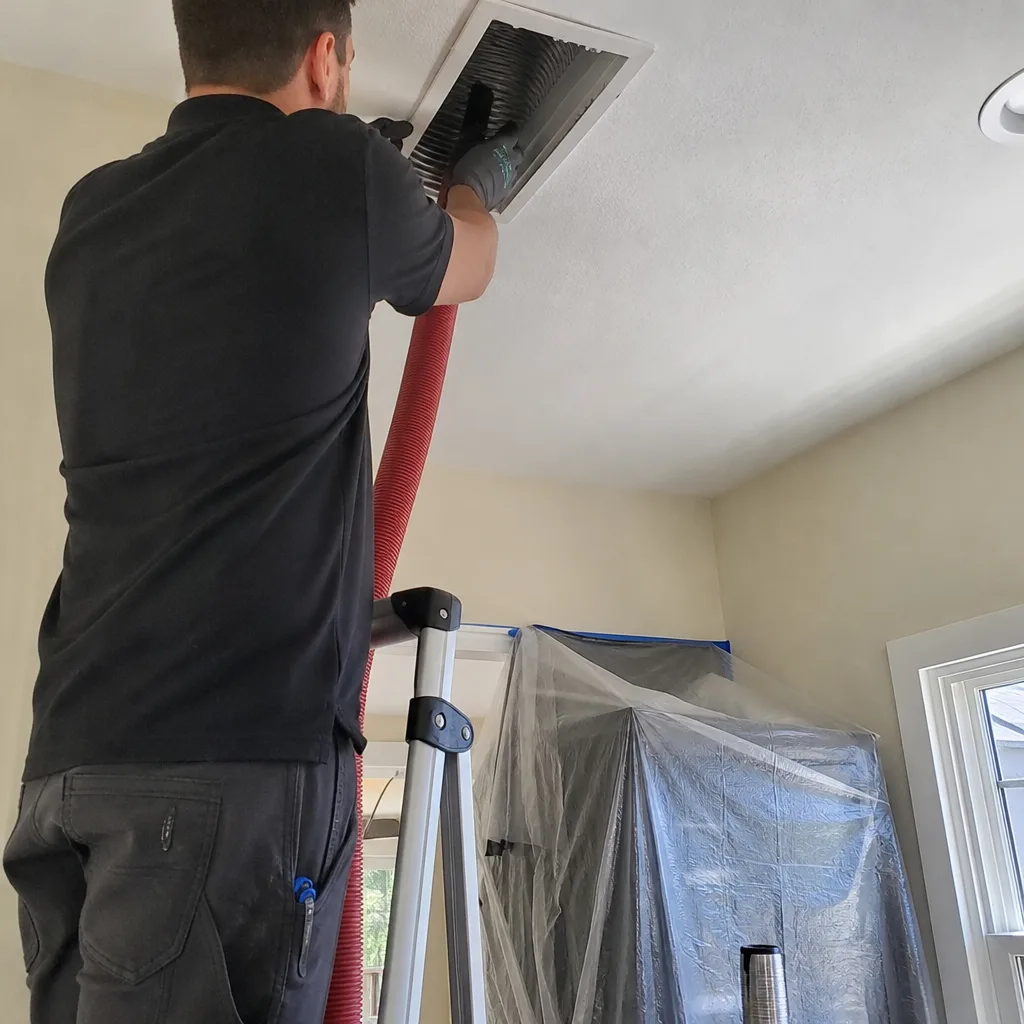
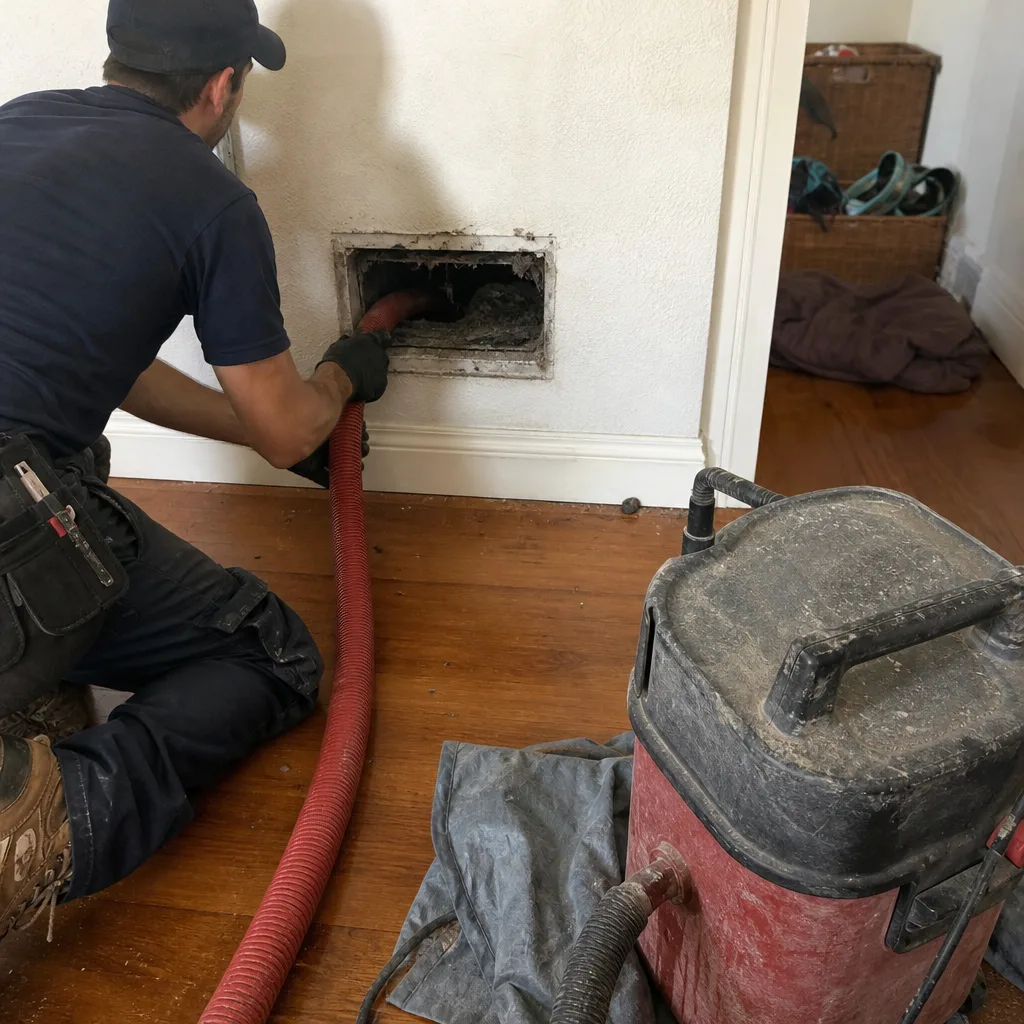
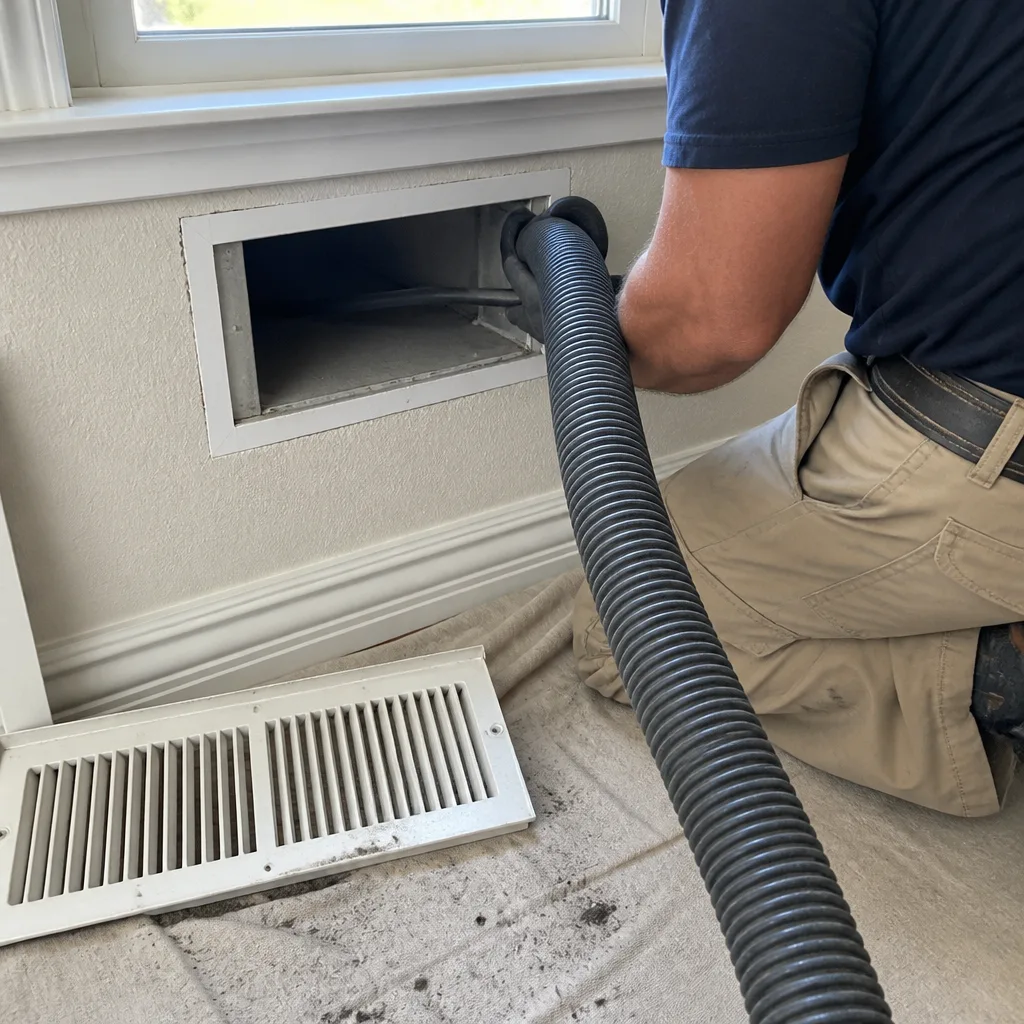
The rotary brush system. Machines like the Rotobrush and Nikro systems combine a rotating brush head with a built-in vacuum that runs through the same access point. The brush mechanically agitates the duct interior walls while the vacuum simultaneously extracts loosened debris. This simultaneous agitation-and-extraction is the core of effective cleaning, and it is why the brush cannot simply be replaced by a drill attachment: the extraction has to happen at the point of contact, not at the end of a separate hose that is fighting friction the entire length of the run.
The negative air machine. Abatement Technologies builds air filtration units designed for commercial remediation work: mold, asbestos, lead, fire damage. The same equipment, deployed in a residential duct cleaning context, creates negative pressure inside the duct system while the rotary brush works. This negative pressure serves two purposes. First, it pulls loosened debris out of the system rather than allowing it to settle elsewhere in the run. Second, it captures airborne particulates through HEPA filtration before they can re-enter the living space. The air inside the ducts during cleaning is dirtier than the air in the room. Without capture at the source, you are just relocating the problem.
The inspection camera. Before-and-after documentation is not a gimmick. It is the only way a homeowner can verify that the interior surfaces actually changed. A rigid borescope camera pushed through the duct run shows the condition of the walls before cleaning and after cleaning. If a company will not show you the inside of your ducts before and after, you have no way to know whether the work was real. We show every customer their own ducts. It is the difference between trusting a claim and seeing the surface.
For Encinitas homeowners considering Air Duct Cleaning in Encinitas, the equipment question is the single most useful filter. The brands behind the work say more than any sales language: Rotobrush for the rotary brush system, Nikro for agitation equipment, Abatement Technologies for on-site air filtration during the job. If a quote cannot name the equipment, assume consumer-grade.
Encinitas-Specific Factors That Shift the Cost-Benefit Math
Encinitas is not a generic coastal suburb, and the duct cleaning calculus here is shaped by specific environmental and housing-stock factors that do not apply in, say, Escondido or Poway.
The marine layer is a dust adhesive. From late spring through early autumn, Encinitas sits under a nightly marine layer that pushes relative humidity into the 70 to 90 percent range. That humidity infiltrates unconditioned spaces like attics and crawlspaces where ductwork lives. Dust that would remain loose and removable in a dry climate gets bound into a dense film on duct interior walls. The result: what looks like a minor dust accumulation in photos is often a stubborn, adhered layer that requires mechanical agitation to remove. This is the single biggest reason DIY approaches underperform in coastal Encinitas compared to drier inland areas.
Older housing stock with retrofitted systems. Much of Encinitas was built in the 1960s through 1980s, and many of those homes have had central air added later. That means long, complex flex-duct runs through attics and crawlspaces that were not originally designed for them. Long runs with multiple bends have more surface area and more places for debris to accumulate. They also have more connection points where ducts can separate. A cleaning that also includes an inspection of those connections is more valuable here than in a newer, purpose-built system.
Coastal air is salty air. Salt aerosols from the Pacific accelerate corrosion on exposed metal components, including duct hangers, register screws, and the wire coils inside flex duct. Corrosion debris becomes part of the particulate mix inside the system. It is also one reason register cleaning in coastal Encinitas is different from register cleaning inland: the grime is saltier, stickier, and more corrosive to the metal underneath.
Open-window seasons mean the system breathes outdoor air. Encinitas homeowners run their HVAC less than inland residents do, and they open windows more often. That means the system pulls in whatever is in the coastal air: salt, pollen from the eucalyptus and Torrey pine, dust from dry landscaping. Window screens do not filter below about 10 microns, and household filters let most of it through. The result is a system that accumulates ambient particulate even when it is not running heavily. A duct system in Encinitas that has not been inspected in five years is likely to show significant interior accumulation even if the home is meticulously clean.
These factors combine into a simple conclusion: the ducts in an Encinitas home are working harder and accumulating faster than the same ducts would in a drier, newer suburb. The cost-benefit math shifts accordingly. What might be a marginal DIY-versus-professional decision in a dry climate with a new home is a clearer call in coastal North County.
Common Mistakes to Avoid
- Using a leaf blower to “blow out” the ducts. This is the most damaging thing a homeowner can do to their system. A leaf blower produces positive pressure, which pushes debris deeper into the system, loosens connections, and can blow insulation into the duct runs from the attic. It creates a mess inside the system that is more expensive to fix than the cleaning would have cost.
- Buying a “duct cleaning kit” for a drill. These kits, typically a flexible rod with a brush head and a phone-camera attachment, sell the illusion of professional-grade agitation. What they actually deliver is surface scratching: the brush loosens debris but nothing extracts it, so the debris settles further down the line. If you already own one, use it for photographic inspection, not for cleaning.
- Ignoring the return side of the system. Homeowners focus on the supply registers, which are visible. The return side carries air from the living space to the air handler and is often the dirtiest part of the system. A cleaning that skips the return ducts is half a job.
- Using the wrong filter to compensate for a dirty system. Installing a high-MERV filter (MERV 13 or above) on a system that was not designed for it restricts airflow and can cause the blower motor to work harder than it should. The filter is not a substitute for cleaning the ducts.
- Assuming a new home means clean ducts. Actually the opposite is often true in Encinitas. New construction and remodel projects generate enormous amounts of drywall dust, sawdust, and debris, and the HVAC system is frequently used as a jobsite exhaust. A new or recently renovated home can have some of the dirtiest ducts in the neighborhood.
- Believing the “duct cleaning is a scam” headlines without reading past them. The EPA’s guidance on duct cleaning is often cited by skeptics, but the context matters. The EPA’s position is that there is no proven health benefit to routine cleaning of a clean system. That is different from saying a visibly dirty system should not be cleaned. If you can see the accumulation, the question is not whether it exists. The question is what you want to do about it.
When to Call a Professional
Call a professional when any of these conditions is present: visible dust accumulation in the duct interior on your phone-camera inspection; a musty or stale odor at system startup that does not resolve after filter replacement; unexplained dust accumulation in certain rooms despite regular cleaning; evidence of rodents, insects, or pest debris in the ductwork; a recent renovation project that left construction dust in the system; or airflow that is noticeably weaker in some rooms than in others. Each of these signals indicates something inside the system that surface-level DIY work cannot address. Air Duct Repair in Encinitas becomes a relevant consideration when airflow problems coincide with dirty ducts, because the underlying issue is often structural, not just cosmetic. Duct Cleaning Encinitas offers free estimates in Encinitas. Call (866) 596-9358 and describe what you are seeing, smelling, and hearing. We would rather help you decide you do not need us than have you spend a weekend making a problem worse.
Frequently Asked Questions
The typical air duct cleaning in Encinitas ranges from $350 to $750 for a standard single-system home of 1,500 to 2,500 square feet, depending on the number of returns and registers, system accessibility, and the level of interior accumulation. Multistory homes, homes with long complex duct runs, and homes that have not been cleaned in over a decade can exceed that range. The honest way to get a number is to have a technician inspect the system, because a photo-based estimate for a system no one has seen often ends up changing on arrival. For help choosing a provider, read How to Hire an Air Duct Cleaning Contractor in Encinitas: A Step-by-Step Guide. We give one flat price per system before work starts, not a per-vent price that multiplies as the job progresses. Call (866) 596-9358 for a free estimate with no obligation.
A dramatically cheaper quote almost always reflects a different scope of work, not a more efficient company. The low-cost model relies on a per-vent price that sounds small but multiplies across a full system, or on a surface-level cleaning that skips the return side, the air handler cabinet, and the main trunk lines. Some operations are essentially a vacuum at the register, which is little better than what a homeowner could do themselves. When comparing quotes, ask specifically which equipment is used, whether the return side and air handler are included, and whether before-and-after photos of the duct interior are provided. If the answer to any of these is vague, the price difference is not value. It is scope reduction.
The only verifiable way is before-and-after photography of the duct interior. A rigid inspection camera pushed through the system shows the surface condition before the cleaning and the surface condition after. If a company will not show you the inside of your own ducts, you are being asked to trust a claim you cannot verify. We photograph the interior of every system we clean, before and after, and we show the homeowner both. You should also feel a difference: less visible dust accumulation in the weeks after cleaning, a reduction in the startup odor, and more consistent airflow at the registers. Those are the experiential markers that correspond to what the photos show.
The honest answer for any duct system is “when it needs it,” not on a fixed schedule. In Encinitas, where marine-layer humidity binds dust to duct walls and coastal air carries a constant particulate load, systems that have not been cleaned in five years or more typically show meaningful interior accumulation. A system that was recently cleaned and is being maintained with regular filter replacement and register cleaning may not need professional attention for three to five years. The best way to know is to look: a phone-camera inspection at the register and return grille takes minutes and tells you more than any schedule ever will. If the photos show a visible adhered layer, it is time. If the interior walls are clean, keep maintaining what you have.
A shop-vac can remove loose dust from the first few feet of a duct run at best. It cannot generate the negative pressure required to extract compacted debris from the full length of a flex-duct system, and the attempt often pushes loosened material deeper toward the air handler. The CFM gap between a shop-vac and professional extraction equipment is the difference between 100 cubic feet per minute and 3,000 to 5,000 cubic feet per minute. That is not a marginal improvement in cleaning. It is a different physical operation. If you want to check whether your ducts need professional cleaning, use the vacuum for what it does well: cleaning the accessible surfaces around the registers, not the interior of the ducts.
Yes, and the reason is straightforward. Rotobrush and Nikro systems are designed for simultaneous rotary agitation and negative-pressure extraction, which is the core function of duct cleaning. Abatement Technologies builds air filtration units for commercial remediation work, which means the airborne particulates loosened during cleaning are captured before they can circulate through your living space. Consumer-grade or off-brand equipment cannot replicate those functions, no matter how it is marketed. When you are comparing duct cleaning providers in Encinitas, asking which equipment brands the company runs is a legitimate, useful question. A company that can name its equipment is a company that invests in doing the job correctly. We supplement the cleaning itself with air-quality equipment from Honeywell and Aprilaire when a homeowner wants ongoing indoor air protection after the system is clean, and products from Guardsman for ongoing surface care. The brands are part of the result.
The Bottom Line
The DIY-versus-professional duct cleaning question resolves down to physics, not effort. A 5-horsepower shop-vac produces roughly 100 CFM. A professional truck-mounted unit produces 3,000 to 5,000 CFM. That gap means the tasks are not comparable: DIY is surface maintenance, and professional cleaning is a different operation entirely. In Encinitas, where coastal humidity glues dust to the inside of duct runs and salt air accelerates corrosion, the case for professional equipment is stronger than in drier inland communities. You can and should handle register cleaning, filter replacement, phone-camera inspection, and exterior dryer vent checks yourself. Leave the interior of the duct system to equipment built for extraction. When the time comes, call (866) 596-9358 for a free estimate, and if you are not sure whether the time has come, the pre-inspection protocol above will tell you. For more guides & resources on indoor air quality, explore our blog.
Written by the team at Duct Cleaning Encinitas, serving Encinitas since 2017.
See the difference
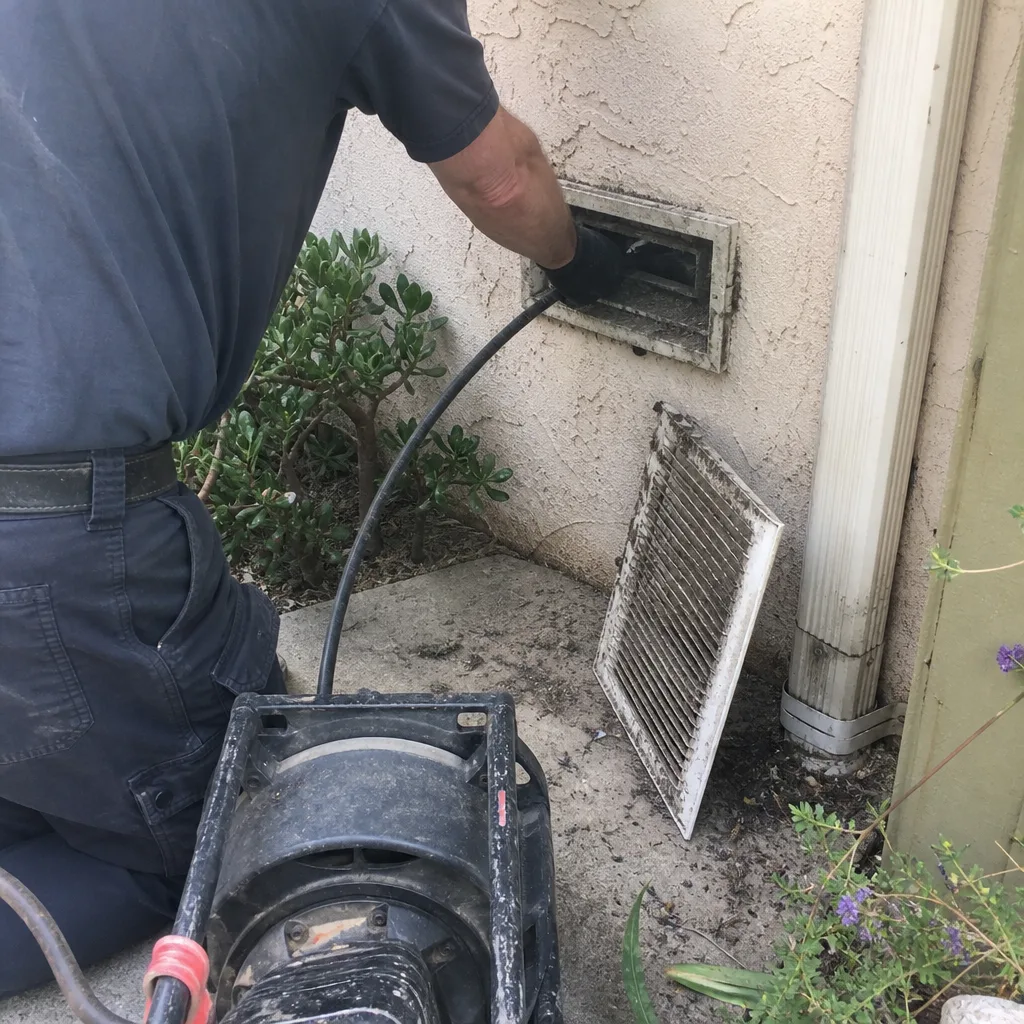 Before
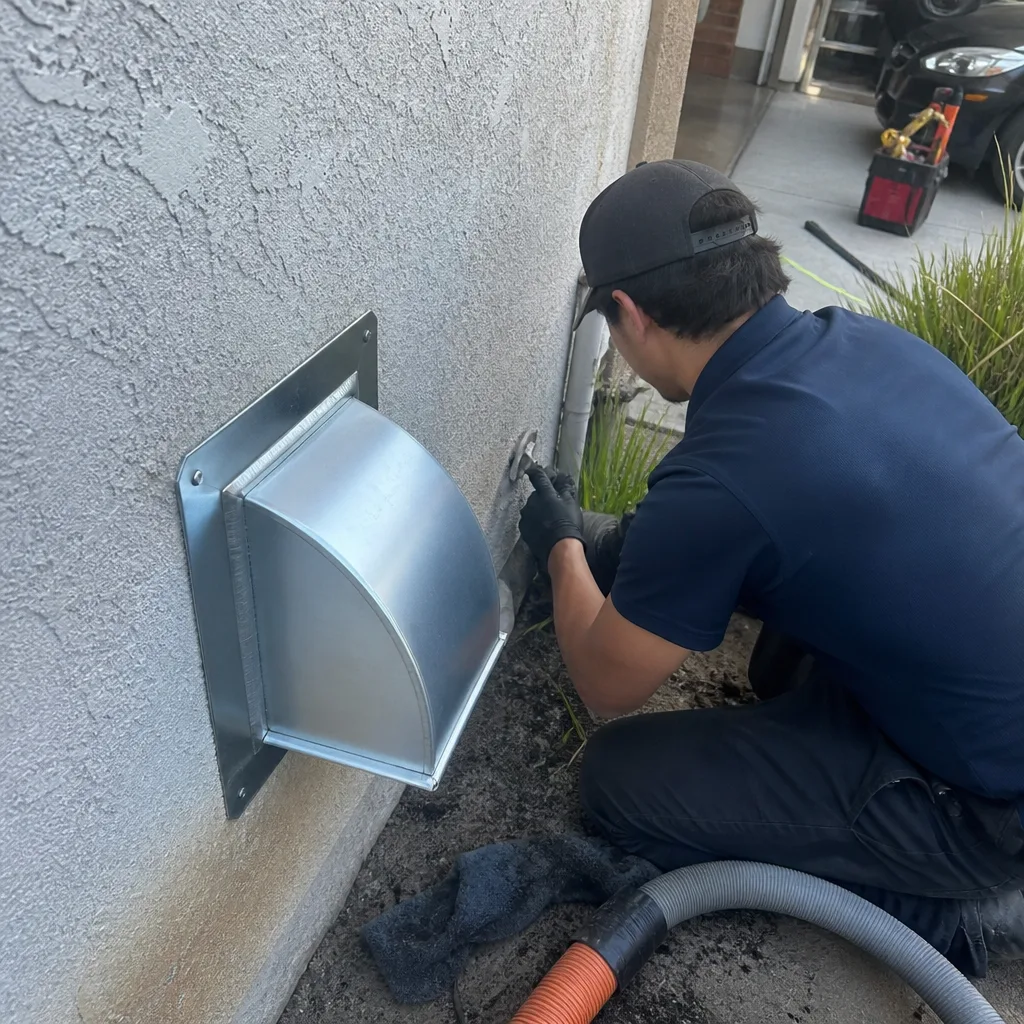 After
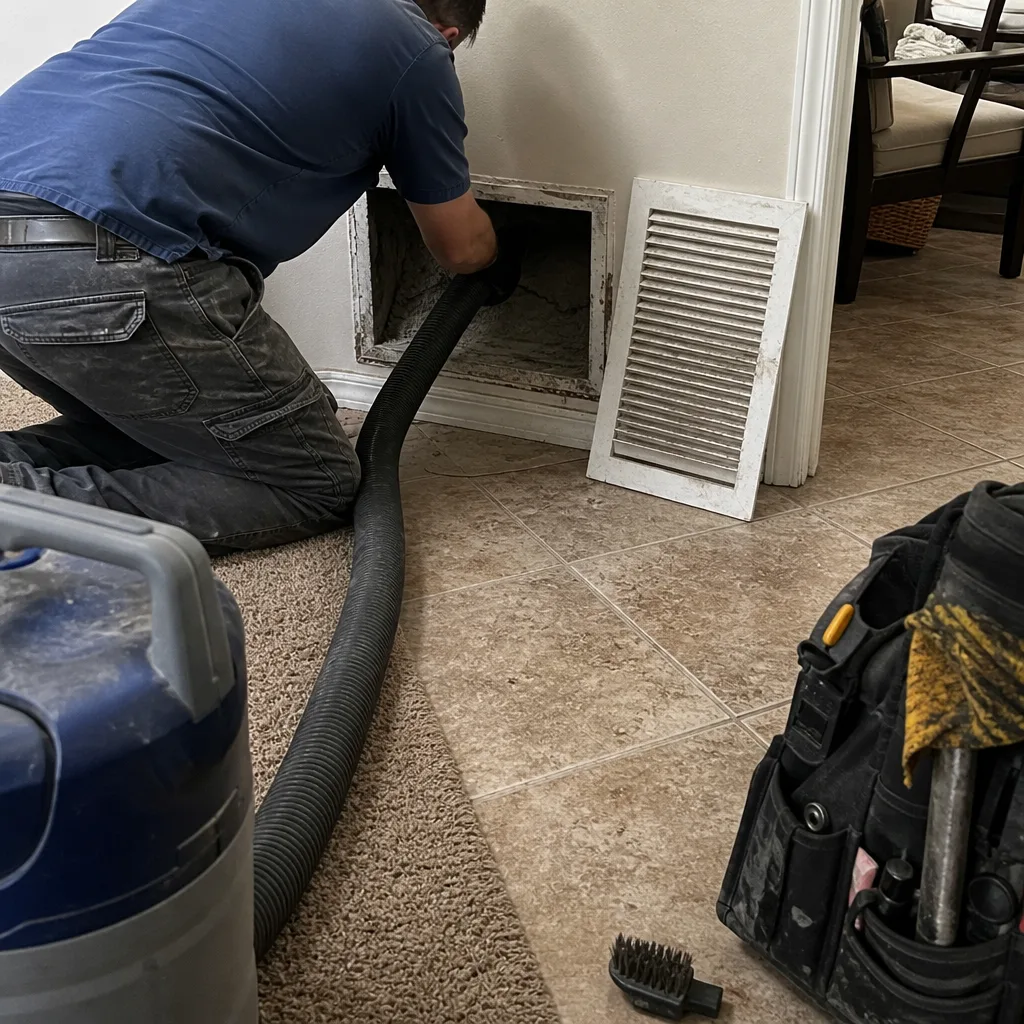 Before
 After
 Before
 After