
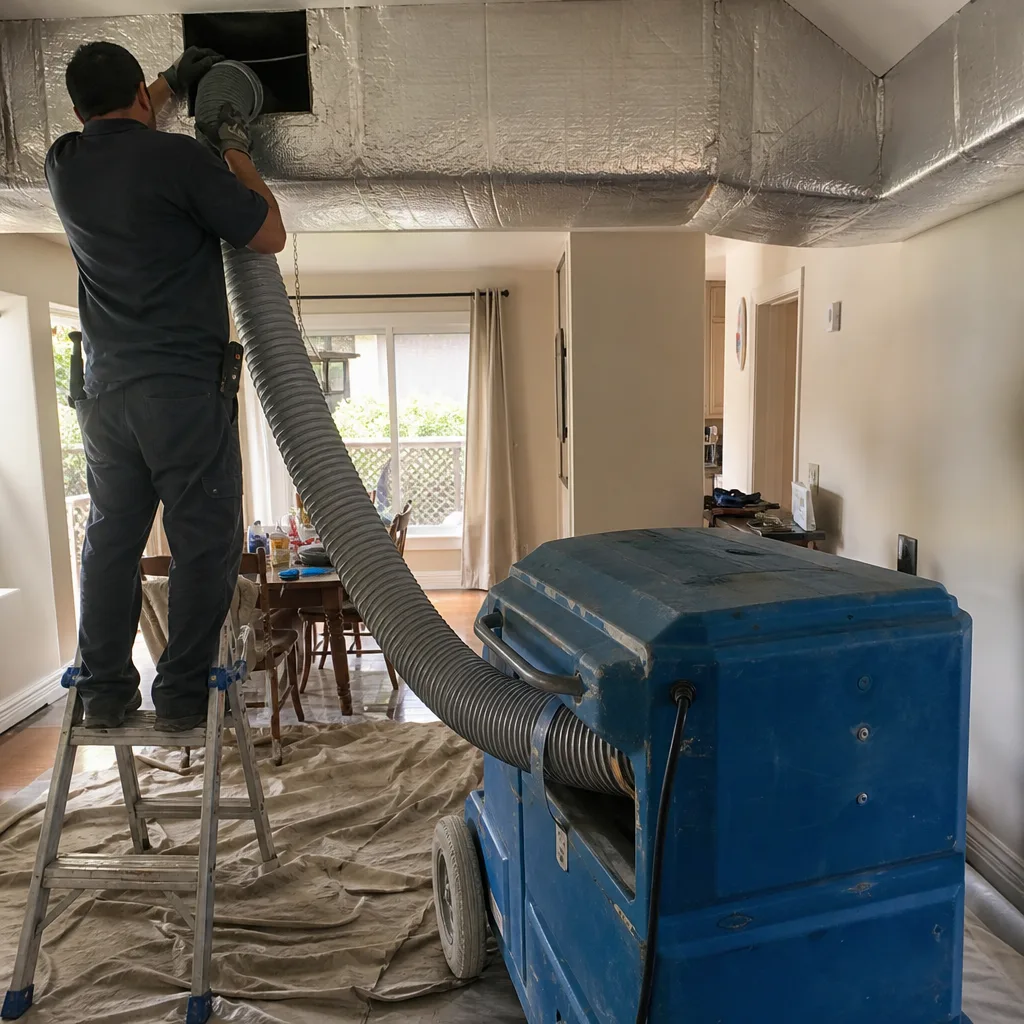
Last updated November 2, 2026
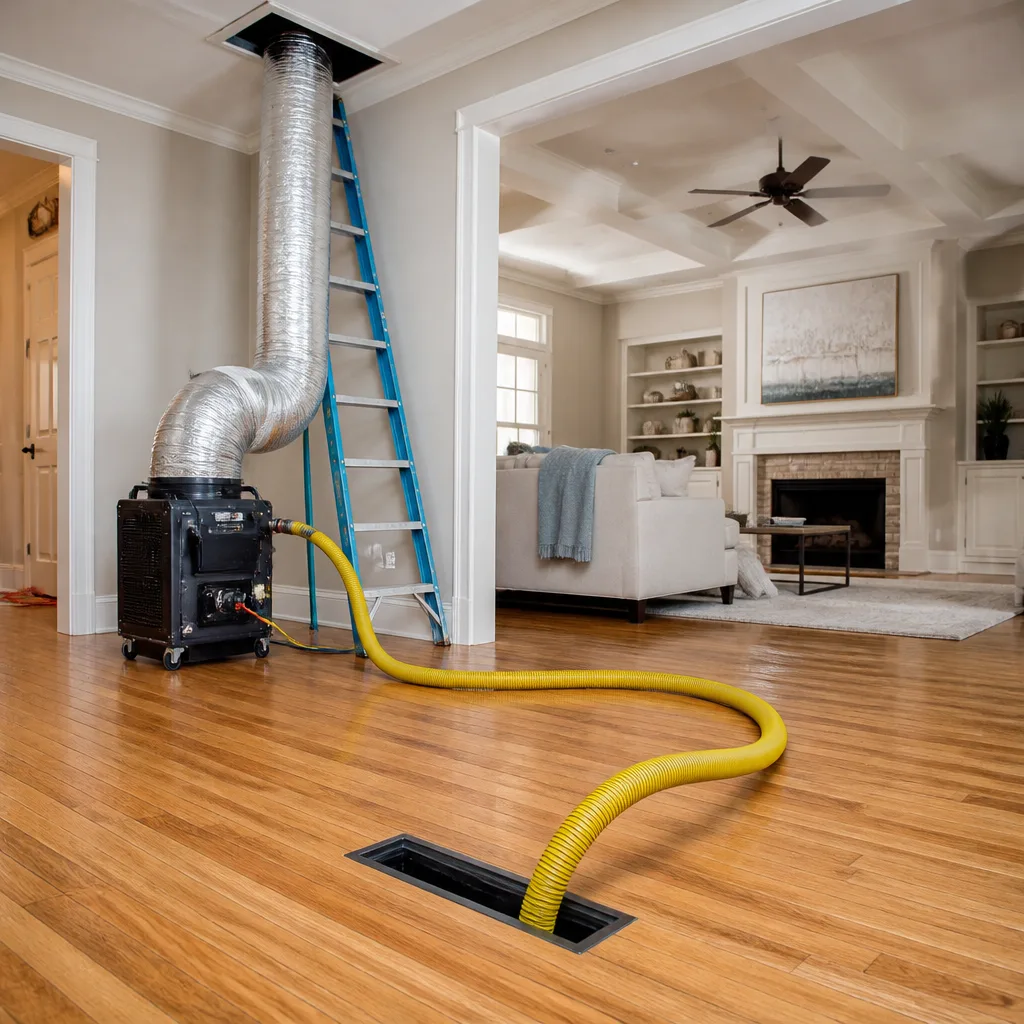 Whole-home duct cleaning
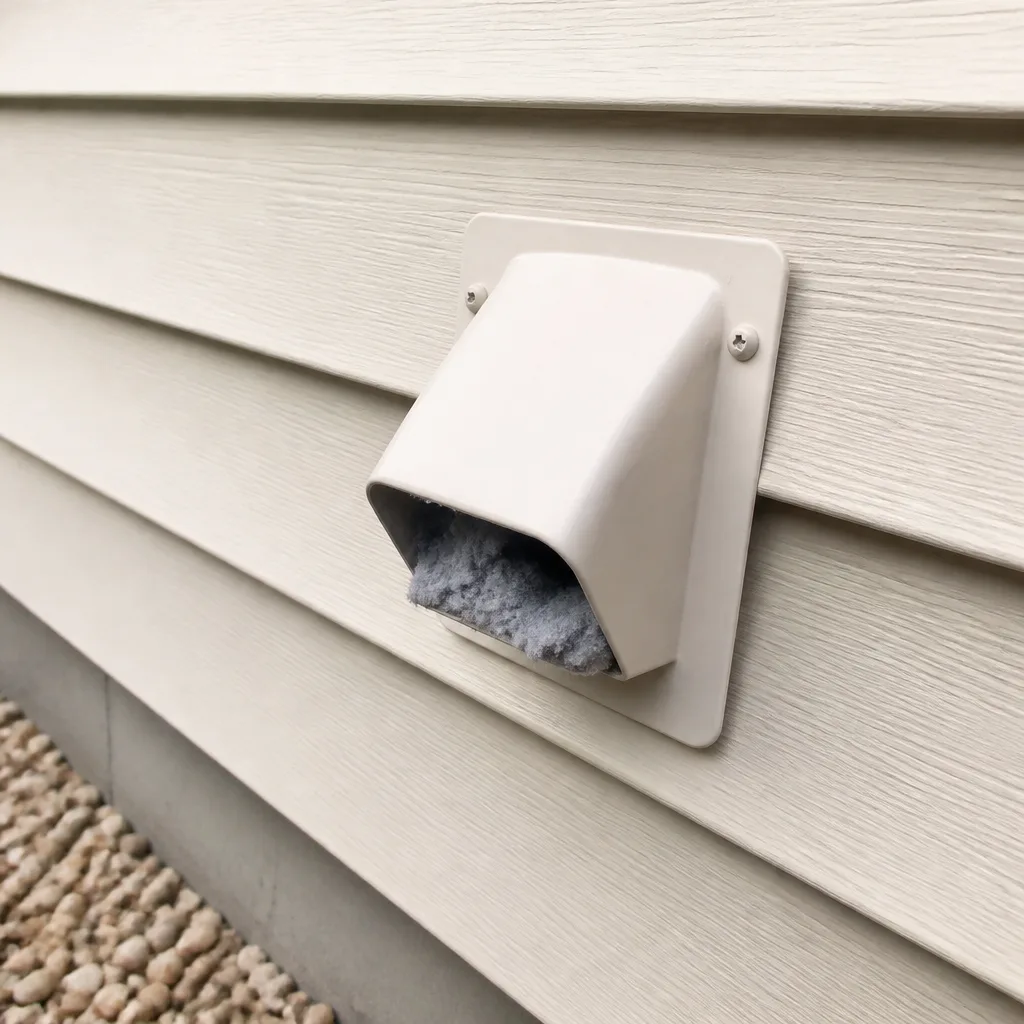 Dryer vent cleaning
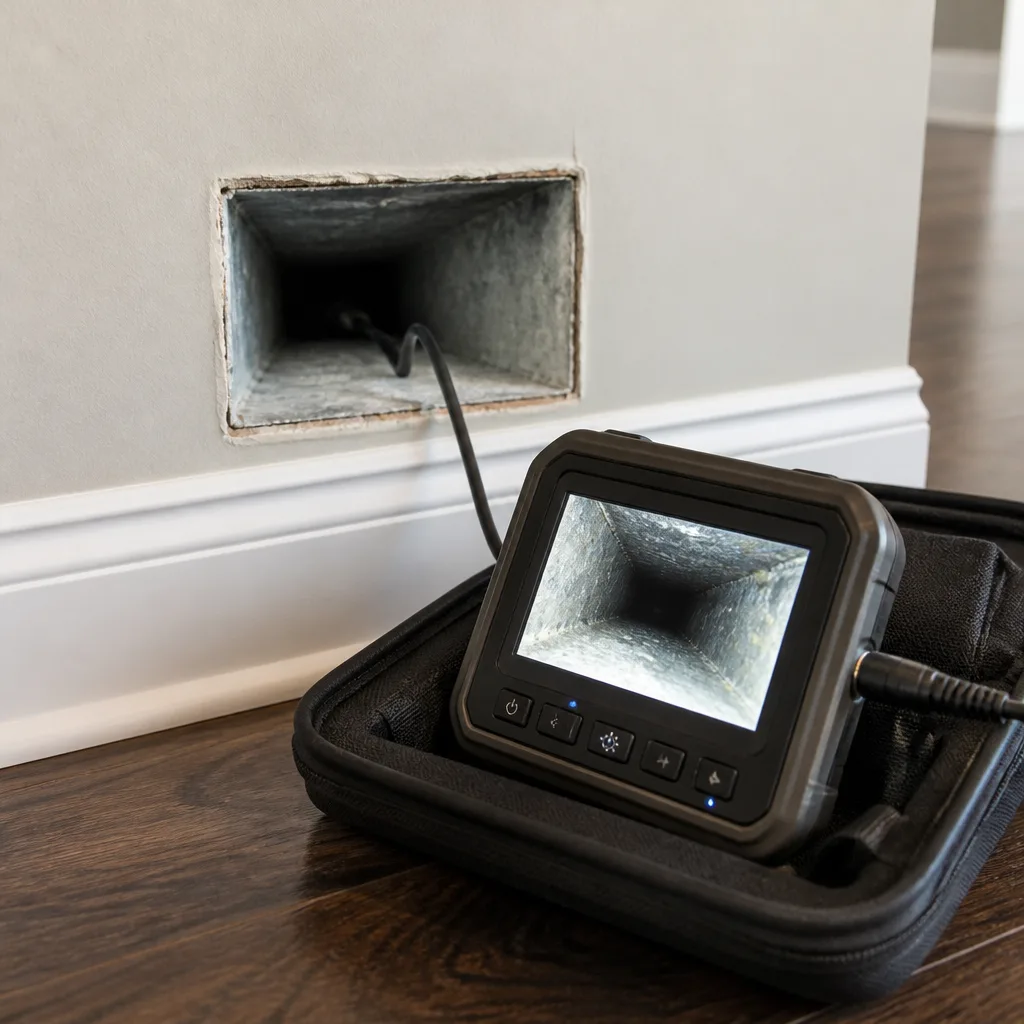 Camera inspection
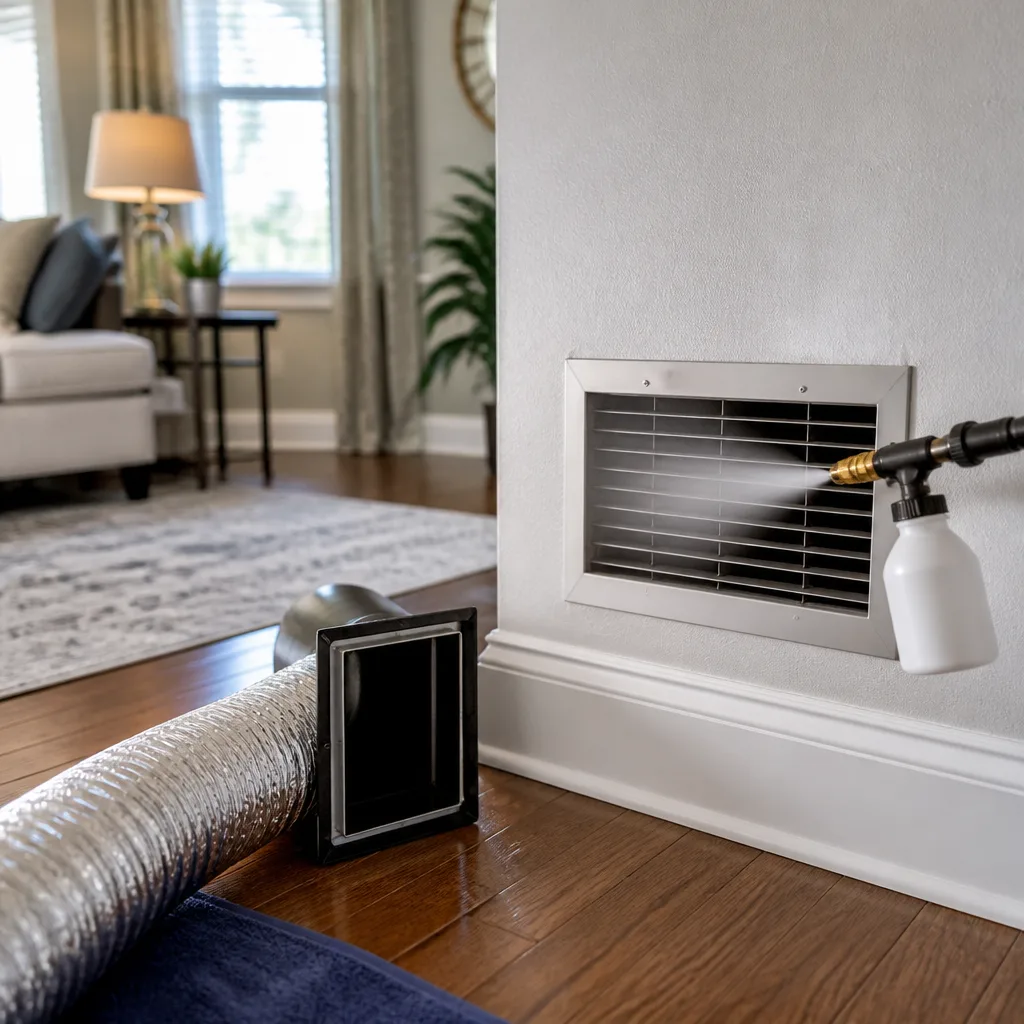 Sanitizing & deodorizing
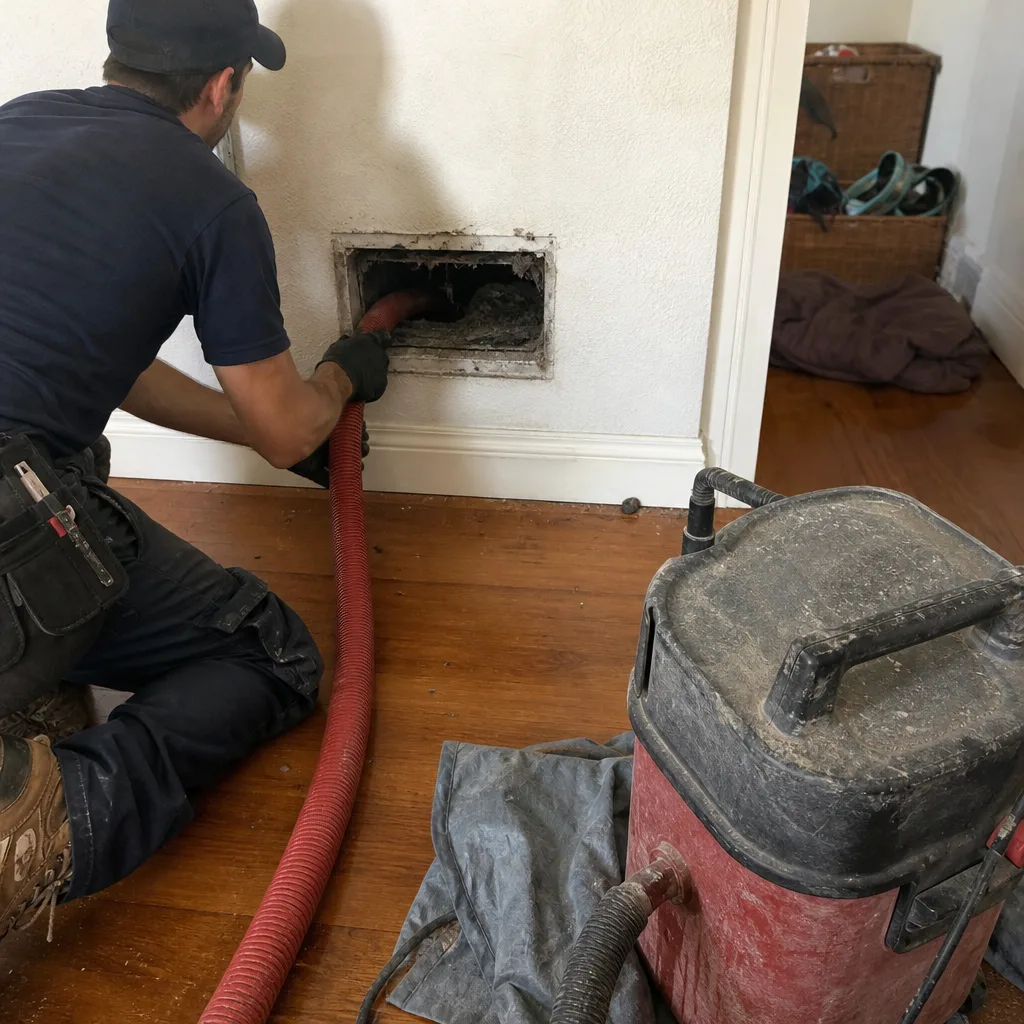
Whole-system duct and dryer vent check with before-and-after photos - you see exactly what came out of your vents
That "$99 whole-house special" is a bait ad - the real number appears once they are in your hallway, or the "clean" is a shop-vac at the register. We photograph the inside of your ducts before and after instead.
Seasonal Air Duct Cleaning Care for Encinitas: Year-Round Homeowner’s Guide
Telling an Encinitas homeowner to clean their air ducts every spring and fall is advice written for Ohio. It assumes four textbook seasons with defined heating and cooling cycles. Encinitas doesn’t work that way. Our seasonal rhythm runs on ocean cycles and offshore wind patterns: June Gloom humidity, summer dry heat, Santa Ana wind events, and winter marine air. Each one stresses a duct system differently, and each one determines what maintenance should happen and when. This guide replaces the generic “clean twice a year” advice with a locally calibrated protocol built for coastal North County San Diego.
Styles & brands we work with
- Whole-home duct cleaning
- Dryer vent cleaning
- Camera inspection
- Sanitizing & deodorizing
Quick Answer
Seasonal air duct cleaning in Encinitas means timing maintenance around four distinct coastal air-quality phases, not calendar seasons. The optimal full-system cleaning window is March through May, before summer cooling load increases. After any Santa Ana wind event between September and November, inspect your system and schedule a cleaning if visible dust accumulation appears at return grilles or supply registers. Air Duct Cleaning by Duct Cleaning Encinitas provides free estimates at (866) 596-9358.
Table of Contents
- June Gloom and the Condensation Problem (June-August)
- Santa Ana Wind Season: The Highest-Risk Particulate Period (September-November)
- Winter Marine Air and Return-Air Plenums (December-February)
- The March-May Window: Why Spring Is the Optimal Cleaning Season
- How to Track AQI for the Encinitas Coastal Zone
- Seasonal Duct Inspection Checklist for Encinitas Homes
- Common Mistakes to Avoid
- When to Call a Professional
- Frequently Asked Questions
- The Bottom Line
June Gloom and the Condensation Problem (June-August)
Encinitas sits close enough to the Pacific that late spring and early summer bring weeks of overcast mornings. The marine layer rolls in overnight and burns off by early afternoon. For homeowners, this isn’t just a weather pattern. It’s a humidity event. Outdoor relative humidity regularly hits 85 to 95 percent during June Gloom mornings, and that moisture finds its way into attic spaces and crawl space areas where ductwork lives.
Here’s the specific problem we see in Encinitas homes: poorly insulated or aging duct runs in unconditioned attics develop condensation on their exterior surfaces when cool, air-conditioned air moves through them while the surrounding attic air is humid. That condensation drips, soaks insulation, and creates conditions where dust inside the ducts clumps and adheres to duct walls. Once that happens, normal airflow won’t dislodge it. You need mechanical agitation, the kind professional rotary brush systems provide.
What to inspect for during June through August:
- Water stains on attic insulation directly above or around duct runs
- Musty odor when the system first kicks on in the morning
- Visible rust or corrosion on metal duct sections, particularly at joints and seams
- Damp spots on ceiling drywall near register locations
- Increased dust on surfaces even though windows have been closed
Condensation damage is a structural issue, not just a cleanliness one. Deteriorated duct sections with rust or separated seams can’t be cleaned back into good condition, which is why Air Duct Repair in Encinitas is a core part of what we do. In one visit, a technician can identify compromised sections, repair or replace them, and then clean the remaining system so it operates efficiently.
Santa Ana Wind Season: The Highest-Risk Particulate Period (September-November)
Every Encinitas homeowner knows the feeling: dry, warm air blowing from the east, low humidity, and the faint smell of chaparral. Santa Ana winds are the region’s most aggressive air-quality disruptor. And for duct systems, they’re the highest-risk particulate period of the year.
The mechanics are simple. Santa Ana winds carry fine dust, pollen, and when wildfires are active, smoke and ash particles. This particulate gets pulled into return-air intakes, settles inside duct runs, and accumulates on coils, blower motors, and plenum surfaces. Unlike normal household dust, Santa Ana particulate is often finer and more pervasive. It penetrates filter media more readily and distributes throughout the entire duct network.
Post-Santa Ana Inspection Protocol
- Wait 48 hours after the wind event clears. This lets airborne particulate settle.
- Remove a supply register in a central room and inspect the visible duct interior with a flashlight.
- Check the filter. If it’s visibly discolored or clogged after a recent change, particulate made it past normal capture.
- Note any new or worsening allergy symptoms among household members. This is a common indicator that fine particulate is circulating.
- If visible dust accumulation is present at registers or inside accessible duct sections, schedule an unscheduled cleaning. Waiting until spring means months of recirculating that material.
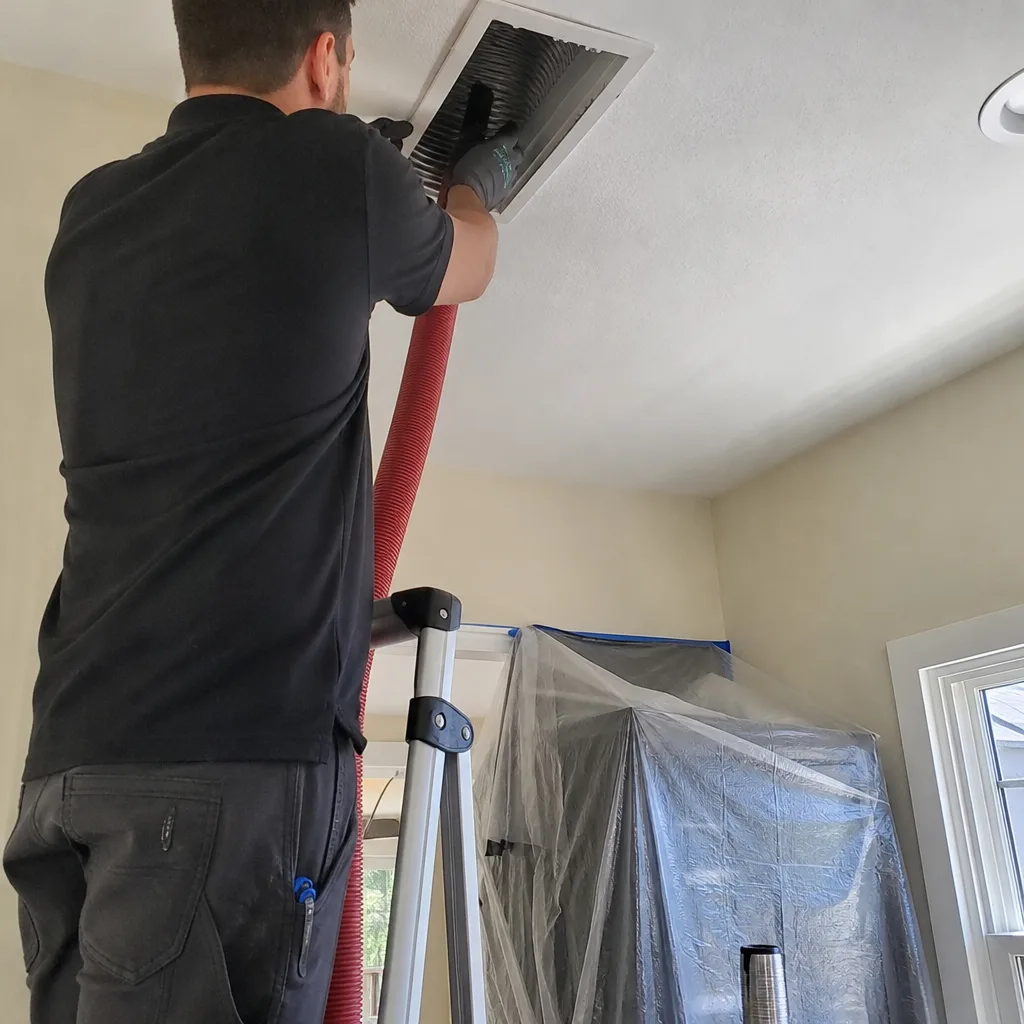
During Santa Ana season, we recommend Air Duct Cleaning in Encinitas for any home where the inspection shows visible accumulation. Using professional-grade Rotobrush and Nikro systems, our technicians mechanically agitate duct surfaces and capture dislodged particulate with commercial vacuums, not consumer-grade shop-vac setups. The difference matters when you’re dealing with fine ash and smoke residue.
Winter Marine Air and Return-Air Plenums (December-February)
Encinitas winters are mild by any national standard, but they bring a specific air-quality dynamic that catches homeowners off guard. Winter marine air is cool and moisture-laden. In older Encinitas homes, particularly those built before 1980 in neighborhoods like Leucadia and Old Encinitas, return-air plenums were sometimes constructed using building cavities rather than dedicated duct runs. These cavity returns sit adjacent to exterior walls or crawl space areas where winter moisture concentrates.
The problem compounds over time. Moist air pulled through these plenums encourages dust adhesion and, in some cases, biological growth. Homeowners report a noticeable stale or earthy smell when the heater runs for the first few minutes each morning. That’s the signature of a return-air plenum that needs attention.
Three things to check in winter:
- Return grille location. If your return-air grille sits low on an interior wall in an older Encinitas home, it may be drawing from a building cavity rather than a sealed duct. These require specific inspection.
- Heater startup odor. A musty or stale smell when the furnace first fires, then fades after a few minutes, often indicates accumulated debris in the return path.
- Cold spots near exterior-facing return plenums. This suggests air leakage pulling unconditioned, damp air into the system.
Our Dryer Vent Cleaning in Encinitas service also sees increased demand this time of year. Winter marine air slows dryer evaporation, which means lint accumulates faster in vent runs. A clogged dryer vent is a fire hazard, and the risk increases when cooler, more humid air reduces dryer efficiency. If your dryer takes longer than one cycle to dry a normal load, the vent likely needs attention.
The March-May Window: Why Spring Is the Optimal Cleaning Season
If you schedule one full-system air duct cleaning per year, book it between March and May. Here’s the logic, and it’s specific to coastal Encinitas.
By March, the winter marine air pattern is fading. Humidity levels begin moderating. The sequence of winter moisture followed by spring drying means any debris that accumulated during winter is now loose and removable, not stuck to duct walls. This timing also positions your system for optimal performance before summer cooling load arrives. Clean ducts, coils, and blower components move air more efficiently, which translates to lower energy consumption when your air conditioner works hardest.
Spring cleaning also lets us identify and repair damage from the previous Santa Ana season and winter moisture cycle in a single visit. As a duct cleaning and repair specialist, we can address structural issues like separated seams, deteriorated flex duct, or compromised plenum connections without referring you to a separate contractor. That’s the advantage of working with a company whose entire service model is built around duct systems: Duct Cleaning Encinitas home offers cleaning, repair, and air-quality upgrades under one roof.
The Spring Service Sequence
- Full system inspection: We assess every accessible duct run, the return plenum, supply registers, blower motor, and coil.
- Mechanical agitation cleaning: Using Rotobrush or Nikro rotary brush systems, we dislodge accumulated particulate from duct surfaces.
- Negative-pressure capture: Abatement Technologies air filtration equipment runs on-site to capture dislodged material and prevent redistribution into living spaces.
- Repair assessment: We document any compromised sections and, with your approval, complete repairs during the same visit.
- Post-cleaning verification: We inspect the work and provide before-and-after documentation so you know what was done.
For Encinitas homeowners with allergy sufferers in the household, spring timing also reduces the particulate load before peak pollen season, which in our coastal zone typically intensifies from May onward.
How to Track AQI for the Encinitas Coastal Zone
Air quality index data is now freely available, and it’s a practical trigger for maintenance decisions. The Encinitas coastal zone benefits from ocean breezes that generally keep AQI in the “Good” to “Moderate” range, but Santa Ana events, wildfire smoke, and even agricultural activity to the east can shift conditions quickly.
Here’s how to use AQI data practically:
- Check daily AQI during wind events. The EPA’s AirNow platform provides real-time readings. Anything above 100 indicates particulate levels that will contribute to duct accumulation if your system runs without adequate filtration.
- Change filters after any AQI spike above 150. The filter catches what it can, but fine particulate can overwhelm standard media.
- Track cumulative exposure. A single moderate AQI day won’t clog your ducts. Two weeks of Santa Ana conditions with intermittent AQI spikes will. Treat cumulative exposure as your trigger, not single-day readings.
- Upgrade filtration during high-AQI periods. We install and recommend Honeywell and Aprilaire air-quality products that provide enhanced filtration during wildfire season and beyond. Cleaner air starts inside the system, not just at the vent.
For Encinitas specifically, know that coastal readings can differ from inland readings by 20 to 40 AQI points on the same day. If you see smoke in the air or smell it, your ducts are capturing particulate regardless of what a distant monitoring station reports.
Seasonal Duct Inspection Checklist for Encinitas Homes
Run through this checklist once each season, or after any significant weather event. It takes fifteen minutes and tells you whether professional attention is warranted.
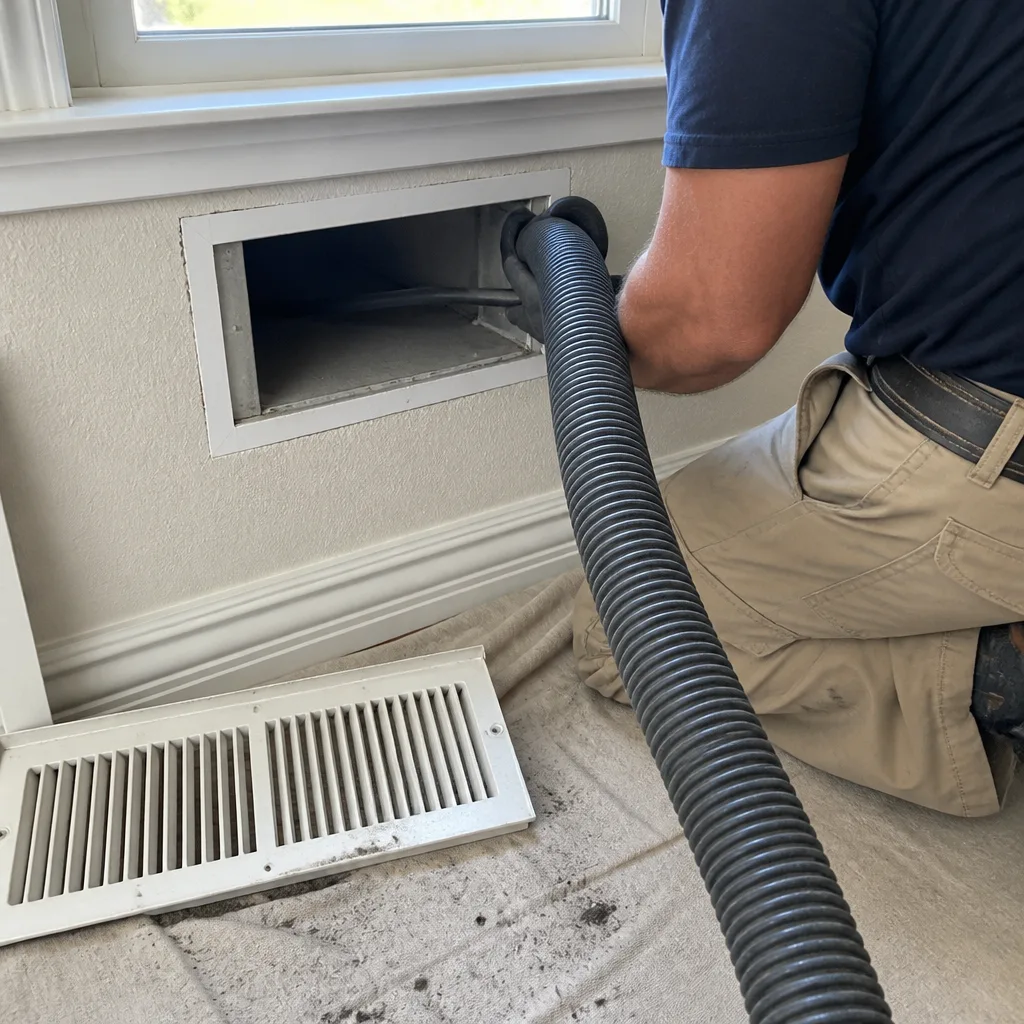
- Remove two or three supply registers in different rooms and inspect the visible duct interior with a flashlight. Look for dust accumulation, debris, or signs of moisture.
- Check the air filter. If it’s visibly dirty within 30 days of installation, your system is pulling more particulate than normal.
- Observe register airflow. Weak airflow from specific registers often indicates a duct leak or blockage, not a dirty filter.
- Inspect visible duct runs in attics, garages, and crawl spaces. Look for separated joints, kinked flex duct, or sagging sections.
- Note any new household symptoms: increased dust, worsening allergies, musty odors when the system runs. These are systemic indicators of duct issues.
- Check dryer performance. Longer dry times or a visible lint buildup at the exterior vent termination point to a Dryer Vent Cleaning in Encinitas need.
If you find anything concerning, call (866) 596-9358 for a free estimate. We’ll tell you honestly whether cleaning, repair, or both are warranted.
Common Mistakes to Avoid
- Following a generic “spring and fall” cleaning schedule. Encinitas doesn’t have a fall cooling-to-heating transition like most of the country. Timing cleaning around our actual climate phases gets better results.
- Ignoring June Gloom humidity. Homeowners assume coastal air is clean air. It’s humid air, and humidity creates condensation problems in unconditioned attic duct runs that deserve inspection.
- Waiting until after wildfire season to check the system. The best practice is mid-season inspection and post-season cleaning. Waiting means months of recirculating fine particulate.
- Assuming a new filter solves everything. Filters capture incoming particulate. They do nothing for debris already adhered to duct surfaces from months or years of accumulation.
- Treating all duct cleaning companies as equivalent. Equipment matters. Professional-grade rotary brush systems like Rotobrush and Nikro mechanically agitate duct surfaces. Consumer-grade setups don’t. Ask what equipment a company uses before booking.
- Skipping repair when it’s needed. A cleaned duct with a separated seam still leaks conditioned air into the attic. Cleaning and repair should happen together when necessary.
- Relying on interior AQI readings alone. Coastal Encinitas readings can mask localized particulate events. Trust your senses: if you smell smoke or see dust, your system is capturing it.
When to Call a Professional
Call a duct specialist if you notice any of the following: visible dust accumulation inside accessible duct sections, musty odors when the system runs, weak airflow from specific registers, water stains near duct runs, or a significant Santa Ana event followed by persistent household allergy symptoms. If your dryer takes more than one full cycle to dry a normal load, the vent needs professional attention. Duct Cleaning Encinitas offers free estimates in Encinitas – call (866) 596-9358 and we’ll assess what’s actually needed. We don’t just clean it – we inspect it and repair it if needed.
Frequently Asked Questions
For most Encinitas homes, a full-system cleaning every 2 to 4 years is appropriate, with annual inspections in between. Homes with pets, allergy sufferers, or exposure to Santa Ana particulate may warrant more frequent cleaning. The single best annual window for a full cleaning is March through May, before summer cooling load increases. Call (866) 596-9358 for an exact recommendation based on your home’s specific conditions – estimates are free.
Air Duct Cleaning Cost Breakdown: The Encinitas Homeowner’s Reference for 2026 shows that air duct cleaning in Encinitas typically ranges from $450 to $900 for a complete residential system, depending on home size, number of duct runs, and accessibility. That’s a whole-system price, not a per-vent upcharge. Repairs, if needed, are quoted separately and approved before any work begins. We quote one flat price per system before work starts – no bait-and-switch pricing, no surprise add-ons. Call (866) 596-9358 for a specific quote.
Cheaper quotes usually mean consumer-grade equipment, abbreviated service, or per-vent pricing that balloons once the technician arrives. Professional-grade rotary brush systems like Rotobrush and Nikro, combined with negative-pressure capture equipment, cost more to operate and deliver different results. If a quote seems too low, ask what equipment the company uses and whether the price covers the entire system. We quote one flat price per system, agreed before work starts.
Request before-and-after photos of your duct interiors. A professional company will document the work. We provide visual verification of cleaned duct sections as part of our standard service. If a company refuses to show you what was done, that’s a red flag.
Yes. June Gloom brings sustained high humidity to Encinitas attics, and that moisture condenses on cool duct surfaces. Over time, this creates conditions where dust adheres to duct walls and insulation gets water-damaged. It’s one of the most common issues we see in coastal homes that inland HVAC companies never mention.
Santa Ana winds carry fine dust, pollen, and during wildfire season, smoke and ash particles that penetrate filters and settle throughout duct systems. A single significant Santa Ana event can deposit more particulate than six months of normal household activity. Post-event inspection is warranted – see our Air Duct Cleaning Emergency Preparedness Guide for Encinitas Homes for details. Call (866) 596-9358 for a free estimate if you notice visible accumulation at your registers.
We source and install air-quality solutions from Honeywell, Aprilaire, and Guardsman. These aren’t afterthought add-ons. They’re part of a complete approach: clean the system, then protect it with better filtration and air treatment. We’ll recommend what makes sense for your home, not what pads an invoice.
The Bottom Line
Encinitas homeowners need a seasonal duct care protocol built for coastal North County, not generic advice. June Gloom brings condensation risk. Santa Ana season brings particulate loading. Winter marine air tests return-air plenums in older homes. And March through May is the optimal window for a full-system cleaning before summer cooling demand arrives. Track your local AQI, inspect registers seasonally, and explore our more guides & resources, or call a duct specialist for anything beyond basic filter changes. Duct Cleaning Encinitas serves Encinitas with professional-grade equipment, repair capability, and air-quality solutions – one specialist for cleaning, repair, and air-quality upgrades, no referrals, no runaround. Call (866) 596-9358 for a free estimate.
Written by the team at Duct Cleaning Encinitas, serving Encinitas since 2017.
See the difference
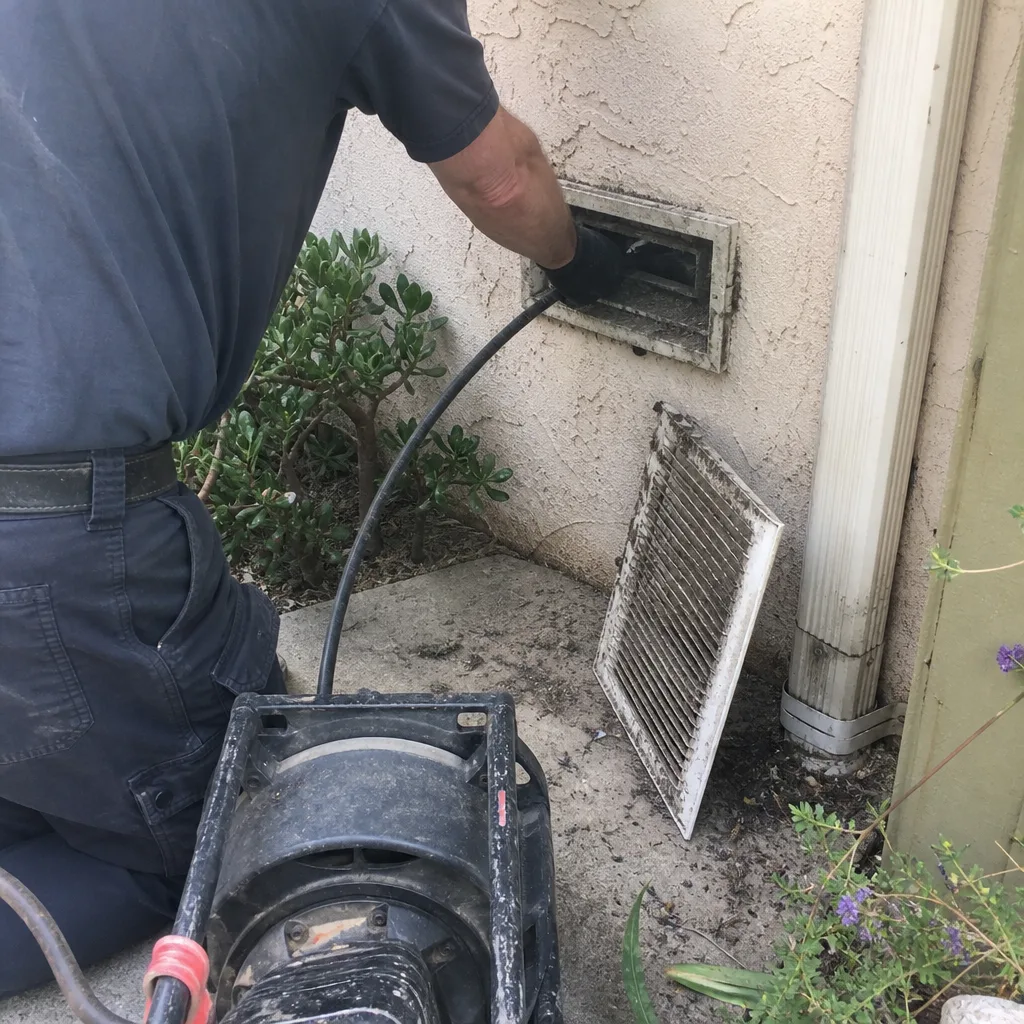 Before
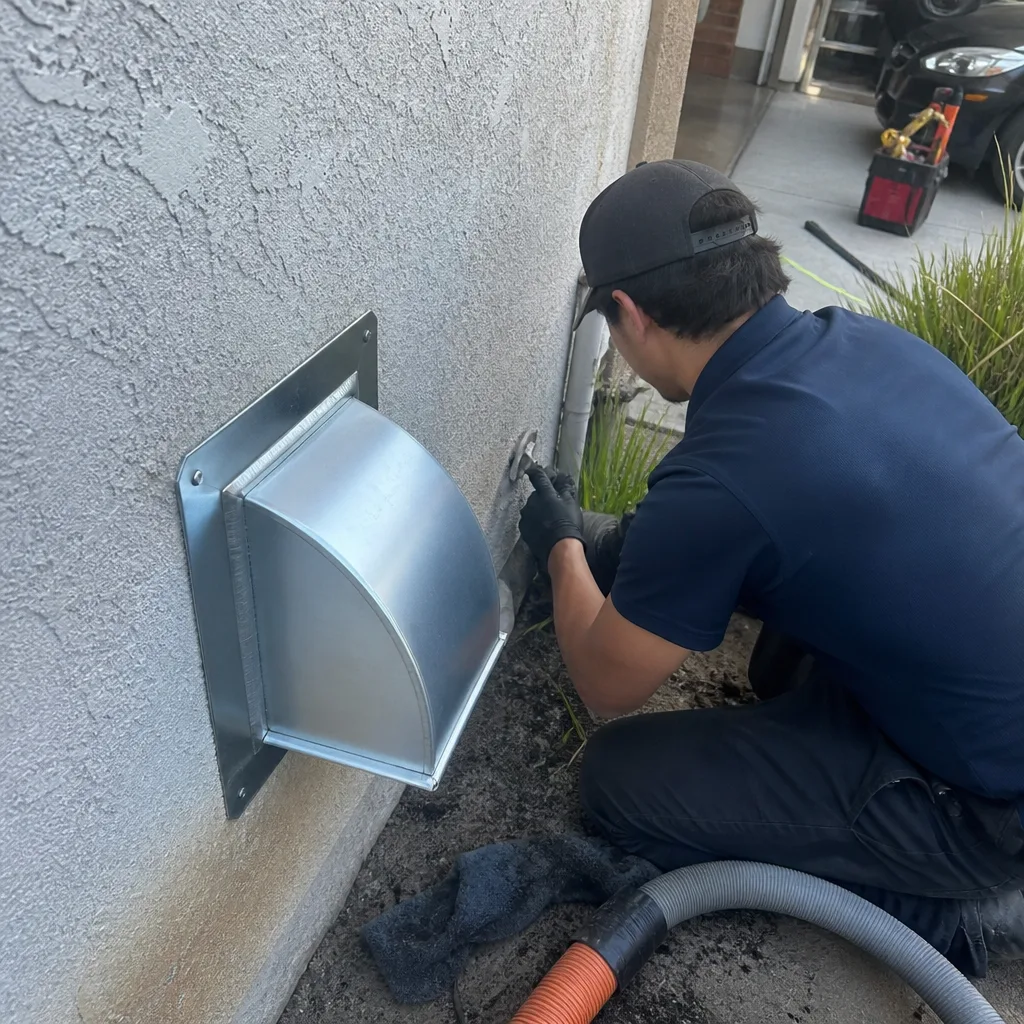 After
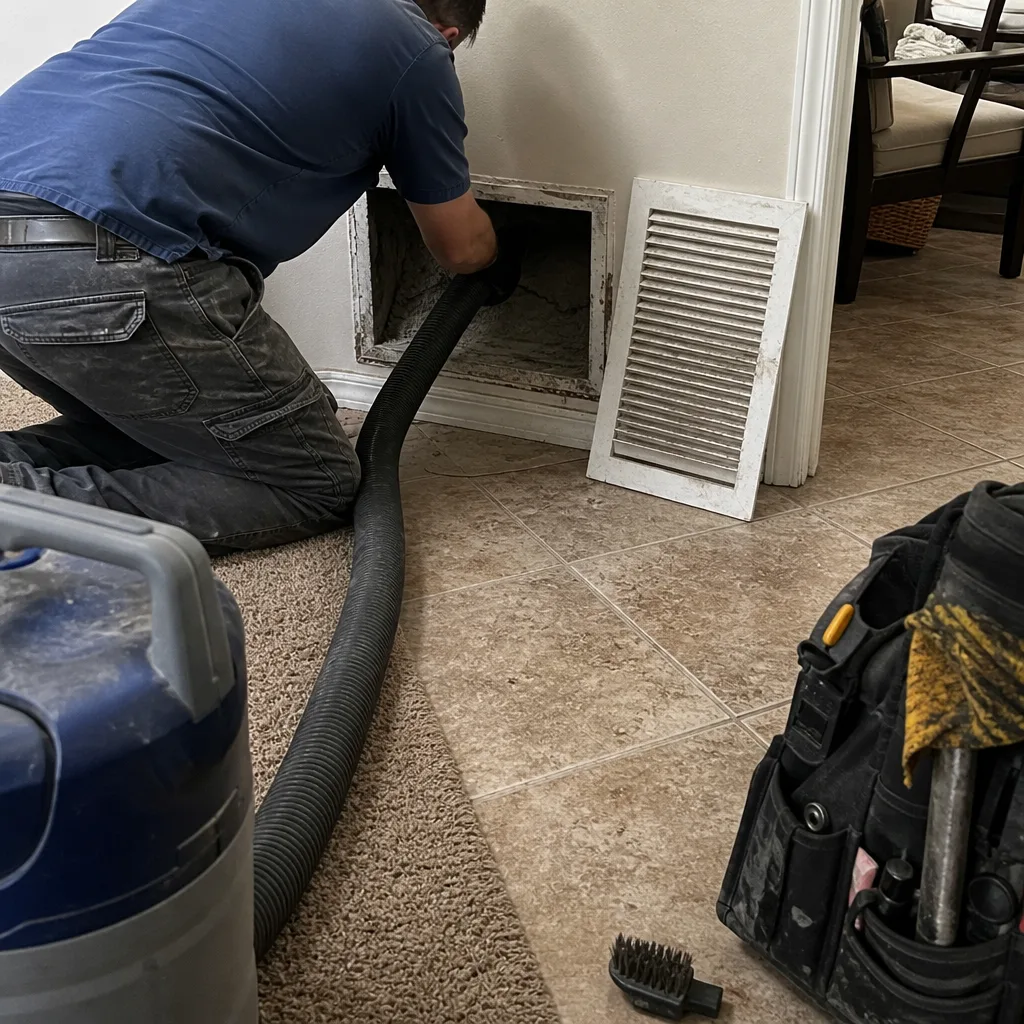 Before
 After
 Before
 After